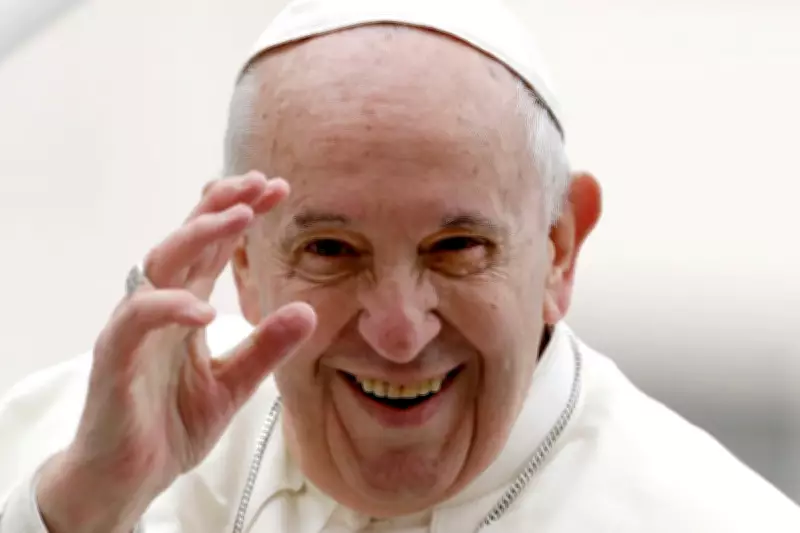
Pope Leo XIV Endorses Francis' Divisive 2016 Text on Communion After Civil Remarriage
Pope Leo XIV is signalling a strong endorsement of one of Pope Francis’ most controversial policies on marriage and divorce, marking a significant moment in Catholic Church leadership. On Thursday, Leo summoned Catholic bishops to Rome for a special meeting focused on ministering to families, taking as its starting point his robust backing of Francis' 2016 document "The Joy of Love."
A Decade-Old Document Revisited
Leo penned a special message commemorating the 10th anniversary of Francis' 2016 text, calling it a "luminous message of hope" that remains even more relevant and urgent today than it was a decade ago. When originally released, "The Joy of Love" immediately sparked intense controversy because it opened the door to allowing civilly remarried Catholics to receive Communion.
Traditional Church teaching holds that unless these Catholics obtain an annulment—a church decree declaring their first marriage invalid—they cannot receive the sacraments, as they are viewed as living in sin and committing adultery. Francis did not create a church-wide exemption for these individuals, but suggested, through vague terms and a strategically placed footnote, that bishops and priests could permit it on a case-by-case basis after guiding them through a spiritual journey of discernment.

Divisive Reception and Conservative Opposition
The document quickly became one of the most divisive elements of Francis' pontificate, serving as a focal point for conservative opposition. It prompted a wave of criticism from predominantly conservative Catholics, who argued it had sown confusion among the faithful regarding the Church's teaching on the indissolubility of marriage.
Within the first year of publication, four conservative cardinals formally asked Francis to clarify certain questions, or "dubia," raised by the text. They contended that Church doctrine unequivocally states Catholics who remarried without a church annulment were living in sin and thus ineligible for the sacraments. Francis never replied to their queries.
Leo's Strong Endorsement and Call to Action
In his anniversary message, Leo strongly endorsed Francis' text, citing Chapter VIII, which addressed the divorce question, though he did not explicitly reference access to the sacraments or Francis' footnote No. 351. In that footnote, Francis elaborated that "in certain cases, this can include the help of the sacraments," emphasising that the confessional should be "an encounter with the Lord’s mercy" and the Eucharist "a powerful medicine and nourishment for the weak."
"On this tenth anniversary, we give thanks to the Lord for the stimulus that has encouraged reflection and pastoral conversion in the Church, and ask God for the courage to persevere on this path," Leo wrote. He has summoned the presidents of bishops' conferences to Rome for a meeting in October to decide next steps for ministering to families today, "in light of 'The Joy of Love' and taking into account what is currently being done in the local churches."
Regional Interpretations and Vatican Approval
Despite the controversy, some regions embraced the text. Bishops from Francis' native Buenos Aires issued criteria applying Chapter VIII that clearly allowed civilly remarried Catholics to receive Communion, particularly if the individual was not responsible for the failed first marriage, while stressing it was not a blanket permission. Francis ordered the Argentine criteria published as an official Vatican act and declared their interpretation authoritative, stating, "The document is excellent and clearly sets out the meaning of Chapter VIII. There are no other interpretations."
Similarly, the Maltese church issued guidelines published in the Vatican newspaper L’Osservatore Romano, indicating Holy See approval. These guidelines state that if a Catholic in a new civil union believes, after a path of spiritual discernment, they can be at peace with God, "he or she cannot be precluded from participating in the sacraments of Reconciliation and the Eucharist."
This endorsement by Pope Leo XIV reinforces the ongoing pastoral shift initiated by Francis, highlighting the tension between traditional doctrine and modern pastoral approaches within the Catholic Church.