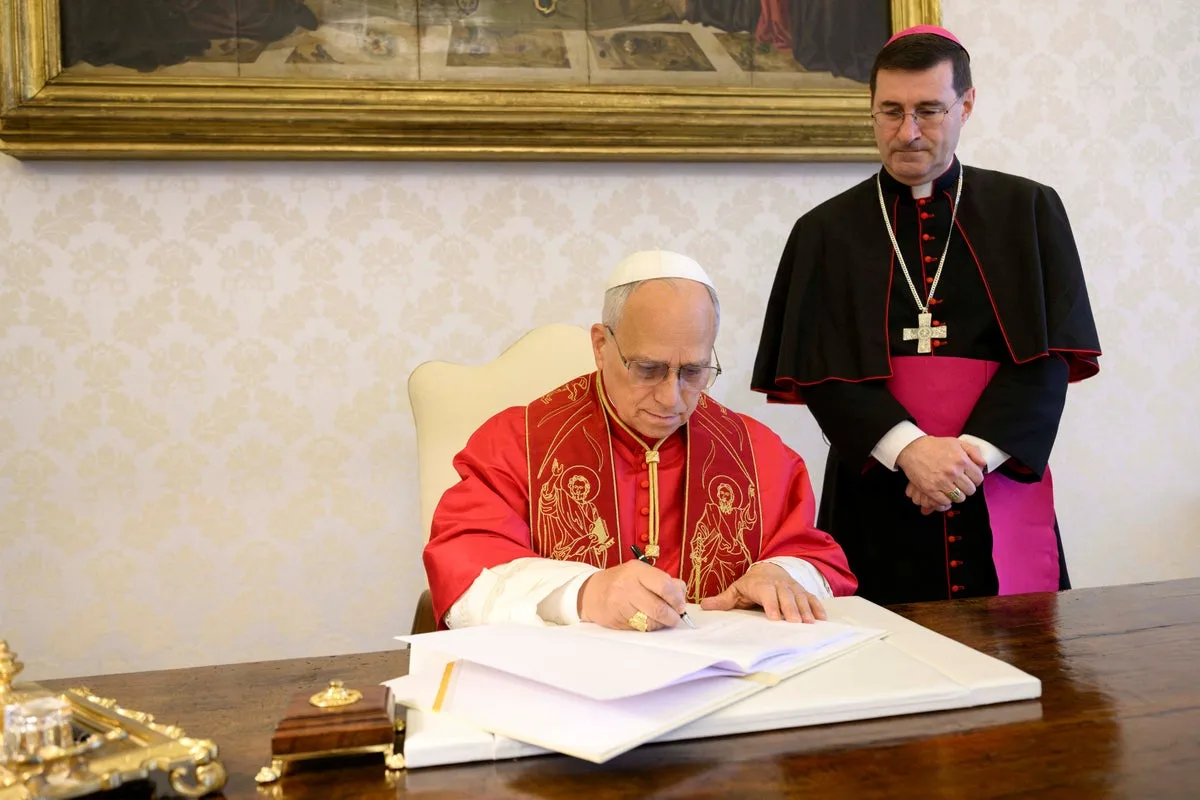
Pope Leo XIV has issued a sweeping encyclical, Magnifica Humanitas (Magnificent Humanity), calling for robust regulation of artificial intelligence and warning that the technology risks accelerating war and threatening humanity. The document, his first encyclical since his election, follows his earlier declaration that AI represents humanity's biggest challenge.
In the text, Pope Leo denounced the 'culture of power' driving the AI race, particularly in developing sophisticated remote warfare. He declared it 'not permissible' to entrust irreversible, lethal decisions to AI systems, a stance that creates a flash point with the Trump administration, which has worked to deregulate AI development. The pope also criticised the concentration of power and data in the hands of a few private sector actors, calling for external regulation.
Experts in tech, academia and Catholic morality said the document will likely become a benchmark in the AI debate. Taylor Black, a Microsoft AI executive and director of Catholic University of America’s AI institute, noted that the encyclical prompts questions about what it means to be human. The Vatican launched the text with Anthropic's co-founder, as part of a decade-long effort to engage Silicon Valley on AI's human cost.

Pope Leo appealed to AI developers and political leaders to slow down and reflect, urging them to work for the betterment of humanity rather than profit or power. He traced the history of Catholic social teaching and applied concepts like justice and solidarity to the digital revolution. Paolo Carozza, chair of the Meta oversight board, called the encyclical a 'defining document for our era'.
In its strongest chapters, the pope denounced how AI has accelerated the 'normalisation of war' by desensitising people to its cost. He called for concrete criteria when making strike decisions, including an identifiable chain of responsibility and measures to distinguish combatants from non-combatants. Non-negotiable requirements include guarantees of accountability and that lethal force cannot be automated.