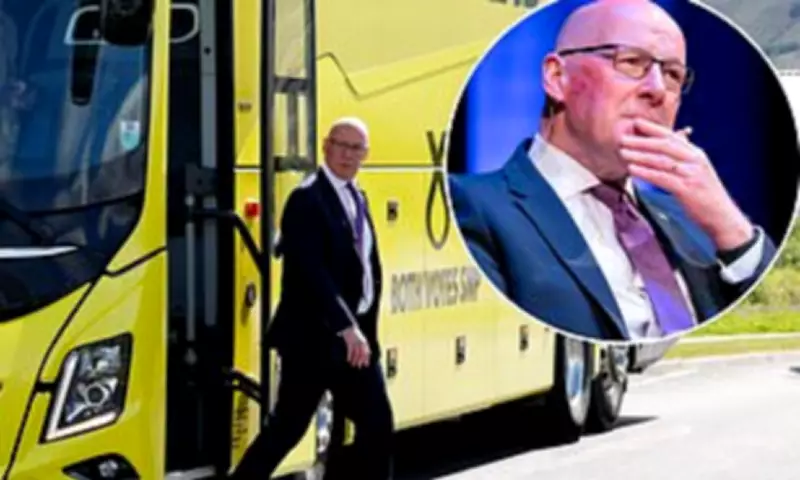
John Swinney appeared set to miss his target of an SNP majority last night as voters rejected his divisive independence plans. The final polling analysis of the election campaign placed the SNP on 56 MSPs, nine short of overall control of Holyrood.
Realistic Mood Within SNP
A senior SNP source described the mood as 'realistic' regarding the likelihood of no majority, while claiming some seats were too close to call and that an upset was still possible. Opposition parties intensified calls for Mr. Swinney to abandon his plan for a 'day one' push for an independence referendum, which he previously stated depended on an SNP majority.
Projected Results
The analysis by the Mark Diffley partnership projected Reform UK would come second with 19 MSPs, narrowly edging Scottish Labour into third place on 18. 'We think that an SNP majority is unlikely now,' Mr. Diffley said. The Scottish Greens would secure 16 MSPs, raising the possibility of them returning to power in a Nationalist alliance with the SNP. 'If the arithmetic after this election means the Greens aren't the swing vote in Parliament, I will be absolutely crushed,' co-leader Ross Greer told the Mail.

The Diffley analysis, based on final polls from YouGov, Ipsos, Norstat, Survation, and More in Common, forecast 11 MSPs for the Tories and nine for the Liberal Democrats. If borne out by today's count, it would mark a spectacular rise for Nigel Farage's Reform UK, which failed to win a single seat in 2021. It would be a record tally for the Scottish Greens, the worst ever Holyrood results for Labour and the Tories, and a modest comeback for the Lib Dems.
Implications for Swinney's Leadership
The outcome could raise questions about Mr. Swinney's tenure at Bute House, as he would have taken the SNP backwards in all five elections he has led. He suffered reversals in Holyrood, council, and European elections during his first spell in charge between 2000 and 2004, and oversaw a collapse in MPs at the 2024 general election. Another slump in support could hasten the expected SNP leadership battle between Housing Secretary Mairi McAllan and Westminster leader Stephen Flynn.
Analysis of Voter Behaviour
Mr. Diffley noted a shift away from the SNP in recent polls, particularly on the regional list. 'There will be a pro-independence majority, but the likely outcome is a minority SNP government. Tightening of the polls and tactical voting is probably the explanation.' He suggested that Mr. Swinney's focus on winning a majority and pushing for a referendum may have inspired anti-SNP tactical voting. 'There was absolutely a risk of going in studs-up on a majority and the argument that would leverage another referendum. The risk is you trade enthusing your base with enthusing the base of the Tories, particularly in very tight contests up in the North-East and down in the Borders.'
Based on people's likelihood to vote, turnout was projected at 50 to 55 per cent, in line with Holyrood elections before the record Covid-era figure of 63.5 per cent in 2021. 'This is likely to be much more around the norm. It also reflects that the campaign hasn't been particularly interesting. Maybe the result is a bit of a foregone conclusion for many people,' Mr. Diffley added.
Expert Perspectives
Pollster Luke Tryl, of More in Common, dubbed Holyrood the 'meh election', with Scottish voters the least enthusiastic in the UK after 19 years of SNP rule. Edinburgh University's Professor Ailsa Henderson, head of the Scottish Election Study, estimated that a fifth of people would vote tactically, with anti-SNP voting the most common variety. She believes the final results could yield surprises, saying: 'We're looking at possible low turnout, late deciding, and tactical voting – and all three of those are sources of volatility.'
Professor Henderson noted that if the SNP win 56 MSPs – the same number Labour won in 1999 – it would be a 'good result' for them after 19 years in power, but it would also come with a sting. 'It will be a disappointment to them, and makes whatever plans they had for a referendum more difficult. It will raise questions about whether they have a mandate to move forward on constitutional change.'