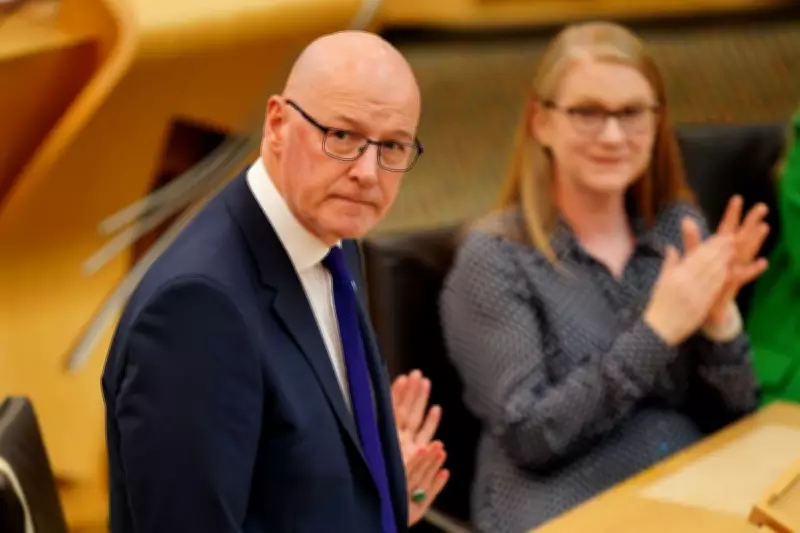
John Swinney has described being Scotland's First Minister as the "greatest privilege" of his life after being formally re-elected to the role by MSPs at Holyrood on Tuesday. The SNP leader, whose party remains the largest at the Scottish Parliament, secured the position in a vote that was widely expected given the SNP's dominance.
Swinney's Commitment to Collaboration
Speaking after the vote, Swinney emphasised his willingness to work with rival parties, stating: "By electing a parliament of minorities, the people have given us a specific instruction to work together. Voters value cooperation amongst their politicians, they want to see more of it. And in this Parliament I will work to see more of it, too." He shook hands with leaders across the chamber, including Reform UK's Lord Malcolm Offord, despite having previously declined to invite him for post-election talks.
Independence Push Continues
Despite lacking an overall majority, Swinney made clear his intention to continue advocating for a second independence referendum. He highlighted that Holyrood now has "the largest pro-independence majority in the history of devolution," with the SNP winning 58 seats—six fewer than in the previous election and seven short of the majority needed to force Westminster to permit a fresh ballot. "The Scottish people have yet again made their wishes known, loud and clear. They want a more secure and a more prosperous independent nation," he said.

Opposition Reactions
Scottish Green co-leader Gillian Mackay backed the call for a second vote, arguing that voters had been "promised big things" after the 2014 referendum but instead got "Brexit, a decade of Westminster failure, a merry-go-round of prime ministers and ongoing climate breakdown." Scottish Labour's Anas Sarwar urged cross-party cooperation, warning that people are "frustrated, angry and tired" of political arguments disconnected from their lives. Reform UK's Lord Offord criticised the SNP for "record highs in tax and spend and grievance stoked against the United Kingdom," while Scottish Conservative leader Russell Findlay described the vote as a "foregone conclusion" but used his nomination to present his vision. Liberal Democrat Alex Cole-Hamilton acknowledged he would not win but celebrated his party's "massive leap forward" in returning 10 MSPs.
Swinney's Vision for Scotland
Swinney pledged to be a "First Minister for all of Scotland," drawing on his experience since 1999 and continuous government service since 2007. He outlined "ambitious goals for this parliamentary session" and expressed confidence in achieving a majority for his proposals. "I believe I can achieve a majority for every ambition I have for this Parliament," he said, while warning against blocking "bold proposals" for "political expediency."