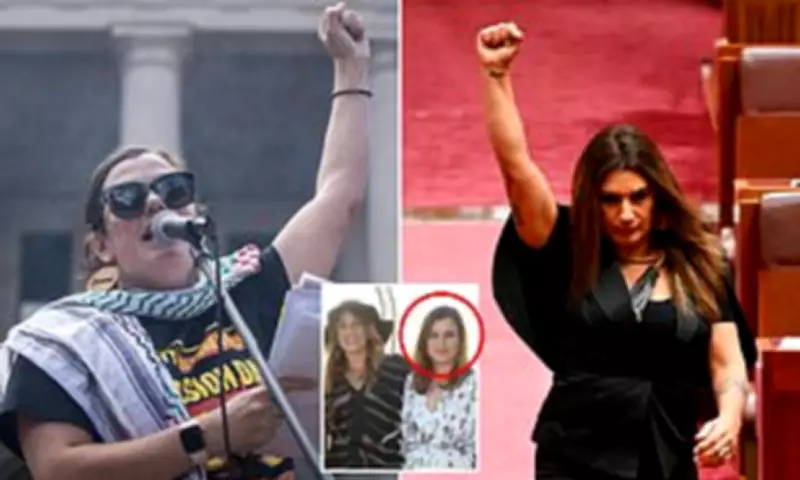
Meriki Onus, the younger sibling of firebrand senator Lidia Thorpe, will rake in almost $350,000 of taxpayer cash a year to co-lead Victoria's controversial First Peoples' Assembly. Onus, a former militant protester who uses they/them pronouns, was appointed to head the assembly alongside Indigenous activist Djaran Murray-Jackson.
Background of Onus
Onus founded the Warriors of Aboriginal Resistance (WAR) group and has led various 'Invasion Day' protests in which Australian flags were burned. The group posted on Facebook several years ago it wanted to 'burn this entire rotten settler colony called Australia'. WAR also demanded Australia be abolished while also calling for 'decolonisation' of the country.
Assembly Leadership and Costs
Onus and Murray-Jackson will earn $348,000 each to lead the Indigenous 33-person assembly which was elected and empowered on May 1. Victorian opposition leader Jess Wilson has vowed to scrap the body if elected, saying the move will save taxpayers about $1 billion. 'Labor's Treaty will spend a billion dollars on a bureaucracy that Victorians do not want and cannot afford,' Wilson said in a statement. 'It will not put a single dollar into closing the gap and will mean $1 billion less for the essential services Victorians rely on.'

In the meantime, a legal insider has warned attempts to solve Victoria's crime crisis could be delayed as every new law in the state will need consultation from the Aboriginal body. The Victorian parliament now requires the extra approval on any new legislation, adding another layer of bureaucracy to the legislative process. Every prospective law is already required to pass a human rights and gender equity statement of compatibility.
The last-minute change was rushed through last month, as most Victorians were preparing for the Easter long weekend. Fierce debate echoed throughout Parliament House before the extra powers were handed to the indigenous entity which will be led by Gellung Warl - the treaty's representative body. The Treaty Bill, introduced by the Allan government last September, came into force on May 1, with the state the first in the country to enact one.
A Victorian legal industry insider told Daily Mail it was very possible all proposed laws will need to be ticked-off by Gellung Warl but the body will most likely focus on major legislation which affects health, infrastructure and the environment. However, the insider said it was possible any further moves the Victorian government intended to make in the future to reduce crime and keep the community safe might be 'stifled' or 'delayed' by the 'added layer of bureaucracy'.
'Further attempts to reduce crime such as the recent bail reforms and 'Adult Time for Adult Crime' laws which came in before Gellung Warl could be delayed as these policies came before Gellung Warl,' the insider who refused to be named said. 'It's tricky timing because the government is working to reduce crime and adding another layer of bureaucracy will certainly slow things down further.'
The insider explained it was expected the new body would 'closely scrutinise' future criminal justice reform given the 'disproportionate impact on the [Indigenous] community'. 'Indigenous Victorians are 14 times more likely to be in prison than non-Indigenous Victorians,' they said. 'Governments can always act quick in a crisis though so it is unlikely the new body will be a major impediment to reform.'
The total wage bill for the entire 33-person Gellung Warl assembly will cost Victorian taxpayers $6 million a year with representatives on higher duties to receive an extra $29,851 a year. The treaty process has already cost an estimated $776 million since work began in 2016, with Gellung Warl set to receive $70 million annually in taxpayer funding. That figure will be reviewed regularly and is expected to rise over time.
Details of the controversial treaty bill, which passed parliament in November last year, have been published on a government website. Key aspects include a requirement for all Victorian prep to year 10 students to learn 'truth-telling' as part of their school curriculum. According to the treaty, this truth-telling will teach students that the 'colony of Victoria was established without the consent, negotiation or recognition of the traditional owners of these lands and waters'.

Access to skiing and snowboarding in alpine areas, as well as hunting and fishing, could also be restricted at the request of Aboriginal groups, with the proposals debated earlier this month. Under the reforms, Gellung Warl is to 'participate in the ceremonial life of the state', which could result in more Welcome to Country ceremonies. Gellung Warl will also have authority over the use of the Aboriginal and Torres Strait Islander flags and other 'physical markers of treaty'.
The body will be empowered to make 'substantive rules relating to how First Peoples' organisations in Victoria provide certificates evidencing that a person is accepted as an Aboriginal or Torres Strait Islander person by the Aboriginal or Torres Strait Islander community'. Gellung Warl will also serve as a 'naming authority' for geographic locations including mountains, state parks and rivers, to 'increase opportunities for the use of traditional or language place names'.