With five months remaining until the midterm elections that could shape his final two years in office, Donald Trump has increasingly retreated behind closed doors, engaging only in safe interviews with friendly allies and venturing out primarily to play golf at his own properties. On Wednesday, his schedule featured a substantial block of so-called 'executive time' in the White House residence, a growing presence on his daily agenda, alongside a handful of what aides term 'policy meetings' and a 'Rose Garden Club' dinner on the patio outside the Oval Office, where he frequently rewards supporters with invitations.
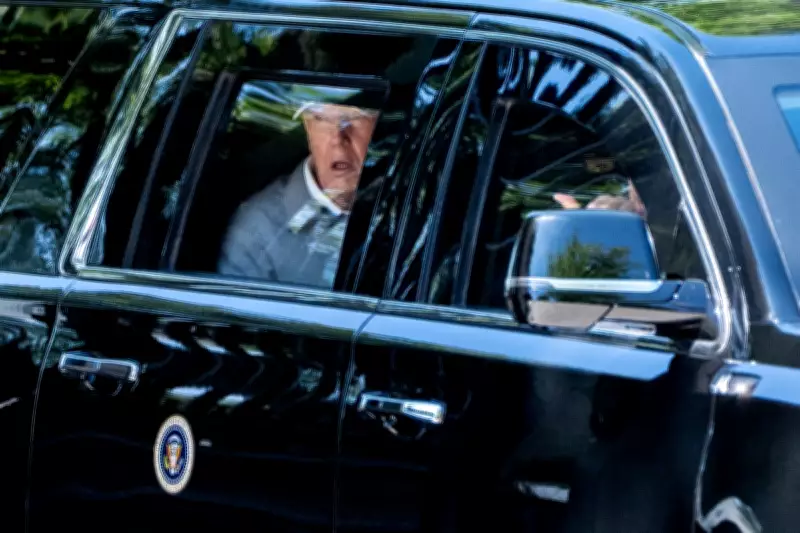
Wednesday marked a full week since Trump has been seen at a public event or one open to the White House press corps. The last such appearance was a Cabinet meeting on May 27, a day after he visited Walter Reed National Military Medical Center in Bethesda, Maryland for what he called a 'six-month physical.' In a Truth Social post, he declared that 'everything' had 'checked out PERFECTLY' during the exam.
Health and Fitness Under Scrutiny
The president's relative invisibility over the past week comes amid growing questions about the health of a commander-in-chief who will turn 80 on June 14 and his fitness to serve in what is often described as the world's most demanding job. Trump is also the oldest person to ever start a term as president. His light public schedule and lack of engagement with the broader press corps continue a trend that began in February, when he unilaterally started the war with Iran, leading to skyrocketing gas prices and a corresponding slide in his approval ratings. This could portend significant losses for his party in the midterm elections.

Data obtained by The Independent from the White House Transition Project shows that the start of the Iran war marked a significant shift in the president's visibility and an increase in the White House's efforts to make him appear busy by loading his schedule with descriptions of 'executive time,' 'policy time,' and other meetings. From February 28, the first day of the war, to the end of April, Trump held 32 short question-and-answer sessions with the White House press pool, plus three news conferences (one solo and two joint). The same data showed he held 21 Q-and-A sessions during the first month and eight days of the second year of his term, from January 20 through the start of the war on February 28, indicating a large reduction in the amount of time he spent speaking to the press pool since the war began.
Attempts to Fill the Void
The president initially attempted to fill the void left by his lack of public appearances by spending significant amounts of time on the phone with reporters who had dialed his personal mobile number, including The Independent. This resulted in a remarkable total of 138 short interviews in 61 days, at least two a day over a seven-day week. However, even the pace of Trump's unprecedented outreach via cellular telephone has flagged over the last few weeks as he has dialed back on his appearances.
At the same time, he has more or less appeared to have given up on the signature campaign rallies that have characterized his political operation since his first run for the presidency in 2015. When Trump does appear before cameras, he often appears exhausted and haggard, and at times he has been seen to close his eyes for significant periods, leading observers to believe he has fallen asleep. His physical appearance has also given rise to questions about his condition, including frequent appearances of bruising on both hands (which the White House attributes to his overuse of aspirin combined with frequent vigorous hand-shaking), swelling in his lower legs that has been blamed on a circulatory ailment known as Chronic Venous Insufficiency, and a rash on his neck.

White House Defenses
White House aides who spoke to The Independent invariably describe the president as possessing boundless energy and point to his late, almost nocturnal hours, including his frequent late-night Truth Social posting sprees, as evidence of his indefatigable nature. One top administration official, Secretary of State Marco Rubio, claimed he had 'never seen him fall asleep' during any meetings while under questioning by Rep. Ted Lieu, D-Calif., at a House Foreign Affairs Committee hearing on Wednesday. Even after Lieu played video of Trump appearing to doze off at several events, Rubio characterized the Democratic congressman's description of Trump as asleep as 'false.'
'On the contrary, the guy doesn't sleep. Which is a big problem, because he calls me at 2 in the morning, he calls me at 5 in the morning, and you know, I like to sleep a little bit,' he said. Moments later, Lieu replied that the president's 'inability to stay awake on the job shows that there's something very wrong with his health and cognitive abilities.'
After The Independent asked the White House to explain why Trump has seemingly cut back on public appearances following his physical, White House spokesperson Davis Ingle vehemently rejected the premise of the query and pointed to Trump's recent sit-down interviews with MAGA-aligned New York Post columnist Miranda Devine and his Fox News presenter daughter-in-law, Lara Trump, as evidence that he had not disengaged from speaking to reporters.
Political Implications
Republican political veterans, none of whom would speak on the record for fear of angering the Trump political operation or the White House, characterized the president's apparent retreat from view as an existential threat to his political brand. One operative noted that even though Trump is older than Biden, during the 2024 campaign he was able to present a far more vigorous image and cast his opponent as not just 'sleepy' but mentally unfit to serve. They said Trump's supporters have bought into his self-image as a man of action because he's always been on the road or visible on television sparring with packs of reporters, and warned that not keeping up that appearance would give further ammunition to critics who say he's lost more than a step since returning to power.
Andrew Bates, a former spokesperson for the Biden White House, told The Independent that Trump's retreat from view is 'a lose-lose for Republican candidates because Trump's decline is showing itself in his growing inability to pretend he cares about anything but making money off of taxpayers and building monuments to himself like assisted living crafts projects.' 'When he surfaces, he says he doesn't think about Americans' finances 'even a little bit;' but when he's off camera, he's rage-posting about the Pope or how his slush fund for cronies was shut down by the courts,' Bates said. However, Ingle, the White House spokesperson, flatly denied there's any valid comparison to be made between the 46th and 47th president's respective conditions. 'President Trump just participated in a 45-minute wide-ranging interview yesterday. Anyone drawing comparisons between the accessibility of President Trump and Joe Biden is a grade-A moron,' he said.