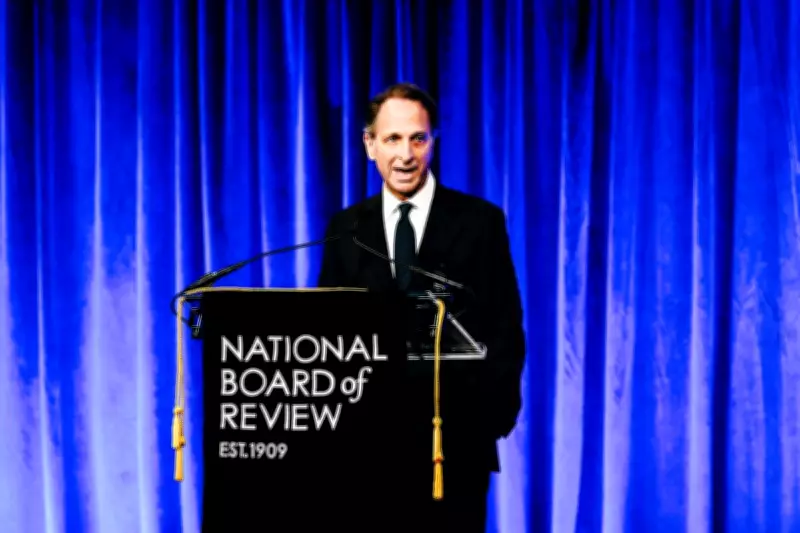
Andrew Weissmann, a former US federal prosecutor and FBI general counsel who was pursued by Donald Trump, has called for sweeping structural reforms to hold politicians accountable if their lies damage democracy. In a new book, Liar's Kingdom: How to Stop Trump's Deceit and Save America, Weissmann argues for a legislative crackdown on election deceit, proposing a Truth in Elections Act built on existing law.
Proposal for Reform
Speaking from Paris, where he teaches for NYU, Weissmann said: "If we ever get out of this mess, what systemic reforms can we do? Because I think we tried going back to the old norms [under Joe Biden] and thinking that was going to be enough, and maybe it will be, but I just have been thinking a lot about, structurally, what we can do differently." He added, "I think the circumstances in the United States have made it imperative that we be as creative as possible."
The Truth in Elections Act would be modeled on the Stolen Valor Act of 2005, which criminalizes lying about military honors with intent to obtain tangible benefit and survived a US Supreme Court challenge. Weissmann pointed to countries like Brazil, where former president Jair Bolsonaro was jailed for election fraud lies that fueled a failed coup, and the UK, where Labour MP Phil Woolas lost his seat in 2010 after falsely suggesting an opponent supported extremist violence.

Free Speech Concerns
Weissmann acknowledged that the principal argument against strict policing of election lies is that it chills free speech. However, he said: "I'm not very sympathetic to the idea that the solution to false speech is more free speech, for a variety of reasons. And if the issue is chilling some truthful speech, we have that problem now." He cited defamation law as an example where chilling effects are accepted.
Weissmann compared Trump to organized crime figures, including Vincent "the Chin" Gigante, who feigned mental illness to avoid accountability until Weissmann's team proved his competence. He placed Trump's claims that the 2020 election was stolen, which set the stage for the January 6 insurrection, in this context, noting that Trump privately admitted Biden won.
Trump's Second Administration
Weissmann criticized the qualifications of nominees in a second Trump administration, saying: "The No 1 qualification we see in so many people who are nominated to incredibly important positions appears to be loyalty, rather than expertise." He singled out FBI director Kash Patel, stating, "I don't think anyone could say he was the very, very best person for the job."
He also noted politicized prosecutions under Trump, such as that of former FBI director James Comey. Last week, the Department of Justice announced a complaint against the DC Bar for disciplinary action against lawyers who backed Trump's election lie, with acting attorney general Todd Blanche calling the association "a blatantly partisan arm of leftist causes." Weissmann laughed, saying, "They said that also about the FBI. You know, I worked at the FBI. That was not my impression."
Personal Impact
Being on Trump's enemies list has had tangible effects. Weissmann has been named in two executive orders: one revoking security clearances for figures including Biden, Clinton, Harris, and Cheney, and another targeting his law firm, Jenner & Block, for employing "the unethical Andrew Weissmann." Trump called Weissmann a "bad guy," which Weissmann noted was a mild upgrade from calling him "scum."
While a federal judge declared the order "null and void," Weissmann wrote: "Rather than find themselves on a governmental enemies list, they stay silent or complicit, as in the McCarthy era. They settle bogus lawsuits brought by Trump and his allies. They cede the defense of academic freedom to avoid losing critical scientific grants." He added that law firms representing him withdrew, and the first publisher for his book backed out within hours of the executive order.
Asked what it feels like to be singled out, Weissmann said: "You have to just get on with your life. But saying you get used to it, I don't think that's right. It's not like it's gone."

Hope in the Courts
In Paris, Weissmann compared the rebuilding of Notre Dame after the 2019 fire to the work needed in the US after Trump. He expressed optimism in the district courts, saying: "That is a place where there's due process, where facts matter, where there really is an ability to get at the truth. And you're dealing with civilians: we have a jury system, and people do rise to the occasion and take it seriously."
While acknowledging flaws in his proposal, Weissmann said courts had "stayed with me as a place where you can still have due process, you can have a forum where truth matters." He noted that when Trump challenged the 2020 election in court, he lost. "It's different to just going to the public and saying whatever, regardless of whether it's true or not," Weissmann concluded.