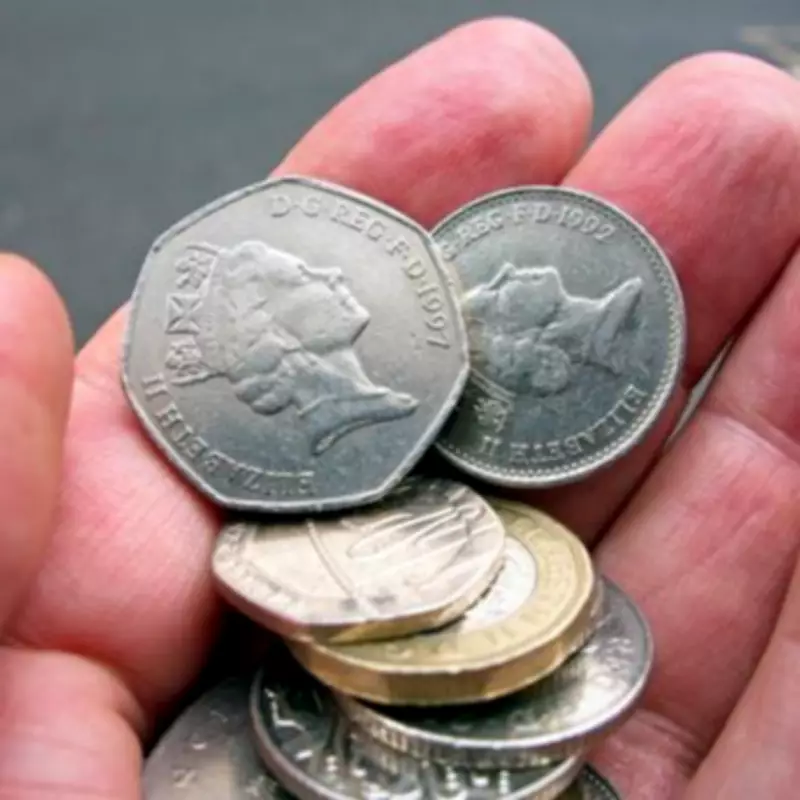
Coin enthusiasts and casual collectors alike are being advised to scrutinise their spare change carefully for a specific commemorative 50p piece that could be worth substantially more than its nominal value due to a distinctive minting flaw.
Spotting the Valuable Error on the Sir Isaac Newton 50p
The coin in question is the Sir Isaac Newton 50p, which was originally issued by the Royal Mint back in 2017 to mark the 375th anniversary of the renowned scientist's birth. This particular commemorative coin is already considered relatively scarce in circulation, with only the Kew Gardens 50p being produced in fewer numbers. However, a specific variant of this coin has captured significant attention due to a manufacturing defect known as a die clash error.
What Exactly Is the Die Clash Error?
According to expert analysis shared widely on social media platforms, notably by the TikTok account UKCoinHunt, the error manifests as two parallel marks or lines that appear near the neck of Queen Elizabeth II on the obverse side of the coin. These marks resemble faint scratches and are the result of a die clash during the minting process, where the dies used to strike the coin's two sides inadvertently come into contact without a planchet in between.

In an instructional video, UKCoinHunt demonstrated the defect by comparing a standard Sir Isaac Newton 50p with one bearing the error, stating emphatically, "You lot need to look out for this error on Sir Isaac Newton which came out in 2017, there's an error that means it's obviously worth a lot more than just 50p."
Potential Value and Collector Advice
While filming the subtle imperfection can prove challenging, the expert indicates that coins featuring this die clash error might fetch approximately £10 each on the secondary market, representing a twentyfold increase over their face value. Consequently, UKCoinHunt recommends that individuals who have accumulated bulk collections of coins in the past should take the time to examine them thoroughly, as additional specimens with the same defect could be lurking within.
The advice has resonated strongly within the collecting community. One TikTok user responded with gratitude, commenting, "Thank you, will definitely check my coins." Another admirer remarked, "Such a beautiful coin I would put it in a photo frame," while a third simply noted, "Have to check my few."
Historical Context of the Sir Isaac Newton 50p
Upon its release nine years ago, the Royal Mint provided rich historical context for the coin's design. The reverse artwork is based on Proposition 11 from Book One of Newton's seminal work, Principia Mathematica. The Mint highlighted Newton's own pivotal role in the institution's history, noting that when he arrived at the Royal Mint, Britain's financial system was nearing a crisis with up to one in ten circulating coins believed to be counterfeit.
Newton's vision for unparalleled quality led him to prosecute notorious counterfeiters, enhance assaying techniques for checking coin quality, and refine weights and measures to unprecedented standards. After becoming Master of the Mint in 1699, he oversaw the new coinage for Queen Anne's accession in 1702 and later supervised the alignment of Scottish coinage with English coinage following the Union of England and Scotland in 1707.
The Mint concluded, "Thanks to Newton's vision Royal Mint coins remain unrivalled in their accuracy and purity to this day. This 50p coin is struck to Brilliant Uncirculated standard."
For collectors and the curious public, this blend of historical significance and modern rarity makes the search for the erroneous Sir Isaac Newton 50p a particularly compelling pursuit.