On a dark, wet, late night in December 2019, a small group gathered to welcome Mikel Arteta to Arsenal. The club had spirited him away from Manchester City under cover of darkness, with the lights of a people carrier illuminating his private road in Didsbury. Bitterness lingered over the move, but as Arteta sat around a large oak table, his eyes reflected a brooding determination. He clenched his fist into his palm and declared, "Everybody has to feel privileged to be here, and the players will have to accept a different way of things. We have to build and change. If players like Bernardo Silva and David Silva at Man City don't get bullied, it's because they defend their position like animals. From now on, that must be us."
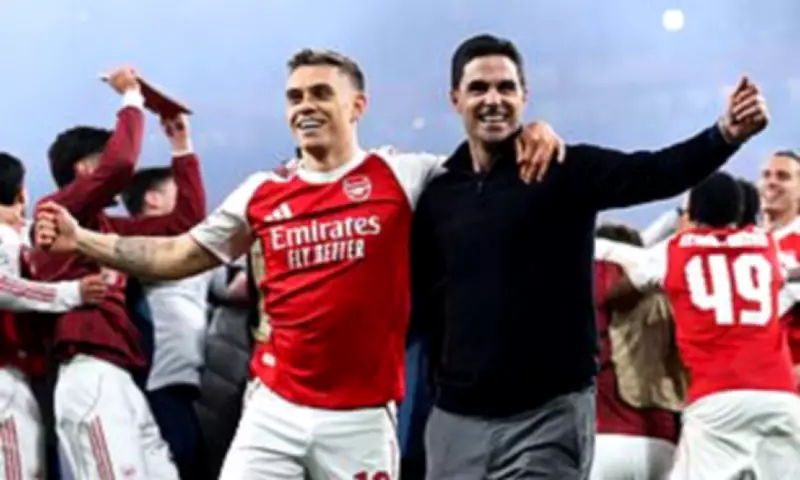
That was Christmas 2019, before the world knew of Covid. It has taken Arteta time to deliver on that promise, but Arsenal are now Premier League champions for the first time in 22 years. The debate over their style of play continues, led by those who would gladly accept even a fraction of what the new champions have achieved. Yet that noise is irrelevant. Arsenal are the best team in England, and Arteta has guided them there through fundamental footballing principles and core management beliefs as old as the sport itself.
Days before that media gathering at the Emirates, Arteta had watched from Manchester City's bench as the reigning champions embarrassed Arsenal 3-0. The Gunners were two goals down within 15 minutes, playing with no pattern, no discernible style, no purpose, and absolutely no heart. Arteta set about fixing everything. He knew it would take time, perhaps longer than hoped, but Arsenal's journey to glory culminated with Bournemouth's help. The team is now a classic modern football side: defensively resolute, capable of scoring in various ways, and exemplary at set-pieces. Thomas Tuchel's coaching staff will even look to adopt some of Arsenal's traits for the World Cup.

Arteta's route to glory began by rooting out poison and installing a new way of doing things that would not suit the dilettantes who had grown comfortable in the Arsenal dressing room. This had to happen before he could even think about implementing a playing style true to the club's traditions. Mesut Ozil, Alexandre Lacazette, and Pierre-Emerick Aubameyang were gifted players but not Arsenal players—not Arsenal people in how they viewed their work. It took courage to remove them; Arsene Wenger had avoided the issue. Arteta needed the confidence of those who hired him. Aubameyang, for instance, was club captain. "I asked sporting director Edu if he really was sure about this, and I could tell he wasn't," one prominent agent told Daily Mail Sport. "Aubameyang was the club's best player. They needed him. But Edu was determined to back Mikel. I could tell they would see it through. Short-term pain. Long-term gain. New standards."
Arteta's Arsenal have passed through different phases of development. Players have been fundamental to certain stages and then moved on without sentiment. Arteta understands loyalty but also recognizes it as a failing when indulged blindly. Kieran Tierney, Granit Xhaka, Aaron Ramsdale, and Oleksandr Zinchenko were all useful and utterly fundamental until the moment they were not. Arteta's pragmatic ruthlessness is as good as any coach in the modern game, especially regarding timing. He has been too emotional at times, impacting his players negatively, and some of his methods have appeared gauche—balancing pens, tennis balls fired during training, pickpockets employed to steal wallets at team dinners. Such antics are funny until they work. Arteta now has a Premier League trophy to support his argument.

More important has been his personal conviction and resolute belief in himself and his project. This has provided shelter from criticism and helped him survive disappointments like three second-place finishes. Last season, Arsenal should have run Liverpool closer; had they done so, Arne Slot's team might have buckled. Yet those setbacks bred evolution and change, leading to introspection and a broadening of ideas and methods. Some coaches are narrowed by failure, and their teams wither. Arteta has not allowed that. From setbacks, great strength has grown. He built a team and style of play, then rebooted it all to reach elite levels. The Premier League title is secure, and Arteta's team is within one big performance of even greater glory in the Champions League final in Budapest. Back in 2019, Arteta promised fundamental change. He vowed to "shake the tree." Perhaps he needed to shake harder than expected, but medals have fallen from it in the end.