The Harsh Reality of Pep Guardiola's Manchester City Legacy After Real Madrid Humbling
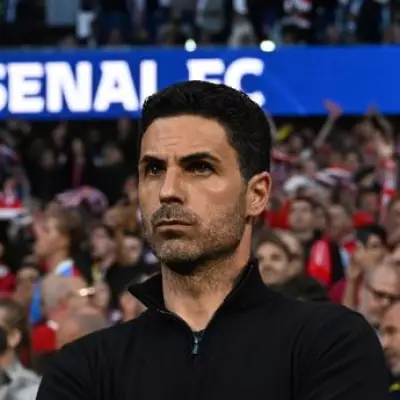
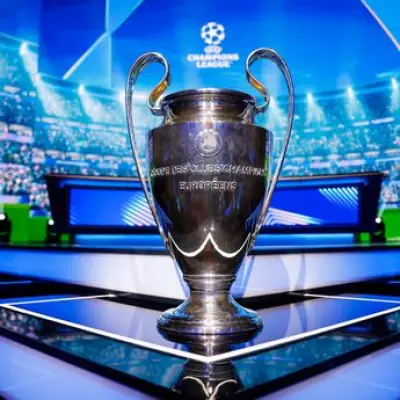
The City manager must confront the stark reality that a second Champions League crown is increasingly unlikely to materialise at the Etihad Stadium, with Real Madrid brutally exposing the fundamental issues plaguing this current side. For a managerial legend, it was a last Champions League game he had hoped to avoid, mirroring Sir Alex Ferguson's painful exit in 2013.
A Legend's Painful European Farewell
Real Madrid travelled to Manchester and secured a decisive 2-1 victory, reducing Guardiola's side to ten men following a red card for a Portugal international. There would be no final glory on the continental stage this season. Guardiola, typically phlegmatic, refrained from blaming Bernardo Silva for his dismissal or referee Clement Turpin, even tipping victorious manager Alvaro Arbeloa for a fine career ahead.
Perhaps the elder statesman reflected that he was once the future himself. Now, attention turns decisively to his past achievements and what might have been. Guardiola's status as a managerial great remains secure, yet the persistent accusation lingers that he could have achieved even more, particularly during his tenure at Manchester City.

The Champions League Conundrum
"I have to win six Champions Leagues to be recognised in that? Yeah, yeah for sure," Guardiola replied with familiar sarcasm when questioned about his European record. Yet his point resonates. While it is easy to argue he should have won more than one European crown with City, context is crucial.
Over his decade at the Etihad, his former clubs Barcelona and Bayern Munich have secured none and one Champions League titles respectively. Only Real Madrid's exceptional squad has claimed at least two during this period, with Arbeloa potentially securing a fifth. Guardiola understands the unpredictable nature of knockout football intimately, where away goals, late strikes, penalty shootouts, and VAR interventions often dictate outcomes.
Captain Bernardo Silva's analysis rings profoundly true. "In a league season the best team wins 95 per cent of the time," Silva stated. "In the Champions League, the best team does not necessarily win."
Missed Opportunities and Tactical Missteps
Manchester City have undoubtedly been Europe's best team at various points since Guardiola's arrival in 2016. Even during their historic Treble-winning campaign of 2022-23, Arsenal led the Premier League for 248 days, while Luciano Spalletti's Napoli shone brightly for months. Guardiola himself acknowledges his debt to goalkeeper Ederson for crucial late saves against Inter Milan in that final.
While City could have won the Champions League more frequently, claiming they should have done so is harsher. Of Guardiola's ten campaigns, seven presented genuine opportunities. His debut season with an ageing inherited squad lacked the necessary quality, as did the last two campaigns ending in the last 24 and last 16 respectively.
The great missed opportunity arguably arrived in 2021, when Guardiola selected the wrong team for the final, omitting both Rodri and Fernandinho while deploying top scorer Ilkay Gundogan as a defensive midfielder. Other selectorial mishaps include Gundogan on the right wing at Anfield in 2018, Savinho starting at the Bernabeu last week, and three centre-backs against Lyon in 2020.
Structural Vulnerabilities and Squad Transition
Guardiola erred by not starting Kevin De Bruyne in the first leg at Tottenham in 2019, though City's elimination involved numerous factors. Over his decade, City have been ill-fated at times, while a susceptibility to lightning counter-attacks has repeatedly proven their undoing, as Real Madrid demonstrated once again.
The club can note they exited the competition unbeaten apart from penalties in 2023-24, yet a record 26-game undefeated Champions League run has been followed by nine losses in seventeen matches. Their last two aggregate defeats to Real Madrid stand at 6-3 and 5-1, highlighting the growing distance from Europe's elite.

Real triumphed without Jude Bellingham and requiring minimal contribution from Kylian Mbappe, boasting other world-class talents like Thibaut Courtois, Fede Valverde, and Vinicius Junior. City arguably possess only two such players in Erling Haaland and Gianluigi Donnarumma, with Rodri potentially a third if he rediscovers peak form.
An Uncertain Future Direction
Arbeloa marvelled at City's squad depth, perhaps reacting to last year's injury crisis that left it dangerously small. While quality exists, extreme quality is lacking. Guardiola has assembled an assortment of fine footballers, but not of the standard De Bruyne and colleagues displayed at their zenith.
This complicates selection considerably. Players are different yet relatively interchangeable, as shown by Guardiola starting Marc Guehi, Nico O'Reilly, Antoine Semenyo, and Savinho in Madrid, then Rayan Ait-Nouri, Matheus Nunes, Tijjani Reijnders, and Rayan Cherki in Manchester. His tactical blunder choosing a front four at the Bernabeu was compounded by similar talent levels across both legs.
"We are not a complete team," Guardiola reflected honestly. Abdukodir Khusanov's extraordinary performance showcased the camp's potential, but while Guardiola created two great sides at City, this current iteration is merely good, with its direction fundamentally uncertain. Either this summer or next, the director will stand aside.
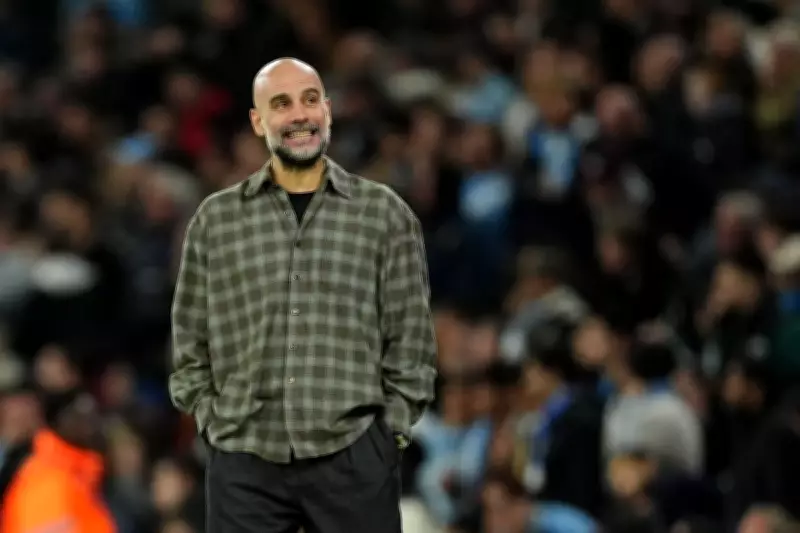
"Everybody wants to fire me," Guardiola smiled when questioned about his future. He knows they don't, but when he finally departs, he will take a host of medals from Manchester, with only one in gold from the Champions League. The harsh truth remains that a second European crown now appears increasingly elusive.