Bearman's High-Speed Crash Ignites F1 Regulation Debate
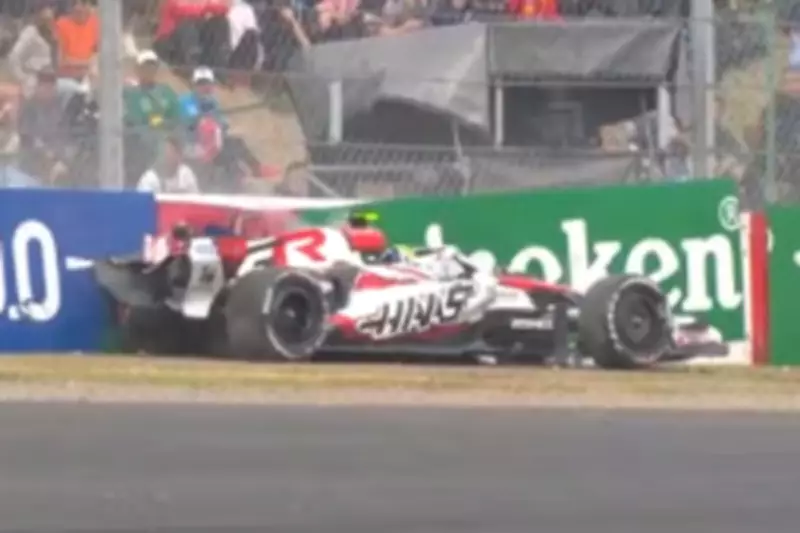
The thunderous 191mph crash involving British driver Ollie Bearman at the Japanese Grand Prix has become a pivotal moment for Formula 1, forcing the sport to confront urgent safety concerns surrounding its 2026 regulations. The 20-year-old Haas driver emerged with a knee contusion after a 50G impact with tyre barriers, similar to Max Verstappen's 2021 Silverstone shunt, highlighting the extreme forces at play.
Drivers Issue Stark Warnings About Closing Speeds
Williams driver Carlos Sainz, who serves as a director at the Grand Prix Drivers' Association, expressed no surprise at the incident. "We've been very vocal on this – we've been warning that this kind of accident was going to happen," Sainz stated post-race. "With these closing speeds, this was going to happen. Hopefully, we come up with a better solution given these massive closing speeds and find a better way of racing."
The Spanish driver emphasized the potential for worse outcomes at street circuits like Baku or Las Vegas, where run-off areas are limited. His concerns were echoed by veteran Fernando Alonso, who had predicted issues before the race even began. "Overtaking these days is accidental," Alonso remarked. "You find yourself with a higher battery than the car in front and you either crash into them or you overtake them. It's an evasive manoeuvre - not an overtake."

The Incident That Changed Everything
Bearman's crash occurred on lap 22 at Suzuka's high-speed Spoon curve as he attempted to overtake Alpine's Franco Colapinto. Data revealed the Briton was traveling 28mph faster than the car ahead when he took evasive action to avoid collision. The sequence unfolded rapidly:
- Bearman swerved left to avoid Colapinto's rear
- His Haas VF-26 smashed into polystyrene speed boards on the grass
- The car spun back across the racetrack
- Impact occurred side-on with the tyre barrier
Remarkably, race stewards launched no investigation, and team principals expressed no anger over team radio. Haas team principal Ayao Komatsu described the incident as simply "scary," while Bearman was seen walking around the garage later in the race after medical clearance.
FIA Acknowledges Need for Review
Three hours after the race concluded, the FIA released a significant statement acknowledging the "high closing speeds" involved in Bearman's crash. The governing body revealed that "a number of meetings are scheduled for April to assess the operation of the new regulations and to determine whether any refinements are required."
This development comes amid growing criticism of the 2026 energy-focused regulations, which Max Verstappen has compared to "Mario Kart" gaming dynamics. The Dutch champion specifically referenced the "mushroom button" effect when discussing Bearman's sudden speed surge – entertaining in virtual racing but dangerously unpredictable in real-world competition.
Path Forward for Formula 1
The five-week gap in the calendar before the Miami Grand Prix on May 3rd provides crucial time for assessment and potential adjustments. Several solutions are under consideration:
- Energy deployment modifications within the existing rulebook
- Fuel flow adjustments to manage acceleration patterns
- Revised overtaking protocols for high-speed sections
- Enhanced safety measures for street circuits
While Bearman's relatively minor injuries demonstrate the effectiveness of safety advancements like the halo device introduced in 2018, drivers argue the fundamental racing dynamics need urgent attention. The British driver's crash has served as the catalyst for change that many within the sport had been anticipating.
As Formula 1 enters this critical evaluation period, all stakeholders recognize that Bearman's 191mph impact represents more than just another racing incident. It marks a turning point that could reshape how the sport approaches overtaking, energy management, and driver safety in its new regulatory era. The coming weeks will determine whether meaningful changes emerge before cars return to the track in Miami.