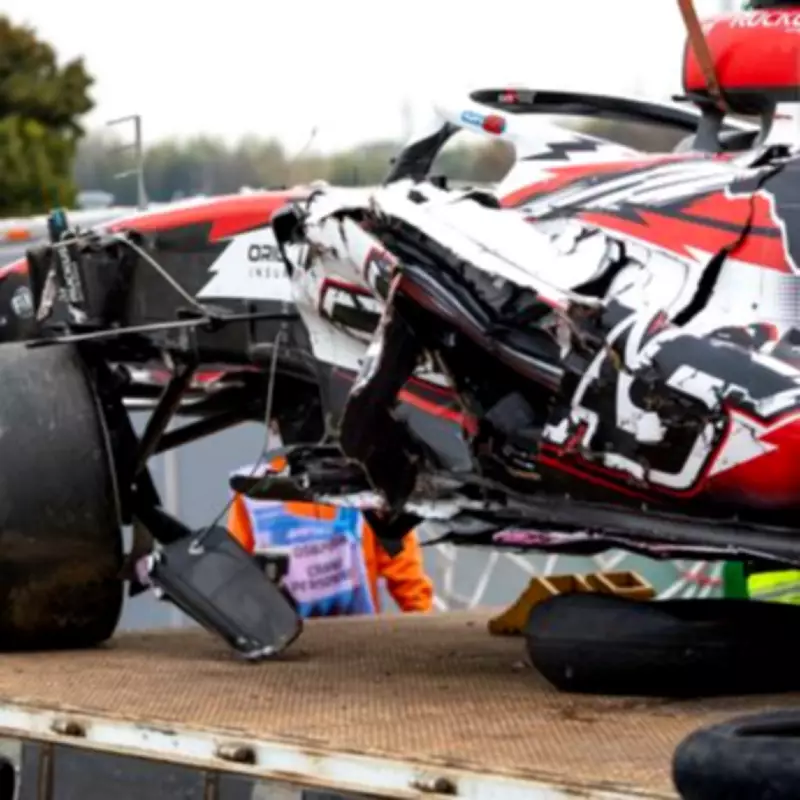
The FIA has issued a detailed statement addressing the aftermath of Haas driver Oliver Bearman's dramatic 50G impact crash during the Japanese Grand Prix at Suzuka, while simultaneously cautioning against premature speculation regarding potential Formula 1 rule adjustments for the 2026 season.
High-Speed Incident at Spoon Curve
During the 22nd lap of Sunday's race, the 20-year-old British driver lost control of his Haas vehicle while attempting an ambitious overtaking maneuver on Alpine's Franco Colapinto for 15th position at the challenging Spoon Curve. Bearman's car swerved onto the grass on the left-hand side of the track before colliding with multiple polystyrene distance markers and ultimately crashing into the barrier at approximately 191 miles per hour.
The young driver, competing in only his second Formula One season, managed to extricate himself from the severely damaged vehicle but was visibly unable to place any weight on his right leg. Track marshals quickly assisted Bearman away from the wreckage, though he subsequently collapsed to the ground before being transported by medical car to the trackside medical centre for urgent X-ray examinations.

Medical Update and Safety Car Deployment
A Haas team spokesperson provided a positive medical update, confirming: "Update on Bearman. 50G impact. Has had an X-ray at the Medical Centre. No fractures. A right knee contusion following the impact. Alert and communicating."
The significant accident triggered an immediate safety car deployment, which strategically benefited Mercedes driver Kimi Antonelli, who capitalized on the situation with a free tyre change that ultimately propelled him into the race lead.
FIA's Structured Approach to Regulation Review
In their official statement, the FIA acknowledged that high closing speeds contributed to Bearman's accident while outlining their methodological approach to potential regulatory adjustments. The governing body emphasized that the 2026 regulations have been subject to continuous discussions among all stakeholders since their introduction.
"By design, these regulations include a number of adjustable parameters, particularly in relation to energy management, which allow for optimisation based on real-world data," the FIA statement clarified.
The organization revealed that all involved parties have consistently maintained that a structured review would occur after the opening phase of the season, allowing sufficient time for comprehensive data collection and analysis. Multiple meetings have consequently been scheduled for April to thoroughly assess the new regulations' operation and determine whether any refinements might be necessary.
Safety as Paramount Concern
The FIA statement strongly reaffirmed the organization's commitment to driver safety, declaring: "Safety will always remain a core element of the FIA's mission." The governing body stressed that any potential adjustments, especially those concerning energy management systems, would require meticulous simulation and detailed analytical work.
"The FIA will continue to work in close and constructive collaboration with all stakeholders to ensure the best possible outcome for the sport," the statement continued, while simultaneously cautioning that "at this stage, any speculation regarding the nature of potential changes would be premature."
The organization committed to providing further updates as their review process progresses, maintaining transparency while emphasizing the necessity of evidence-based decision-making in matters affecting both competitive integrity and competitor safety in the world's premier motorsport championship.