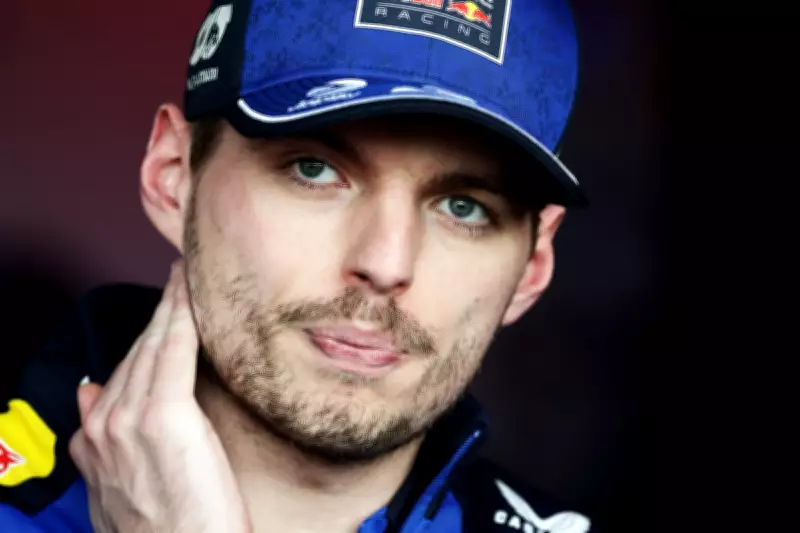
Why Max Verstappen Should Consider a One-Year F1 Sabbatical
Max Verstappen's mounting frustration with Formula 1 from every perspective has become unmistakable. As Kieran Jackson observes, a year-long hiatus could potentially revitalise the Dutch racing superstar. Monday 30 March 2026 marked another chapter in Verstappen's public expressions of disillusionment, with the Red Bull driver openly questioning his future in the sport.
Verstappen's Growing Discontent with Formula 1
During Red Bull's previous era of ground-effect dominance, Verstappen's media appearances often lacked dramatic headlines. That situation has changed dramatically. His forceful outbursts to journalists have become a recurring feature of the new Formula 1 season's opening phase. The origins of Verstappen's visible irritation are multiple.
Was it his sharp criticism of the 2026 cars during pre-season testing and the initial races? Perhaps his dismissal of a British journalist in Japan over a question from months prior? Or maybe his threat to quit Formula 1 entirely after finishing eighth at the Japanese Grand Prix? Whatever the trigger, clear signs indicate all is not well within Verstappen's camp.

Comments this week from his fiery father, Jos Verstappen, best illustrate the 28-year-old's profound dissatisfaction. "Max used to think racing a Formula 1 car was the most beautiful thing there was," Jos told Dutch outlet De Telegraaf. "But now I have a rather bleak outlook. I wish I could say it wasn't so... but with an eye on the future, I do see this becoming a problem."
A Pattern of Retirement Threats
It should be acknowledged that Verstappen has threatened to leave Formula 1 before, even during his most successful periods. In 2023, during his most dominant career year, he declared increased sprint races made racing "not worth it." A year later, after being penalised for swearing in an FIA press conference, he described finding Formula 1 "really tiring" and hinted at walking away.
To some extent, these statements appeared as empty threats. Why would Verstappen, one of Formula 1's contemporary greats, retire at his competitive peak? Would he genuinely reject opportunities to win additional world championships and secure his legacy among racing legends? This year feels distinctly different, however.
Why This Time Feels Different
Multiple circumstances demonstrate why Verstappen's latest retirement contemplation, candidly expressed to BBC Radio 5 Live on Sunday, carries genuine weight this occasion. The first factor involves the sport's current state and Red Bull's performance decline.
Back in 2023, Verstappen warned that simulations of the 2026 car looked "terrible." He would argue, alongside many other grid drivers, that subsequent events have proven him correct. Qualifying has transformed into an examination of energy management and engine power rather than pure, limit-pushing speed behind the wheel.
The process of lifting-and-coasting on straights, downshifting gears to harvest depleted energy reserves, fundamentally contradicts what Formula 1 should represent. During races, numerous overtaking aids—including overtake mode, boost mode, and active aerodynamics—have prompted Verstappen to compare the sport to Mario Kart.
He referenced using the "mushroom" power-up from the computer game following Ollie Bearman's 191mph crash and described testing in Bahrain as "like Formula E on steroids." Verstappen has not minced words: he detests these new cars. "It doesn't feel natural to a racing driver," he told 5 Live. "I try to adapt but it's not nice, the way you have to race. It's really anti-driving. At one point, yeah, it's just not what I want to do."
Red Bull's Competitive Struggles
While Verstappen insists this isn't the sole basis for his unhappiness, Red Bull's current predicament certainly doesn't help. The team currently sits sixth in the constructors' standings, with Verstappen already trailing leader Kimi Antonelli by 60 points. His inability to compete with the fastest cars has provoked unusual cockpit behaviour; when passed by former teammate Pierre Gasly at Suzuka, he waved from his cockpit.

Some observers might interpret his growing angst as sour grapes. One certainty remains: this context explains why persistent links with a Mercedes move last year made complete sense. The prediction proved accurate—the Silver Arrows now lead the pack.
Personal Factors and Career Fatigue
Additional factors contribute to Verstappen's mindset. Though only 28, he has raced in Formula 1 since childhood, debuting at just 17 years old. This marks his 12th consecutive season, and by the summer break, he will rank fifth on the all-time list of most consecutive races, behind only Rubens Barrichello, Sebastian Vettel, Lewis Hamilton, and Valtteri Bottas.
More than ever, his patience with the record-long calendar and weekend spectacle extravagance appears to be wearing thin. His unnecessary ejection of a Guardian journalist from his media session on Thursday underscores this frustration. A genuine longing to spend more time at home in Monaco also emerges.
His daughter Lily, with long-term girlfriend Kelly Piquet (daughter of three-time Formula 1 world champion Nelson Piquet), turns one in May. Verstappen also serves as a "bonus Dad," as he describes it, to Kelly's six-year-old daughter Penelope from a previous relationship with ex-Red Bull driver Daniil Kvyat.
"Privately I'm very happy," Verstappen said on Sunday. "Normally it's 24 [races]. Then you just think about is it worth it? Or do I enjoy being more at home with my family? Seeing my friends more when you're not enjoying the sport?"
Life Beyond Formula 1
What remains obvious is that Verstappen wouldn't retire from racing entirely. Contrasting his current Formula 1 perspective, his enthusiasm visibly increases when discussing endurance racing. He has confirmed participation in the 24 Hours of the Nurburgring event in mid-May.
Last week, he also announced his "Team Redline" simulator team would rebrand as "Verstappen Sim Racing," suggesting increased focus on the virtual racing world. Collectively, these elements paint a picture where terminating his £50 million annual Red Bull contract two years early becomes a conceivable proposition.
The Case for a Sabbatical
Of course, Red Bull's competitiveness could improve. Formula 1 and the FIA are also considering regulation changes, though modifications possess inherent limitations. The most logical step appears to be Verstappen taking a sabbatical at season's end.
A one-year break from the globetrotting circus could reinvigorate him as he enters his thirties. Undoubtedly, every team on the grid would express interest in his return for the 2028 season. His hope would also involve tweaks to this new generation of cars ensuring a purer driving form during both qualifying and races.
Fernando Alonso pursued a similar path after the 2010s, racing at Le Mans and in IndyCar before returning full-time. Michael Schumacher also took a break following his Ferrari domination era, returning three years later with Mercedes. Observers shouldn't be surprised if Verstappen chooses a comparable trajectory.