IOC Announces Historic Ban on Transgender Athletes with Mandatory Sex Testing
The International Olympic Committee has made a landmark decision to ban transgender athletes from competition and implement mandatory sex testing. IOC President Kirsty Coventry announced the new regulations, which will require athletes to undergo a once-in-a-lifetime SRY gene test to "protect fairness, safety and integrity in the female category."
Testing Requirements and Historical Context
Under the comprehensive new testing framework, transgender athletes will be completely barred from Olympic competition. Additionally, athletes with Disorders of Sex Development (DSD) must provide evidence that they "do not benefit from the anabolic and/or performance-enhancing effects of testosterone."
This decision comes after only one openly transgender woman has competed in Summer or Winter Games history - weightlifter Laurel Hubbard, who placed last in her group at the Tokyo Olympics in 2021. The debate around sex testing intensified following allegations that boxers Imane Khelif and Lin Yu-ting had failed tests administered by the disgraced International Boxing Association in 2023.

Prominent Voices Celebrate the Decision
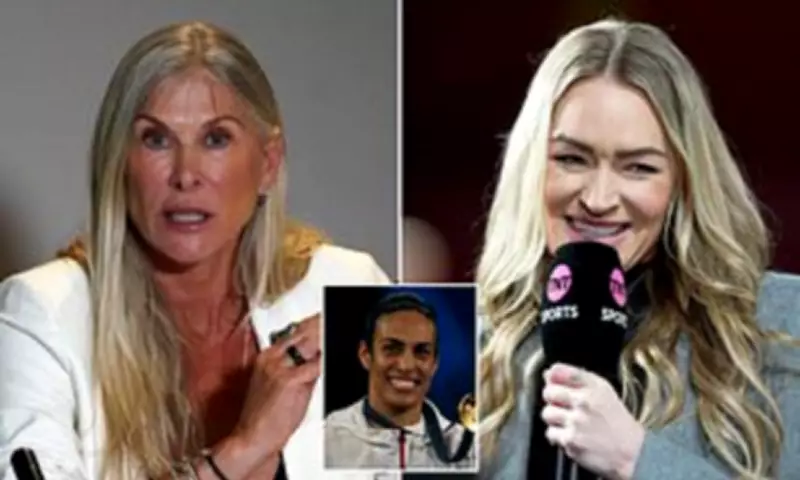
Former Olympian Sharron Davies and sports broadcaster Laura Woods have both publicly endorsed the IOC's decision, having previously advocated for increased testing and questioned Khelif's gold medal performance in Paris.
Woods, who revealed she received death threats toward her then-unborn child after speaking out against Khelif two years ago, responded to the announcement with enthusiastic approval. Davies was particularly vocal in her support, publishing multiple statements celebrating what she called a necessary step for women's sports.
"Males can no longer steal places or prizes from women in Olympic sport," Davies wrote. "Now that must apply to all women, because some women are not more worthy of fairness than others. Fairness for all female athletes, at all levels."
In another post, Davies declared: "This is the males at long last being told NO," before quoting directly from the IOC's official announcement. She expressed frustration that "we have to get excited about women's sport being for women" and criticized the previous situation where "we allowed anyone to identify into an advantage in a category they had no business being in."
Specific Cases and Broader Implementation
Davies specifically referenced Algerian boxer Imane Khelif, commenting on a photograph showing Khelif consoling Italian opponent Angela Carini. "A shameful episode in Olympic history," Davies wrote, while also mentioning the 2016 women's 800m podium that featured athletes with DSD, including Caster Semenya.
Khelif has consistently maintained she is a woman and announced in February her willingness to complete sex testing to compete at the 2028 Los Angeles Olympics. Meanwhile, Lin Yu-ting was recently cleared to compete in World Boxing events after the governing body reviewed her sex eligibility test results.
The IOC's decision follows similar moves by other sporting bodies. World Boxing confirmed in 2025 that fighters would need mandatory sex screening to participate in their events, while World Athletics made testing compulsory for female athletes in major championships and Diamond League events last year.
Official Statement and Future Implications
IOC President Kirsty Coventry emphasized the scientific basis of the new policy: "As a former athlete, I passionately believe in the rights of all Olympians to take part in fair competition. The policy that we have announced is based on science and has been led by medical experts."
"At the Olympic Games, even the smallest margins can be the difference between victory and defeat," Coventry continued. "So, it is absolutely clear that it would not be fair for biological males to compete in the female category. In addition, in some sports it would simply not be safe."
The IOC president stressed that "every athlete must be treated with dignity and respect" and noted that athletes will only need screening once in their lifetime. She promised "clear education around the process and counselling available, alongside expert medical advice" to support implementation.

This sweeping policy change represents one of the most significant developments in Olympic eligibility standards in decades, fundamentally reshaping participation criteria for female athletic competitions at the highest level of international sport.