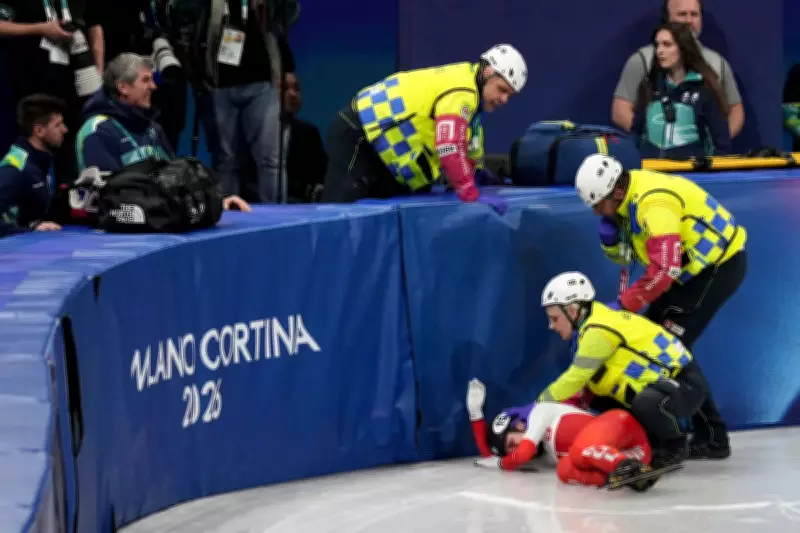
In a shocking incident at the Milan Cortina Winter Olympics, Polish speed skater Kamila Sellier was involved in a horrific crash during the women's 1,500m race, resulting in a competitor's blade slicing her face above the left eye. The accident occurred on Saturday 21 February 2026, prompting immediate medical attention and a temporary pause in the event.
Details of the Olympic Speed Skating Accident
The collision involved Sellier, 15-time Olympic medallist Ariana Fontana of Italy, and American skater Kristen Santos-Griswold. Officials later penalised Santos-Griswold for an illegal lane pass, which was identified as a contributing factor to the multi-skater pile-up. Medics rushed to the ice to tend to Sellier, who was visibly injured and bleeding profusely from the facial wound.
Medical Response and Injury Assessment
Kamila Sellier received emergency stitches at the arena to address the deep cut caused by the blade. She was then transported to a nearby hospital for further diagnostic tests to ensure no serious damage, particularly to her eye. Polish Olympic officials have since confirmed that her eye was not seriously impaired, offering some relief amid the distressing scene.

As she was stretchered off the ice, Sellier managed to give a thumbs-up gesture to the crowd, demonstrating resilience despite the painful injury. The track was left marked with a trail of blood, highlighting the severity of the accident that captivated spectators and viewers worldwide.
Race Continuation and Outcomes
Following the pause for medical attention, the race resumed with Ariana Fontana advancing to the semi-finals and eventually the finals. However, Fontana finished in fifth place, missing out on a medal in the highly competitive event. The incident underscored the inherent risks in speed skating, where high speeds and close proximity can lead to dangerous collisions.
This accident has sparked discussions about safety protocols in Olympic speed skating, with calls for stricter enforcement of lane rules to prevent similar occurrences in future competitions. The resilience shown by Sellier and the swift medical response have been praised, though the event serves as a stark reminder of the physical dangers athletes face in pursuit of Olympic glory.