Ukrainian Skeleton Star Appeals to CAS Over Olympic Disqualification
Ukrainian skeleton athlete Vladyslav Heraskevych has formally lodged an appeal with the Court of Arbitration for Sport against his disqualification from the Winter Olympics. The International Olympic Committee ruled Heraskevych out of competition before the event began, citing a violation of rules concerning statements on the field of play.
Helmet Featuring War Victims Sparks Controversy
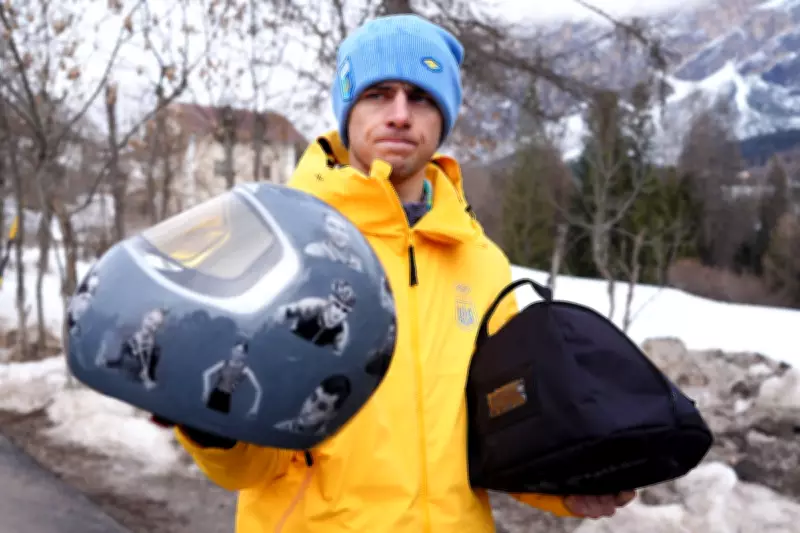
The disqualification centres on Heraskevych's helmet, which displays pictures of individuals killed during the ongoing war with Russia. IOC officials determined that the helmet contravened regulations prohibiting political or personal statements during competition. With the first two runs already completed following his exclusion and the final heats scheduled for Friday evening, Heraskevych has requested either immediate reinstatement or a supervised run to maintain his competitive status pending CAS's final decision.
A statement from CAS revealed: "Mr Heraskevych argues that the exclusion is disproportionate, unsupported by any technical or safety violation and causes irreparable sporting harm to him."

Failed Negotiations and Emotional Appeals
Heraskevych did not compete after in-person discussions with IOC president Kirsty Coventry at the Cortina Sliding Centre on Thursday morning failed to produce a resolution. Speaking after the decision was announced, the Ukrainian athlete expressed his frustration and disappointment.
"In Ukraine now, we also have a lot of tears and I don't want to downsize her feelings, but I believe that we should be controlled by the rules and I believe that we didn't violate it," Heraskevych stated. "I believe I did a great proposal for them this morning, when I proposed to allow me to use this helmet, and also to show solidarity with Ukraine, and give some generators for Ukraine."
The athlete argued that the controversy has overshadowed the competition itself, noting: "Because of this scandal, now all you are here, you're not watching the race, and I believe it's a terrible mistake made by the IOC."
IOC Defends Decision Amid Compromise Attempts
IOC spokesman Mark Adams revealed that the organisation had attempted to find a compromise, suggesting Heraskevych wear a black armband instead of the controversial helmet. "We were begging Heraskevych to reconsider his position," Adams said on Wednesday.
Heraskevych remains convinced that the rules have been misinterpreted, pointing to inconsistent application: "Especially when we had already on these Olympic Games other cases, when others in almost equal situations were treated differently and didn't face any sanctions."
The athlete expressed concern that the situation benefits Russian propaganda efforts: "I believe that this situation also plays along with Russian propaganda. I saw that this news was treated very well in Russia."
Rule 50 and Athlete Commission Guidelines
President Coventry emphasized that the IOC's decision was not politically motivated, instead citing guidelines established by the IOC Athletes' Commission. "We're not making a judgement on whether the message is political or not political, or has a statement or doesn't make a statement. It's any messaging, any form of messaging," Coventry explained.
She continued: "That's how the athletes back in 2020, 2021, came up with saying we should not allow any messaging on the field of play, on the podium and in the Olympic village. But they wanted other space – the mixed zone, talking to the press, press conferences, as soon as you come off the field of play, that's there, he can do that. It's just the field of play."
In a subsequent development, Coventry intervened to ensure Heraskevych's accreditation would not be withdrawn, allowing him to remain at the Games despite being unable to compete. This decision permits the Ukrainian athlete to maintain his presence at Olympic venues while his appeal proceeds through the CAS process.