Ukrainian Skeleton Star Banned for Memorial Tribute Vows Olympic Comeback
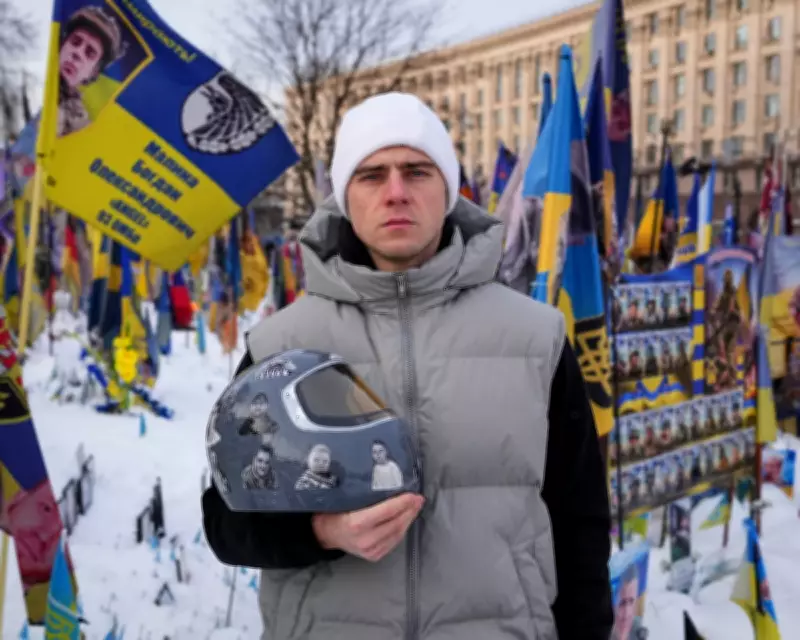
On the eve of the fourth anniversary of Russia's invasion of Ukraine, skeleton athlete Vladyslav Heraskevych stands firm in his conviction. Disqualified from the Milano Cortina Winter Olympics for wearing a helmet bearing the faces of 24 Ukrainian athletes killed in the conflict, Heraskevych has no regrets about sacrificing his Olympic dreams for a greater purpose.
Unfinished Olympic Business
In his first detailed interview since the disqualification, Heraskevych reveals his determination to return to Olympic competition. "I deeply love the sport of skeleton," he states. "And I want to come back and compete in the Olympics. First, we need to appeal in another court not under IOC control. Our goal is to win this case. Then I want to compete in Olympic competitions with the same helmet. And, of course, to win a gold medal."
The image of Heraskevych holding his "helmet of memory" before an improvised memorial to fallen soldiers became one of the defining moments of the 2026 Games. Despite comparisons to historic protests like Tommie Smith and John Carlos's 1968 civil rights demonstration, Heraskevych dismisses notions of personal heroism.

"I'm not a hero," he insists. "I don't believe I did something heroic. Of course, I'm very thankful for all the support. But I believe the people on the helmet are the heroes. There are kids there who were not able to have an adult life. But it's because of them the whole world is talking about Ukraine, not me."
Controversy and Consequences
Following his disqualification, Heraskevych received Ukraine's Order of Freedom from President Volodymyr Zelenskyy and a $200,000 donation from Shakhtar Donetsk president Rinat Akhmetov. He emphasizes that the money will go to charity and that he seeks no personal fame from the controversy.
The athlete vehemently denies rumors that his protest was orchestrated by a global PR firm. "I'm not a worldwide superstar. I'm not in a PR world," he asserts. "And when all this started, you couldn't predict that the IOC would disqualify me with no real reason from the Olympics."
Heraskevych explains that he decided to honor the fallen Ukrainians just three to four weeks before the Games, having known many personally. "It was important to bring them with me because at some point in their lives, it was their goal to be at the Olympics too," he says.
Confrontation with Olympic Authorities
The skeleton racer describes a dramatic last-minute meeting with IOC President Kirsty Coventry in Cortina, minutes before his disqualification. Coventry reportedly left the meeting in tears, while Heraskevych departed with his Olympic hopes crushed.
"We talked in a pretty respectful manner, both of us," he recalls. "But when we prepared for my court case at the Court of Arbitration for Sport, we found out the decision about my disqualification was made the night before."
Heraskevych expressed frustration at what he perceived as inconsistent enforcement of rules, noting that another athlete competed wearing multiple Russian flags while Russian fans displayed flags without confiscation. "It seems like the IOC plays alongside with Russia," he told Coventry. "They have actions with no consequences. So why do you have special treatment for me?"
The Ukrainian athlete had asked permission to use his memorial helmet during competition, suggesting the IOC could change rules afterward if necessary. He also proposed the IOC provide electric generators to Ukraine as a gesture of solidarity. "It plays alongside with Olympic values because it's about peace and friendship," he argued. "It would provide support in a tough situation. And you will have a better image as an organization. But then I was disqualified."

War Memories and Future Determination
Speaking on the anniversary of Russia's invasion, Heraskevych vividly recalls being awakened by explosions at 5 a.m. four years earlier. "The first days were so scary," he remembers. "We didn't have a stable source of news. It was just chaotic. You're sitting there and you don't understand what's going on. When you hear explosions and see rocket attacks, it was a really terrible feeling. You realize that your life and everything you have achieved means nothing."
Days before the 2022 invasion, Heraskevych had displayed a "No war in Ukraine" sign at the Beijing Games. He continues to advocate for banning Russian athletes from international competition, particularly expressing horror at Russian Paralympians competing under their own flag in the upcoming Winter Paralympics.
"It's a big mistake," he declares. "We may have a situation where former soldiers are competing in Italy under their own flag. Basically, they were killing Ukrainians on the frontlines and now they will kill them as a propaganda instrument."
Despite his disqualification, Heraskevych maintains he made the right choice. "Of course, I'm sad that I couldn't compete. I was in the best shape of my life. But I couldn't betray these athletes. If I did, I would regret it for my whole life. I believe the whole world understands that it was an unfair disqualification. I think I did the right thing. I don't have any regrets."
He concludes with a reflection on what truly matters: "War is a great reminder about what really matters. Sometimes in the modern world of social media, people chase the wrong things. Expensive cars. A fancy life. The things that really don't matter. After the war started, the happiest thing was just to see your friends in good health, to hug each other, and to know your family members were OK. This is what is really important, not material things."