Bill Murray's Irish Golf Jaunt Overshadowed by Scotland's Rugby Agony
A few months ago, the iconic Hollywood actor Bill Murray visited Dublin to promote a golf documentary series he is creating for the BBC. The project follows Murray and his companions on a road trip across Ireland, playing some of the nation's premier golf courses. The legendary star, known for his wicked humour and self-deprecating style, shared his deep connection to the sport.
"I started out caddying, and golf was the best education I ever received. Ireland feels like the right place to put all that to work," Murray remarked during his promotional tour. While golf remains his primary passion, Murray has also occasionally engaged with rugby during his Irish visits.
Scotland's Recurring Nightmare at the Aviva Stadium
However, when reflecting on Murray's extensive filmography last Saturday, it wasn't his classic golf comedy Caddyshack that came to mind for Scottish rugby fans. Instead, the repetitive torment of Groundhog Day felt painfully appropriate. As masses of Scotland supporters departed Dublin's Aviva Stadium and returned to the city centre, they couldn't escape the sensation of witnessing the same disappointing script for what felt like the hundredth time.

Scotland suffered a comprehensive 43-21 defeat to an Irish team that secured the Triple Crown, though they were ultimately denied the Six Nations championship due to dramatic late events in Paris. By evening's end, Scotland found themselves excluded from the celebrations as Dublin prepared for monumental festivities.
The surreal nature of the situation was perfectly captured when former Sinn Féin leader Gerry Adams posted on social media: "Come on England!" Ireland found themselves in the bizarre position of desperately hoping for an English victory, and they nearly received it.
The Championship's Thrilling Climax and Scottish Regret
England would almost certainly have delivered that result if not for a critical error by Henry Pollock in the final minute against France. Pollock lost possession attempting an improbable offload, allowing Thomas Ramos to kick a penalty that secured a 48-66 victory for France. This provided a fittingly thrilling conclusion to what many consider the greatest Six Nations championship of the modern era.
Watching these events unfold from their hotel, the Scottish players undoubtedly experienced profound regret. The day transformed into one of deflation and anti-climax, another instance of serving as Ireland's punchbag. The final standings will show Scotland finishing third with three victories, representing significant improvement from their post-Rome despair.
Their campaign included thrilling highs against France, reasserted dominance over England, and a gutsy comeback win in Cardiff. While this indicates progress, that progress carries a major asterisk: Scotland remain no closer to defeating Ireland.
Townsend's Unbreakable Irish Hex
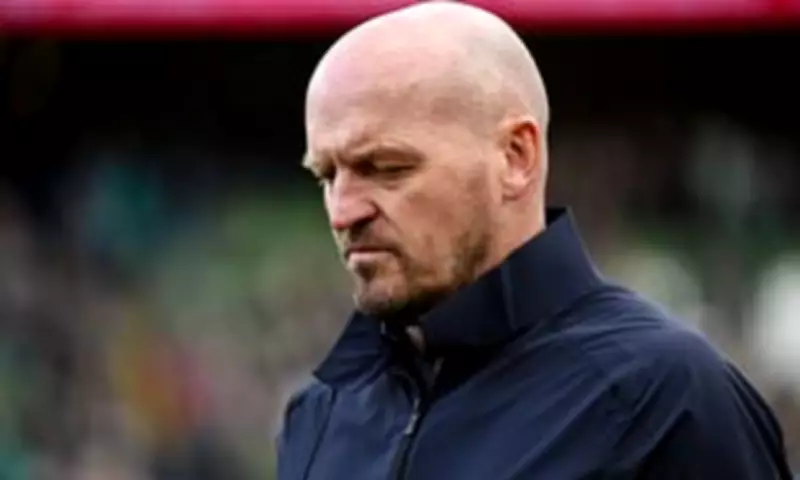
Head coach Gregor Townsend's winless streak against Ireland now extends to twelve matches. Scotland's inability to overcome their Irish rivals will define his tenure as much as their Calcutta Cup success against England. Townsend described Saturday's defeat as a "lesson" for his players, prompting the question: how many more lessons against Ireland do they require?
This was not a day for learning experiences but for claiming major silverware, and Scotland fell considerably short. Most of their key players—including Finn Russell, Sione Tuipulotu, Huw Jones, and Zander Fagerson—failed to deliver, particularly during a first half where they appeared completely off the pace.
This likely represented Russell's poorest performance of the championship, arriving precisely when Scotland needed him at his brilliant best. Although Scotland briefly threatened a comeback in the second half, twice reducing the deficit to five points, they never genuinely seemed in contention.
Statistical Failures and Psychological Barriers
Scotland's error count soared alarmingly high. They wasted promising field positions repeatedly and failed to apply meaningful scoreboard pressure. The game essentially passed them by, followed by the customary platitudes about long-term growth from such experiences.

These sentiments felt somewhat like a cop-out. Scotland had a genuine trophy opportunity on Saturday but never convinced observers they might actually seize it. The perpetual promise of future success remains strong with Townsend's squad, though the head coach's position appears secure until the 2027 World Cup.
Nevertheless, a troubling reality persists: under Townsend's leadership, Scotland seem incapable of beating Ireland. A profound mental block has developed, compounded by excessive scar tissue, psychological damage, and repeated failures that make believing in a breakthrough increasingly difficult.
Irish Dominance and Championship Excellence
Ireland thoroughly deserved their victory, with Tadhg Beirne emerging as the outstanding player on the pitch, closely followed by Stu McCloskey. It was McCloskey who delivered a massive hit on Russell during the first half, dislodging the ball and thwarting a promising Scottish attack.
Beirne has assumed Peter O'Mahony's mantle as the relentless forward who establishes Ireland's physical dominance against Scotland. What surprised many was the pace and precision of Ireland's attacking play, carving open the Scottish defence with excellent execution.
This performance was particularly impressive considering Ireland were supposedly in transition with fly-half concerns. Earlier in the week, Scotland winger Darcy Graham claimed Ireland "were there for the taking." He proved profoundly mistaken.
Ireland remain distinctly superior to Scotland, boasting greater power, class, and experience in crucial matches. Alongside France, they will continue as the teams to beat next season. Whatever the 2027 Six Nations produces, matching this championship's drama will prove challenging.
The 2026 tournament set a new record with 111 tries scored, surpassing last year's 108. Super Saturday alone witnessed 29 tries, the most ever in a single day. By numerous measures, this has been a spectacular championship.
For Scotland, however, it concluded with another gut-wrenching disappointment in Dublin. With Townsend at the helm, winning a championship appears increasingly improbable because Ireland will inevitably obstruct their path. As the familiar scent of regret permeated Dublin's air, the prospect of Scotland finally deciphering the green code seemed more distant than ever.