Djokovic Provides Medical Evidence to Counter McEnroe's Conspiracy Claims
Novak Djokovic has delivered a firm rebuttal to tennis legend John McEnroe after the American commentator publicly questioned the legitimacy of the Serbian star's injury during the 2025 Australian Open. The dispute centres on Djokovic's withdrawal from his semi-final match against Alexander Zverev, which followed a muscle injury sustained in his quarter-final victory over Carlos Alcaraz.
McEnroe's Controversial Commentary Sparks Backlash
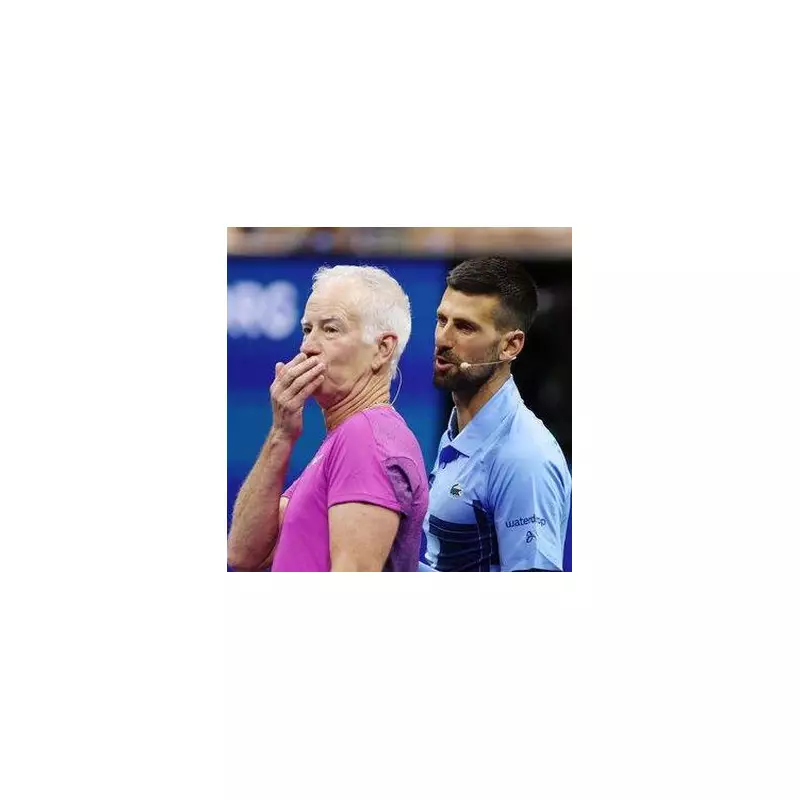
During live broadcast commentary, McEnroe cast doubt on the authenticity of Djokovic's condition, suggesting a pattern of behaviour. "This isn't the first time we've seen this routine. Don't be fooled," McEnroe stated, igniting widespread discussion across the tennis community. His remarks implied that Djokovic's retirement might not be entirely genuine, placing the 24-time Grand Slam champion at the centre of an unwelcome conspiracy theory.
Djokovic's Swift and Substantive Response
Djokovic responded decisively by uploading a photograph of an MRI scan to his social media accounts, which clearly confirmed a torn leg muscle. Accompanying the image was a pointed caption: "Thought I'd leave this here for all the sports injury 'experts' out there." When later pressed about McEnroe's comments in a media interview, Djokovic offered a measured but unmistakably critical reply.

"To be honest, I haven't seen these comments so I can't say more," Djokovic remarked. "What I can say is that it's always easier to judge and criticise than to understand. It's a lesson I've learned in life." This subtle retort highlighted the personal nature of the criticism while underscoring the challenges athletes face when their physical conditions are publicly scrutinised.
Recovery and Return Following the Injury
The injury was thoroughly genuine, requiring three weeks of dedicated treatment before Djokovic could return to competition at the Qatar Open in February. His comeback trail proved challenging; he did not secure a tournament victory until the Miami Open in late March. This period contributed to a notable twelve-month drought without a Grand Slam title, only the second such gap since 2010.
A combination of fluctuating form and recurring physical issues subsequently fuelled speculation about a potential retirement, particularly after Djokovic's Melbourne exit at age 37. When questioned about his future at the Australian Open, he remained contemplative. "I don't know [if that was my final match at the Australian Open]. There is a chance. Who knows? I'll just have to see how the season goes," Djokovic explained. "I want to keep going, but whether I'm going to have a revised schedule or not for the next year, I'm not sure."
Looking Ahead to the 2026 Australian Open Campaign
The 2025 season concluded without a major breakthrough for Djokovic, as he reached the semi-finals in all four Grand Slams but failed to clinch a title. Attention now shifts to the 2026 Australian Open, where a single Grand Slam victory would see him surpass every other player in tennis history with an unprecedented 25th major title.
His campaign in Melbourne has begun strongly, with Djokovic advancing to the fourth round without dropping a set. He is scheduled to face Jakub Mensik next, and Melbourne Park—where he has already secured ten titles—represents perhaps his most favourable opportunity to achieve this historic milestone.
Challenging Path to the Championship
Nevertheless, the route to the trophy remains formidable. The tournament draw indicates that Djokovic may need to overcome both Jannik Sinner and Carlos Alcaraz to claim the championship. He has lost his last five meetings with Sinner, including their Australian Open encounter in 2024, while Alcaraz emerged victorious in their most recent match at the US Open last September.
As the competition progresses, the tennis world watches keenly to see whether Djokovic can summon another legendary performance in Melbourne or if the sport's emerging elite have permanently overtaken him. This ongoing narrative intertwines personal legacy, physical resilience, and the intense scrutiny that accompanies life at the pinnacle of professional sport.