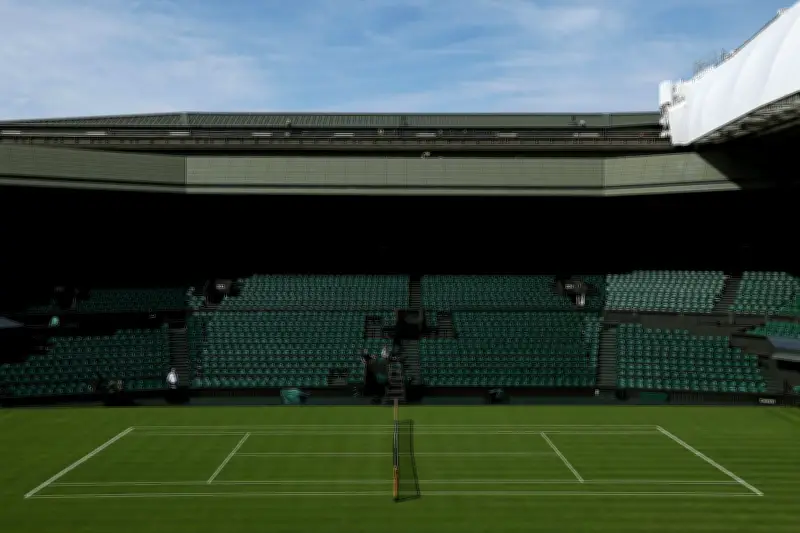
Wimbledon has announced a series of significant rule changes set to take effect from the 2026 tournament, including the introduction of a video review system and a stricter serve clock. The All England Lawn Tennis Club (AELTC) confirmed the changes on Tuesday, which are designed to modernize the championships and align with evolving standards in professional tennis.
Video Review System to Be Introduced
The most notable change is the implementation of a video review system, allowing players to challenge certain calls by the umpire. This system, already used at other Grand Slams, will enable players to request a review of line calls, foot faults, and other decisions. According to the AELTC, the system will use Hawk-Eye technology and be available for a limited number of challenges per set, similar to the system used at the US Open.
“We are committed to ensuring fair play and accuracy in officiating,” said Sally Bolton, chief executive of the AELTC. “The video review system will provide players with the opportunity to contest decisions, reducing the potential for errors that could affect match outcomes.”

Serve Clock Reduced to 15 Seconds
Another key change is the reduction of the serve clock from 25 seconds to 15 seconds between points. This rule aims to speed up the pace of play and reduce the time taken by players between serves. The change will apply to all matches at Wimbledon, with exceptions only for medical timeouts or other interruptions deemed necessary by the umpire.
The new serve clock is part of a broader effort by tennis authorities to address concerns over slow play. The AELTC noted that the average time between points at Wimbledon has increased over the past decade, and the 15-second rule is expected to tighten match durations.
Limits on Bathroom Breaks and Medical Timeouts
Wimbledon will also impose stricter limits on bathroom breaks and medical timeouts. Players will be allowed only one bathroom break per match, and it must be taken at a set break. Medical timeouts will be limited to one per player per match, with a maximum duration of three minutes. These changes are intended to minimize disruptions and prevent players from using breaks to break an opponent’s momentum.
“We want to ensure that the focus remains on the tennis,” Bolton added. “By limiting breaks, we are creating a more consistent and fair environment for all competitors.”
Impact on Players and Spectators
The rule changes have drawn mixed reactions from players. Some have welcomed the video review system as a step forward for fairness, while others have expressed concerns about the reduced serve clock. “It’s going to be tough to adjust to 15 seconds,” said a top-10 player who spoke on condition of anonymity. “But if it makes the game faster, maybe it’s for the best.”
Spectators can expect shorter matches and fewer delays, which may enhance the viewing experience. The AELTC also plans to display the serve clock on screens around the court, adding transparency for fans.
Implementation Timeline
The new rules will be implemented from the 2026 Wimbledon Championships, which are scheduled to take place from June 29 to July 12. The AELTC will work with the International Tennis Federation (ITF) and the ATP and WTA tours to ensure a smooth transition. Training for umpires and line judges on the video review system will begin later this year.
Wimbledon joins the Australian Open, French Open, and US Open in adopting a video review system, marking a significant shift for the oldest Grand Slam tournament. The serve clock change aligns Wimbledon with the ATP Tour, which introduced a 15-second serve clock in 2022.