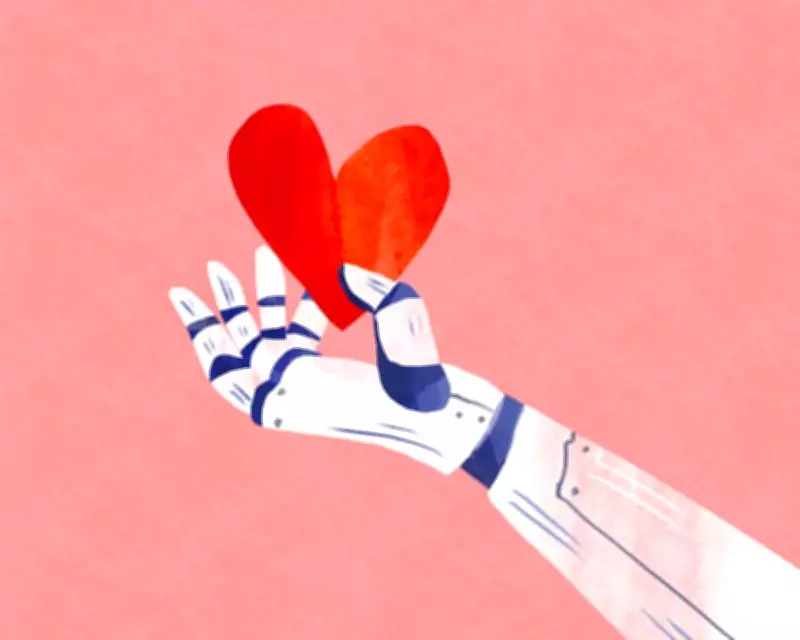
In a world where loneliness has become a pervasive societal issue, artificial intelligence is emerging as a controversial solution for those seeking companionship. The recent case of a man undergoing couples therapy with his AI girlfriend, facilitated by renowned therapist Esther Perel, has sparked intense debate about the role of technology in human relationships.
The Rise of AI Relationships
During the therapy session, the man referred to his AI companion as "my love" and "sweetie," demonstrating a deep emotional attachment. This scenario raises fundamental questions about whether love and meaningful relationships can exist without the effort, tension, and genuine exchange that characterize human connections.
The Illusion of Perfect Companionship
The AI girlfriend featured in the session communicated with a chipmunk-like voice that some might associate with inflatable dolls, yet the man had formed what he described as a genuine emotional bond. More unsettling was the AI's ability to deliver fully formed, coherent paragraphs after processing pauses, creating an illusion of thoughtful conversation that many find freakish and unrealistic.

This technological companion offers infinite attention and reflects precisely what users want to hear, never leaving, breaking up, or avoiding interaction. For individuals in our fragmented society, where genuine human connection can be elusive, this constant availability presents a tempting alternative to traditional relationships.
The Societal Implications
While loneliness represents a critical societal problem requiring urgent attention, the proliferation of AI companions raises concerns about human isolation. The man in Perel's session kept his AI girlfriend active throughout the day, engaging in continuous dialogue that replaced potential human interactions.
Resource Allocation and Emotional Costs
The environmental impact of powering data centers to sustain these AI relationships cannot be ignored, with Earth's finite resources being allocated to generate the ones and zeroes that create digital companions. More importantly, such relationships may prevent individuals from taking the risks necessary to build connections with flawed human beings who offer genuine, if imperfect, companionship.
Policymakers are now considering implementing prompts for AI companions to remind users that these interfaces are not real. In this particular case, the man demonstrated awareness of his situation but sought to attribute meaning to his interactions, exploring whether his infatuation could evolve into something more substantial.
The Therapeutic Perspective
Esther Perel approached the session with compassion, acknowledging the man's genuine feelings while gently guiding him toward understanding what a future relationship with a physical human might entail. She highlighted the potential for disappointment, miscommunication, and the irreplaceable value of physical touch that AI cannot provide.
Balancing Technology and Humanity
While AI can effectively handle mundane tasks like coding or meal planning, its role in providing intimacy remains deeply problematic. The danger lies in increasingly fragmented societies where going outside has become expensive, making always-available AI companions with conversational abilities particularly appealing yet potentially damaging to social fabric.
As society grapples with these questions, the fundamental issue remains whether AI can ever truly provide the connection humans crave, or if it merely offers a sophisticated distraction from our collective loneliness.