AI Music Startups Suno and Udio Navigate Industry Backlash and Legal Challenges
AI song generator startups Suno and Udio have sparked significant controversy within the music industry, leading to lawsuits from major record labels. Now, these companies are actively seeking to establish partnerships and integrate their technologies into the traditional music landscape.
The Rise of AI-Generated Music and Industry Pushback
In 2024, Sony Music, Universal Music, and Warner Records filed copyright infringement lawsuits against Suno and Udio, alleging that these platforms exploited the recorded works of professional musicians without proper authorization. The lawsuits claimed that the AI companies trained their systems on copyrighted material, creating synthetic approximations of artists' work.
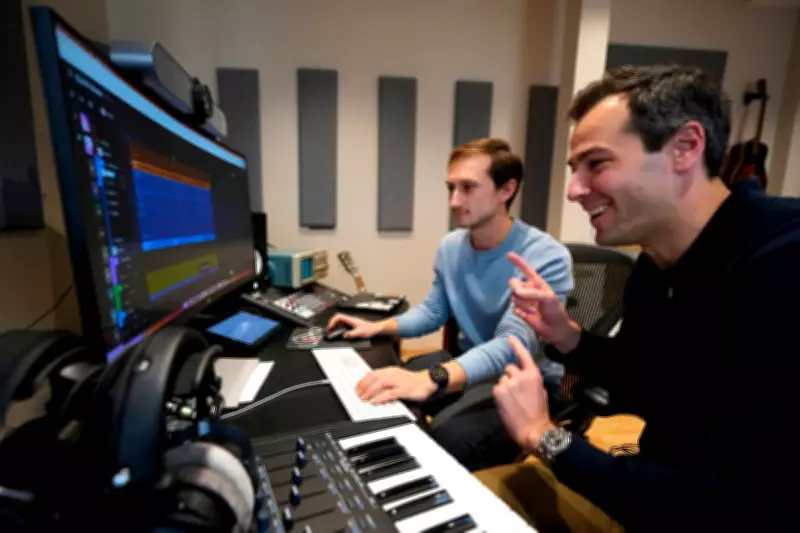
Despite this legal pressure, both startups have continued to develop their platforms, which allow users to generate complete songs by simply typing descriptive words like "Afrobeat, flute, drums, 90 beats per minute." The process requires no musical skills or traditional instrumentation, making music creation accessible to a broader audience.

Efforts to Bridge the Divide with Record Labels
Following the lawsuits, Suno and Udio have shifted their approach from confrontation to collaboration. Suno, now valued at $2.45 billion, reached a settlement with Warner Records last year. Similarly, Udio has secured licensing agreements with Warner, Universal, and independent label Merlin. However, Sony Music remains the only major label that has not settled with either startup as legal proceedings continue in federal courts in Boston and New York.
Suno CEO Mikey Shulman emphasized the importance of working with the music industry rather than against it. "We have always thought that working together with the music industry instead of against the music industry is the only way that this works," Shulman stated. "Music is so culturally important that it doesn't make sense to have an AI world and a non-AI world of music."
Artist Concerns and Industry Skepticism
Many professional musicians remain skeptical of AI music platforms. Singer-songwriter Tift Merritt, co-chair of the Artists Rights Alliance, helped organize the "Stealing Isn't Innovation" campaign, which included artists like Cyndi Lauper and Bonnie Raitt. The campaign urges AI companies to pursue proper licensing deals and partnerships rather than building platforms without regard for copyright law.
"The economy of AI music is built totally on the intellectual property, globally, of musicians everywhere without transparency, consent, or payment," Merritt explained. "So, I know they value their intellectual property, but ours has been consumed in order to replace us."
Company Leadership and Public Perception
Both Suno and Udio have faced criticism for their public statements about music creation. Shulman previously remarked that "the majority of people don't enjoy the majority of the time they spend making music," a comment he later clarified, stating he wished he had "said different words." He emphasized that music creation involves repetitive practice that isn't always enjoyable, but overall, music remains an amazing pursuit.
Udio CEO Andrew Sanchez, an opera-loving tenor, positions his company as a more artist-friendly alternative. "So many tech companies actively cultivate this I-am-a-tech-company-crusader and that's part of their identity," Sanchez noted. "That alienates people who are creative and I am uniformly opposed to that."
Practical Applications and User Experiences
Despite industry resistance, some users have embraced AI music tools. Christopher "Topher" Townsend, a gospel music creator from Philadelphia, Mississippi, uses Suno to generate songs under the fictional artist name Solomon Ray. He combines ChatGPT for lyrics, Suno for music generation, and other AI tools for cover art and promotional videos.
"I can see why artists would be afraid," Townsend admitted. "(Solomon Ray) has an immaculate voice. He doesn't get sick. You know, he doesn't have to take leave, he doesn't get injured and he can work faster than I can work."

Educational Perspectives and Future Outlook
Jonathan Wyner, a professor of music production and engineering at Berklee College of Music, views generative AI as another tool for musicians. "To the creative musician, AI represents both enormous potential benefits in terms of streamlining things and frankly making kinds of music-making possible that weren't possible before, and making it more accessible to people who want to make music," he explained.
As the legal battles continue and negotiations with record labels progress, both Suno and Udio are working to secure their place in the music industry. Neither company received invitations to the recent Grammy Awards, but their leaders engaged in discussions on the sidelines of the event, hoping for future recognition and integration.