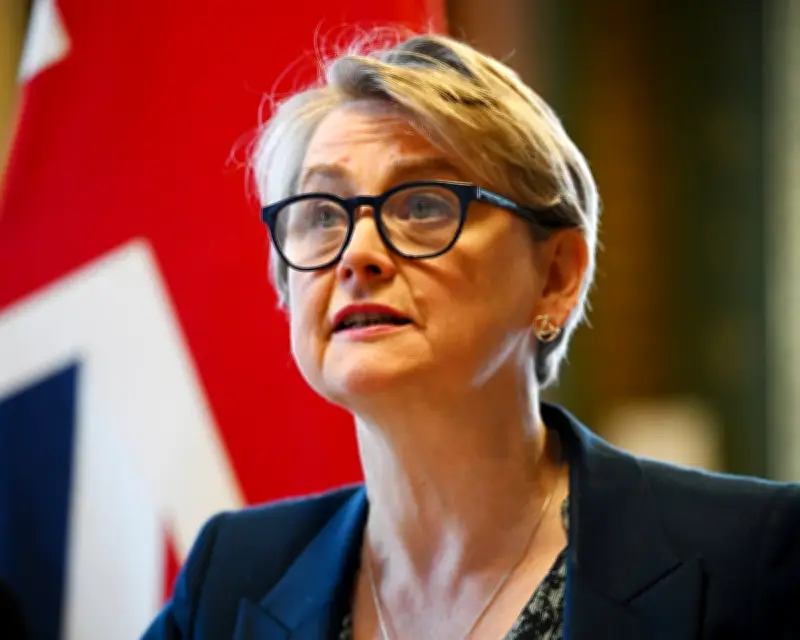
Foreign Secretary Yvette Cooper has warned that artificial intelligence poses a 'Hiroshima'-style threat to humanity if governments fail to agree on international rules for its development. In an exclusive interview with the Guardian, Cooper urged countries, including the US and China, to establish global regulations, stating that AI will dominate foreign policy over the next two years.
Cooper's Essay Outlines Global Security Threats
In an essay published Monday by the Chatham House thinktank, Cooper identified AI as one of several threats to global security, alongside the climate crisis, irregular migration, and foreign interference. She argued that the world is at a dangerous moment, particularly due to the permanent withdrawal of the US from its role as a global arbiter.
Cooper wrote: 'On nuclear, international agreement came only after the world saw the terrifying power of the new technology at Hiroshima – and asked what would happen if it fell into the wrong hands. We cannot afford to wait for an AI equivalent of Hiroshima before we act.'

AI as a Dominant Foreign Policy Issue
Cooper told the Guardian: 'Across the world, people are feeling the same thing – there is amazing potential here, but there is also huge risk. We are already in a world where we have malign actors who will use technology against us – whether that be hybrid threats, state-backed criminal groups, or extremists and terror groups.' She added: 'I think AI is going to end up being the dominant foreign policy issue that we deal with over the next two years.'
US Role and UK-EU Relations
Cooper wrote that European powers must adjust to the idea that the US will no longer guarantee international peace and democracy, even after Donald Trump's presidency. 'We should no longer expect the US to play the role it once did,' she said. 'There will continue to be issues where we disagree. But reduced dependence on any single ally will make us stronger.'
She proposed that the UK and EU negotiate a more permanent settlement instead of constantly renegotiating individual trade elements. The government is finalizing the latest round of EU renegotiation, including deals on agriculture, electricity trading, and youth visas, though a summit has been postponed as EU officials seek to engage with the incoming Burnham government.
Cooper argued: 'We need to develop a new, structured relationship with Europe, leading the development of its new security architecture, with a more European Nato at its core. And we must settle our relationship with the EU as a closer but stable partnership, rather than one based on endless incremental bargaining.' She did not specify the shape of this partnership, while Burnham has previously expressed support for rejoining the EU but recently stated he would not pursue that as prime minister.
Palestine Peace Process
Cooper also warned that with Trump preoccupied with the war in Iran and global attention shifting elsewhere, countries risk forgetting about delivering peace in Palestine. She told the Guardian: 'You have the 20-point plan … [but] my big worry is that it is running into the ground.'