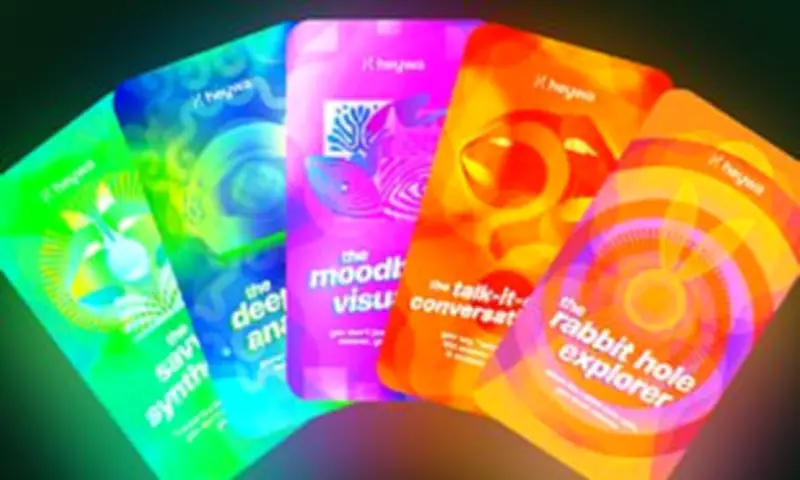
It's an activity that billions engage in daily, yet new research suggests we might all be navigating the digital world in fundamentally different ways. According to experts from the behavioural insights platform Heywa, there are five distinct 'Online Languages' that categorise how individuals interact with the internet.
The Framework of Digital Communication
Drawing a parallel to the famous 'Five Love Languages' concept developed by Gary Chapman in 1992, this new framework aims to decode our digital behaviours. Just as love languages describe preferred methods of giving and receiving affection, Online Languages reveal how we think, learn, and form connections in the virtual realm.
'The way you search online reflects your real-world personality – how you solve problems, process information and socialise,' explained psychologist Kate Nightingale, who collaborated with Heywa on this research. 'Just as love languages helped us understand relationships, our Online Languages provide insight into our cognitive and social patterns.'

The Five Digital Dialects
Heywa's analysis identifies five primary Online Languages:
- The Rabbit Hole Explorer: Characterised by curiosity and spontaneity, these users follow fascinating tangents wherever they lead, valuing discovery over direction.
- The Deep Dive Analyser: Methodical and evidence-driven individuals who rigorously research and verify information until confident they've found the correct answer.
- The Moodboard Visualist: Visually oriented and design-led users who understand and trust information best when they can see it mapped out graphically.
- The Talk-It-Out Conversationalist: Dialogue-driven personalities who refine ideas through back-and-forth discussion rather than solitary searching.
- The Savvy Synthesiser: Adaptive individuals who blend multiple styles and sources seamlessly, connecting insight, intuition, and creativity into clear outcomes.
Discovering Your Digital Identity
To help individuals identify their Online Language, Heywa has developed a concise two-minute quiz featuring seven multiple-choice questions. The assessment probes various digital behaviours, including how users approach planning trips, their typical number of open browser tabs, and their preferred methods for searching information online.
Sample questions include: 'It's Friday night. You're looking for a cocktail bar. What's your move?' and 'When you're planning a trip, what's your vibe?' The quiz also examines search history patterns and online research preferences to provide accurate categorisation.
Broader Context in Digital Psychology
This research emerges alongside other recent studies examining digital personality types. Experts from the University of Oxford and the Berlin University Alliance recently identified four new personality categories that ChatGPT users typically fall into, ranging from 'AI enthusiasts' to 'reserved explorers.'
Dr. Christoph Gerling of the Humboldt Institute for Internet and Society noted: 'Using AI feels intuitive, but mastering it requires exploration, prompting skills and learning through experimentation. This makes the task-technology fit more dependent on the individual than ever before.'
These parallel research efforts highlight the growing recognition that our digital interactions are not uniform but reflect deeper psychological patterns and preferences.
The Online Languages framework provides a valuable tool for understanding these differences, offering insights that could enhance digital literacy, improve online communication, and help individuals leverage their natural tendencies for more effective internet use.