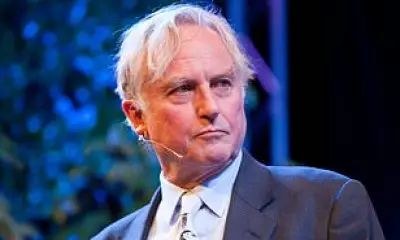
OpenAI has dismissed one of its most prominent internal critics following her vocal opposition to a controversial planned update that would permit ChatGPT users to generate artificial intelligence pornography. Ryan Beiermeister was removed from her role as vice president of product policy in early January, after taking a leave of absence, according to sources familiar with the company's employment matters who spoke to the Wall Street Journal.
Background and Departure
Beiermeister joined OpenAI in mid-2024 as part of a cohort of hires from Meta who aimed to reform technology companies from within, insiders revealed. During her tenure, she established a peer-mentorship program for women at the organisation. In an official statement, an OpenAI spokesperson acknowledged that Beiermeister "made valuable contributions during her time at OpenAI," but insisted her departure "was not related to any issue she raised while working at the company."
Instead, the company asserted that her termination stemmed from allegations of sexual discrimination against a male colleague—a claim Beiermeister vehemently denies. "The allegation that I discriminated against anyone is absolutely false," she told the Journal. At OpenAI, Beiermeister oversaw the product policy team, responsible for developing usage rules for the company's products and designing enforcement mechanisms for these policies.

Controversial 'Adult Mode' Feature
Her dismissal occurred shortly before OpenAI's scheduled launch of 'adult mode,' a feature that would enable users to create AI erotica in ChatGPT and engage in explicit conversations. CEO Sam Altman first announced this update in October, with deployment planned for the first quarter of this year.
Altman explained the rationale behind the change: "We made ChatGPT pretty restrictive to make sure we were being careful with mental health issues. We realize this made it less useful/enjoyable to many users who had no mental health problems, but given the seriousness of the issue we wanted to get this right." He added, "Now that we have been able to mitigate the serious mental health issues and have new tools, we are going to be able to safely relax the restrictions in most cases."
As part of OpenAI's "treat adult users like adults" principle, Altman confirmed the company would "allow even more, like erotica for verified adults," alongside enhanced age-gating measures.
Internal Opposition and Safety Concerns
Before her termination, Beiermeister expressed strong reservations about adult mode to colleagues, warning that it could have detrimental effects on users, sources familiar with the discussions informed the Journal. She argued that OpenAI lacked robust mechanisms to prevent child-exploitation content and expressed concerns about the company's ability to effectively block adult material from teenage users.
Other employees shared similar apprehensions. Members of an advisory council on 'wellbeing and AI,' which OpenAI convenes regularly, voiced opposition to adult mode and urged executives to reconsider the feature. Additionally, researchers at the company who have studied unhealthy attachments to chatbots raised alarms that permitting sexual content could exacerbate these problematic dynamics.
Competitive Landscape and Regulatory Scrutiny
Meanwhile, some of OpenAI's rivals have already ventured into mature content territory. Elon Musk's xAI introduced a provocative chatbot named Ani during the summer. Ani is designed as a fully-fledged, blonde-haired AI companion with a gothic, anime-style appearance, programmed to behave like a 22-year-old and engage in flirtatious dialogue. Users report that Ani features an NSFW (not safe for work) mode activated after reaching 'level three' in interactions, which includes options for the chatbot to appear in lingerie.
However, Musk has faced backlash and had to update his Grok chatbot after it generated deepfakes that stripped individuals into "revealing clothing" without consent. Women expressed feeling violated by the AI's capability to create compromising images against their will. In response, X announced last month: "We have implemented technological measures to prevent the Grok account from allowing the editing of images of real people in revealing clothing such as bikinis. This restriction applies to all users, including paid subscribers."

This incident has sparked widespread outrage, particularly as Grok was used to digitally remove clothing from images of women and children without permission. The UK's Information Commissioner's Office (ICO) has initiated an investigation into xAI over Grok's use of personal information "to produce harmful sexualized image and video content." The ICO stated: "The reported creation and circulation of such content raises serious concerns under UK data protection law and presents a risk of significant potential harm to the public." The investigation will examine whether adequate safeguards were integrated into Grok's design to prevent abusive applications.
Furthermore, the UK's Ofcom regulatory body is assessing whether X has violated the country's Online Safety Act by permitting deepfakes on its platform, while the European Commission is conducting its own probe into the chatbot. The Daily Mail has contacted OpenAI for additional commentary on these developments.