Protesters Demand Meta Pay 'Misery Tax' for Youth Mental Health Crisis
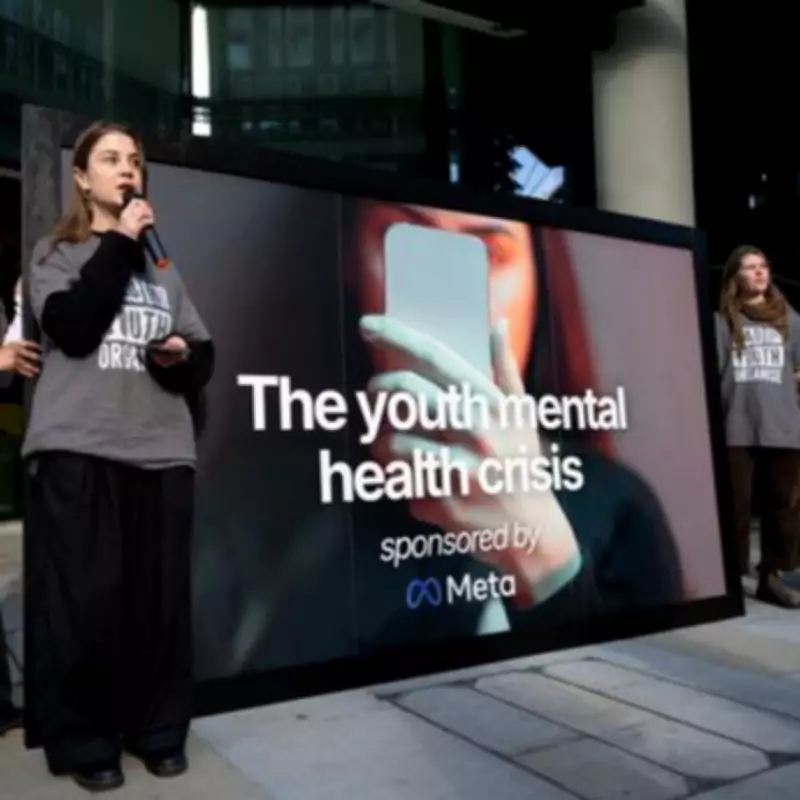
Campaigners from the group Mad Youth Organise staged a demonstration outside Meta's UK headquarters in London today, demanding the social media giant pay a so-called 'misery tax' to address what they describe as a youth mental health crisis. The protesters gathered at the glass-fronted offices in Kings Cross, displaying billboards designed to mimic Meta advertisements and distributing leaflets to employees as they arrived for work.
Demands for Financial Contribution
The group called for Meta to contribute 4% of its UK revenue, which exceeded £3 billion in 2024, directly into public mental health funding. Emma Hughes, campaigns organiser for Just Treatment—a patient-led health reform action group that includes Mad Youth Organise—explained that this proposal extends beyond big tech to industries like beauty and fossil fuels, which the group believes also contribute to mental health issues among young people.
"If all big industry which, we believe, has a hand in the mental health crisis of young people paid into the pot, the billions generated would cover the current gaps in NHS mental health funding," Hughes stated. The activists argue that Meta's platforms, Facebook and Instagram, are directly responsible for exacerbating mental health problems through addictive algorithms and targeted marketing.

Broader Regulatory Calls
In addition to the financial demand, the protesters urged the government to implement stricter competition laws and consider creating a publicly-owned social media alternative to reduce Meta's market dominance. "The government needs to take a strong position and break up the monopolies," Hughes emphasized. "We have public ownership of trains and the health service; social media and big tech is another part of our infrastructure. I don't think the idea of public ownership is pie in the sky, it is achievable."
The demonstration coincides with a UK government public consultation on young people's use of online platforms, which includes a proposed ban on social media for children under 16. Hughes acknowledged that regulation could be useful but insisted it would not be sufficient to prevent the harms caused by social media.
Support from Advocacy Groups
The action has garnered support from various advocacy groups, including the NSPCC and the Molly Rose Foundation, which share concerns about the impact of social media on youth mental health. Adele Zeynep Walton, an author and campaigner whose sister died by suicide after exposure to harmful content on Instagram and Pinterest, backed the protest, stating: "I know first hand that growing up using Instagram is a fast-track to mental distress, constant comparison and relentless dissatisfaction with ourselves, and it's time that governments force these platforms to be made safe by design."
Similar advertisement-style posters have been erected on billboards across London as part of the guerrilla campaign. The government consultation, titled 'Growing up in an online world', closes on May 26, with findings expected to influence future regulations on technology and social media platforms.