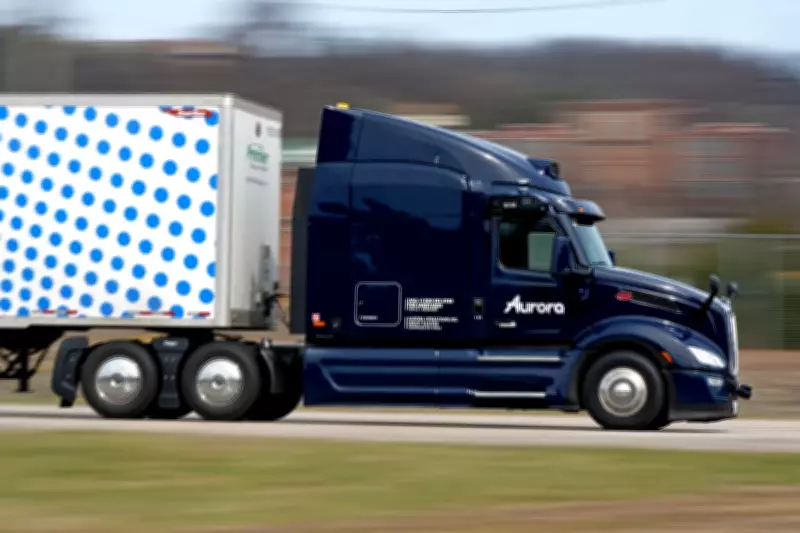
Driverless Semis Hit Texas Roads, Industry Predicts 2027 Rollout
Autonomous semis are already navigating highways in Texas, with industry experts forecasting that driverless trucks could become a common sight on roads across the United States by 2027. According to a recent report, these vehicles are currently being tested in Texas and parts of the south central and southwestern U.S. to assess their long-term viability for cargo transport.
Testing and Expansion in Texas
Aurora Innovation, a key player in the autonomous trucking sector, has conducted unassisted runs between Dallas and Houston using its artificial intelligence driving systems. These tests have collectively covered over 1,200 miles, as reported by the New York Times. The company's trucks have been hauling goods such as berries for Discroll and mining-related freight for Detmar Logistics.
Chris Urmson, Aurora's CEO, stated to the Times, "By the end of this year, we will grow from a handful of autonomous trucks on the road to more than 200. And by the end of 2027, it will be thousands." Despite a recent request from Paccar, the manufacturer of some test trucks, to reintroduce safety drivers, Aurora aims to return to fully autonomous operations this year.

Industry Consensus and Economic Impact
The trucking industry is reportedly forming a consensus that fully-autonomous Class 8 trucks, commonly known as semis, will be ready for widespread use by 2027. Several companies, many based in Texas, are preparing to deploy their autonomous systems. Kodiak AI, another major competitor, currently powers 10 trucks owned by Atlas Energy Solutions, which transport industrial sand on rural roads.
Don Burnette, Kodiak's CEO and founder, told the Times that his company plans to have driverless semis making long-haul deliveries by the second half of 2027, expressing confidence in scaling the business quickly. The economic stakes are high, with the U.S. freight trucking business generating more than $900 billion in annual revenue. According to Truckers Report, driver salaries account for 26 percent of the per-mile cost of operating a commercial truck, suggesting that going driverless could significantly boost profit margins for freight companies.
Safety Concerns and Opposition
Despite the progress, safety concerns persist. The Teamsters International, a union representing many U.S. truckers, has opposed driverless vehicles, citing incidents of crashes, injuries, and property damage linked to autonomous technology. In a statement, the union criticized Big Tech and corporations for claiming safety while problems like "phantom braking"—where vehicles brake unexpectedly without clear reason—have been reported.
Missy Cummings, a former adviser to the National Highway Traffic Safety Administration and director of the Mason Autonomy and Robotics Center at George Mason University, voiced ongoing safety worries to the Times. She noted, "There is no identified solution on the horizon for the problem of phantom braking. And it will not be addressed soon, because nobody wants to admit that it’s happening." Lawsuits have also been filed over alleged decisions made by autonomous vehicles, highlighting the regulatory and safety challenges ahead.
As autonomous semis continue to roll out in Texas, the industry faces a critical juncture between innovation and safety, with 2027 poised as a potential turning point for widespread adoption.