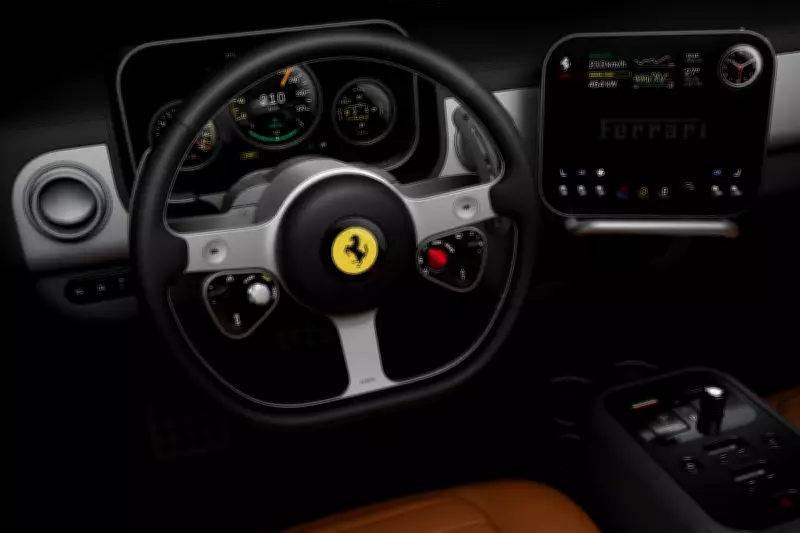
Ferrari Luce Interior Crafted by Apple Design Legend Jony Ive
Ferrari has officially revealed the interior and user interface of its inaugural fully-electric sports car, the Ferrari Luce, marking a significant milestone in the brand's electrification journey. The cabin design represents a high-profile collaboration with Sir Jony Ive, the renowned designer behind Apple's most iconic products including the iPhone, and his creative collective LoveFrom.
Five-Year Partnership with LoveFrom Collective
The announcement confirms that the cabin, interface, and overall user experience of the Ferrari Luce have been developed through an extensive five-year partnership with LoveFrom, the design firm founded by Sir Ive alongside fellow designer Marc Newson. Ferrari has stated that LoveFrom has been involved across every dimension of the new vehicle's design, working closely with Ferrari's Styling Centre under the leadership of Flavio Manzoni.
This collaboration represents the second phase of Ferrari's carefully orchestrated launch plan for its first electric model. The underlying technology was initially showcased in October 2025 at Ferrari's e-building in Maranello, with the final phase including the exterior design scheduled for revelation in Italy during May 2026.

Design Philosophy and Naming Strategy
Ferrari confirmed that the name Luce, translating to 'light' or 'illumination' in Italian, introduces a fresh naming strategy for the brand as it transitions into the electric era. The company describes this name as expressing a broader philosophy centered on clarity, simplicity, and forward-looking design principles.
The interior design unmistakably reflects design principles long associated with Ive's celebrated work at Apple. Observers can detect subtle hints of iPad aesthetics in the infotainment screen and digital instrument binnacle, along with carefully considered details in the switchgear and on-screen graphics. Ferrari characterizes the cabin as being defined by simplicity, clarity, and meticulously considered interaction.
Hardware and Software Integration
Ferrari emphasizes that hardware and software were developed in tandem, creating a cohesive system where physical architecture and digital interface function as one unified experience. Core elements including the driver binnacle, control panel, and central console are self-contained and clearly organized around inputs and outputs, mirroring the structured, intuitive layouts familiar in consumer technology.
In contrast to the touchscreen-heavy approach adopted by many contemporary electric vehicles, Ferrari states that the Luce interior places strong emphasis on tactility. Precision-engineered mechanical buttons, dials, and switches are thoughtfully combined with multifunctional digital displays, with numerous controls designed to be operated by feel alone. The interface draws inspiration from classic sports cars and Formula One single-seaters while applying a contemporary, technology-led design language.
Materials and Manufacturing Innovation
Materials and manufacturing processes form a central component of the design narrative. Ferrari selected aluminium for its precision-machining qualities, with interior components crafted from 100 percent recycled aluminium alloy. These parts undergo CNC-machining from solid billets and receive finishing through anodisation processes specifically designed to enhance durability and surface quality.
Glass plays a prominent role throughout the cabin, with Ferrari utilizing Corning Gorilla Glass for displays, controls, and the central console. The brand explains this material was chosen for its scratch resistance, clarity, and longevity, aligning with a design approach focused equally on durability and aesthetics.
Signature Features and Design Elements
One of the most distinctive interior features is the innovative start-up sequence, centered around a physical key designed as a tactile object. Manufactured from Gorilla Glass, this key incorporates an E Ink display that only consumes power during colour changes, which Ferrari claims represents an automotive industry first. When inserted into its dock on the central console, the key triggers a choreographed lighting sequence across the binnacle and control panel.

The steering wheel similarly reflects the design-led approach, reinterpreting classic three-spoke designs from the 1950s and 1960s through exposed aluminium construction and simplified forms. Created from recycled aluminium, this steering wheel weighs 400 grams less than a standard Ferrari wheel and features controls arranged into two analogue modules inspired by Formula One layouts.
Ferrari maintains that the interior of the Luce offers the first tangible insight into how the brand, working collaboratively with Sir Ive and LoveFrom, is fundamentally rethinking the driving environment for its electric future, preceding the complete exterior reveal anticipated later this year.