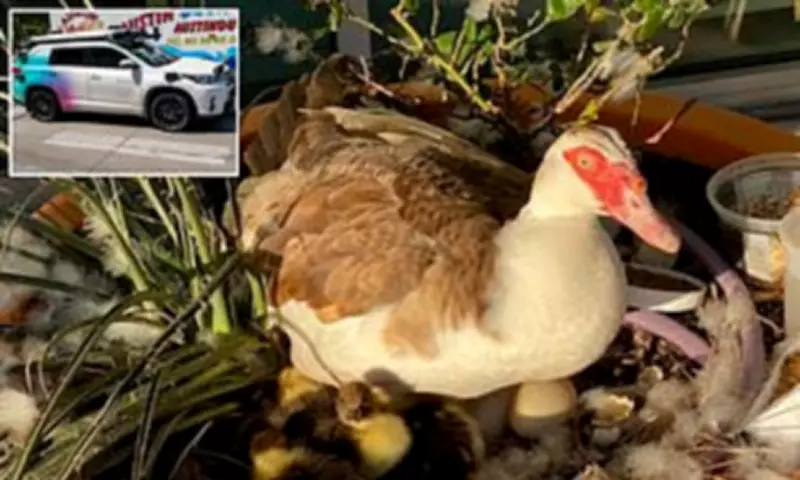
Outrage has erupted in Austin, Texas, after a self-driving car allegedly struck and killed a beloved duck near a popular park, with furious residents calling for autonomous vehicles to be banned from the area. The incident, reported by local news station KXAN, occurred earlier this week near Mueller Lake Park, sparking a heated community response on social media and raising fresh concerns about the safety of driverless technology.
Witness Account of the Tragic Incident
A witness detailed the event in a local Facebook group, stating they observed an Avride autonomous vehicle drive over the aquatic bird as it rested near the park. 'I saw an Avride self-driving car, with a person in the driver's seat not touching the wheel, run over and kill a duck near the park,' the witness wrote. 'It didn't slow down or hesitate at all, just steamrolled right through, and the person inside did not stop to see what happened, just kept on driving.'
The witness further alleged that the car ran through a stop sign and nearly collided with their vehicle before hitting the duck, which appeared to be lying near a nest of eggs at the time of its death. This account has intensified public anger, with one community member commenting on the post, 'This makes me so sick. Wish we could get them banned from Mueller. That's not the first time an autonomous car killed one of the ducks here.'

Company Response and Safety Measures
Avride, a company based in Austin that has been developing self-driving cars since 2017 and began testing in the city last summer, according to KVUE, has launched an investigation into the incident. Yulia Shveyko, Avride's head of communications, told the Daily Mail, 'Avride takes safety very seriously. As a precaution, we have adjusted testing routes and provided additional training and guidance to safety personnel as part of our standard procedures. We are also actively evaluating technological measures to further enhance safety.'
The company informed local news that it has excluded roads around Mueller Lake Park from testing operations. However, Avride denied the allegation that the vehicle failed to stop at a stop sign. Shveyko stated, 'The vehicle came to complete and appropriate stops at all relevant stop signs. We will, however, continue to carefully analyze all related data to ensure a full understanding of the situation.'
Community Backlash and Broader Concerns
The incident has sparked widespread outrage among Austin residents, with many taking to Facebook to express their frustration. One person wrote, 'Anything self driving needs to be outlawed. They don't even stop for school busses,' while another added, 'Ridiculous. Take them off the road.' A third commenter noted, 'The tech that no one asked for strikes again. And again. And again. And...'
Mueller Lake Park, located just a few miles outside downtown Austin, features a 6.5-acre lake, an open-air amphitheater, interactive playscape, picnic peninsula, loop trail, jogger stretching area, and public art, making it a cherished community hub. The duck's death has highlighted tensions between technological advancement and local wildlife preservation.
Historical Context of Autonomous Vehicle Incidents
This tragedy follows a similar incident in San Francisco in October, when a self-driving Waymo car struck and killed KitKat, a nine-year-old tabby cat well-known for patrolling a corner store. The cat was hit around 11:30 PM on October 27, according to owner Mike Zeidan, and was found underneath the vehicle before being pronounced dead at an animal hospital. An anonymous complaint alleged the Waymo robotaxi did not attempt to avoid the feline.
Waymo responded by stating, 'The trust and the safety of the communities we serve is our highest priority. We reviewed this, and while our vehicle was stopped to pick up passengers, a nearby cat darted under our vehicle as it was pulling away.' The company offered condolences and pledged a donation to a local animal rights organization.

These incidents underscore ongoing debates about the reliability and ethical implications of autonomous vehicles, particularly in urban environments where they interact with pedestrians, pets, and wildlife. As companies like Avride and Waymo continue testing, public scrutiny and regulatory pressures are likely to intensify, balancing innovation with community safety and animal welfare concerns.