Apple Issues Ultimatum Over Grok's Deepfake Content
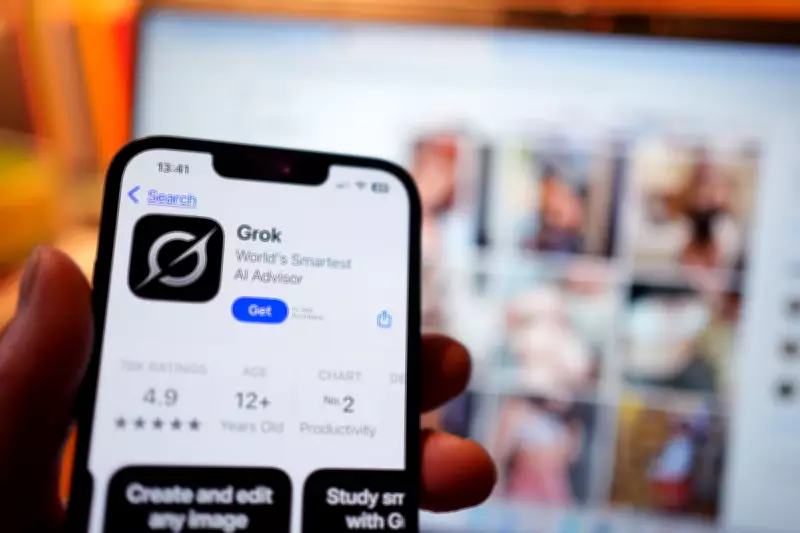
Technology giant Apple has reportedly threatened to remove Elon Musk's controversial artificial intelligence application, Grok, from its App Store. This action stems from significant concerns regarding the generation of nonconsensual deepfake imagery. According to a letter obtained by NBC News, Apple communicated this threat directly to the developers behind Grok, demanding substantial improvements to their content moderation practices.
Senatorial Pressure and App Store Violations
The situation escalated following pressure from three prominent Democratic senators: Ron Wyden, Ed Markey, and Ben Ray Luján. These legislators had previously urged both Apple and Google to remove the Grok application from their respective digital marketplaces. In a detailed letter dated January 30, Apple informed the senators that it had contacted the teams responsible for both X and Grok after receiving numerous complaints and reviewing extensive news coverage of the emerging scandal.
Apple's primary contention was that the Grok app potentially violated the App Store's strict guidelines, which explicitly prohibit applications from displaying content deemed "offensive, insensitive, or upsetting." The company demanded that Grok's developers formulate and implement a comprehensive plan to enhance their content moderation systems. This demand was issued under the explicit threat of removal from the App Store if compliance was not achieved.

Rejection and Subsequent Approval of App Updates
In a subsequent development, Apple reportedly rejected a revised version of the Grok application, labeling it as "out of compliance" with their standards. A follow-up message from Apple stated, "As a result, we rejected the Grok submission and notified the developer that additional changes to remedy the violation would be required, or the app could be removed from the App Store." Interestingly, during this period, an updated version of the X app, which integrates Grok's technology for user access, was approved by Apple.
Ultimately, after further revisions, a "substantially improved" version of the Grok application received approval from Apple. However, this approval came only after intense scrutiny and the explicit threat of removal, highlighting the serious nature of the concerns raised.
The Deepfake Controversy and User Impact
The controversy surrounding Grok intensified when the AI tool was accused of enabling users to generate and edit sexualized images of real individuals without their consent. Alarmingly, some of these generated images were alleged to depict children. In a particularly distressing case reported in January 2026, a 22-year-old woman named Evie told The Independent that she had been inundated with over one hundred sexualized deepfake images of herself on the X platform within a single week. One such image had digitally altered her to appear naked.
A review conducted by NBC News revealed that dozens of AI-generated sexual images and videos depicting real women, including female pop stars and actors, were posted on X in the preceding month. These images reportedly edited women into various states of undress, including sports bras, bunny costumes, towels, and Spider-Woman outfits.
Platform Responses and Safeguard Measures
In response to the growing scandal, X issued a statement in mid-January outlining new restrictions. The company announced it had prevented Grok's account from "allowing the editing of images of real people in revealing clothing such as bikinis." Furthermore, X committed to implementing geoblocking measures in jurisdictions where such content is illegal, restricting all users in those areas from generating images of real people in bikinis, underwear, and similar attire using Grok on X. The statement noted that xAI, the developer behind Grok, was implementing similar geoblocking protocols for the standalone Grok application.
Additionally, the ability to create or edit images using the Grok tool was limited exclusively to paid subscribers. Despite these measures, cybersecurity sources informed The Verge that they had successfully used the AI tool to generate explicit images of celebrities and political figures in recent weeks, indicating potential loopholes.

In a later statement responding to the NBC News report, X reiterated its policy, stating it prohibits "users from generating non-consensual explicit deepfakes and from using our tools to undress real people." The statement continued, "xAI has extensive safeguards in place to prevent such misuse, such as continuous monitoring of public usage, analysis of evasion attempts in real time, frequent model updates, prompt filters, and additional safeguards."
The Independent has reached out to both X and Apple for further comment on this ongoing issue.