Appeals Court Rejects Anthropic's Request in Pentagon AI Dispute
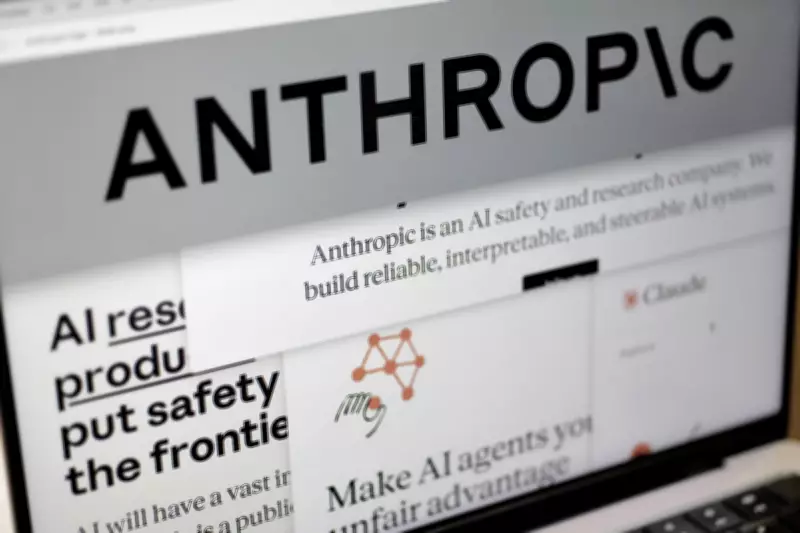
A federal appeals court in Washington D.C. has declined to intervene in the Pentagon's decision to blacklist artificial intelligence laboratory Anthropic. The ruling, delivered on Wednesday, marks a significant development in the ongoing legal battle between the AI company and the Trump administration over the deployment of AI technology in military applications.
Conflicting Judicial Opinions Emerge
This decision stands in stark contrast to a previous ruling from a federal judge in San Francisco. In that separate case, Judge Rita Lin compelled the Trump administration to remove labels designating Anthropic as a national security risk. The conflicting outcomes highlight the legal complexities surrounding AI regulation and national security concerns.
Anthropic had filed simultaneous lawsuits in both jurisdictions last month, alleging that the administration was engaging in what they termed an "unlawful campaign of retaliation." The company argued this retaliation stemmed from their efforts to impose limitations on how their Claude chatbot technology could be utilized in fully autonomous weapons systems and potential surveillance operations targeting American citizens.

The Pentagon's Stance and Company Allegations
The Trump administration has consistently portrayed Anthropic as a liberal-leaning entity attempting to dictate U.S. military policy. They had labeled the company as a supply chain risk, a designation that could severely restrict Anthropic's ability to work with military contractors and government agencies.
In her San Francisco ruling, Judge Lin determined that the administration had overstepped its authority by applying these stigmatizing labels and issuing directives that threatened to cripple Anthropic's competitive position in the AI race against rivals like OpenAI and Google. Following that decision, the administration removed the damaging designations, allowing government personnel and contractors to continue using Claude and similar chatbot technologies.
Appeals Court's Reasoning and Future Proceedings
The Washington appeals court acknowledged that Anthropic would "likely suffer some degree of irreparable harm" if maintained as a supply chain risk. However, the three-judge panel found insufficient justification to issue their own order revoking the administration's actions. They noted that "the precise amount of Anthropic's financial harm is not fully clear" at this stage of proceedings.
The court has scheduled a hearing for May 19th to receive further evidence in the case. This suggests the legal battle is far from concluded, with both sides preparing to present additional arguments and documentation.
Industry Reaction and Broader Implications
Anthropic responded to the ruling with a statement expressing gratitude that the court recognized the urgency of resolving these issues. "We remain confident the courts will ultimately agree that these supply chain designations were unlawful," the company asserted.
Matt Schruers, CEO of the Computer & Communications Industry Association, voiced concerns about the conflicting court decisions creating business uncertainty. "The Pentagon's actions and the DC Circuit's ruling create substantial business uncertainty at a time when U.S. companies are competing with global counterparts to lead in AI," Schruers warned, highlighting the potential impact on the broader technology landscape.
The legal standoff continues to unfold against the backdrop of rapid AI advancement and intensifying global competition in artificial intelligence development. The outcome of these cases could establish important precedents regarding government regulation of AI technologies and the boundaries of corporate influence on military applications.