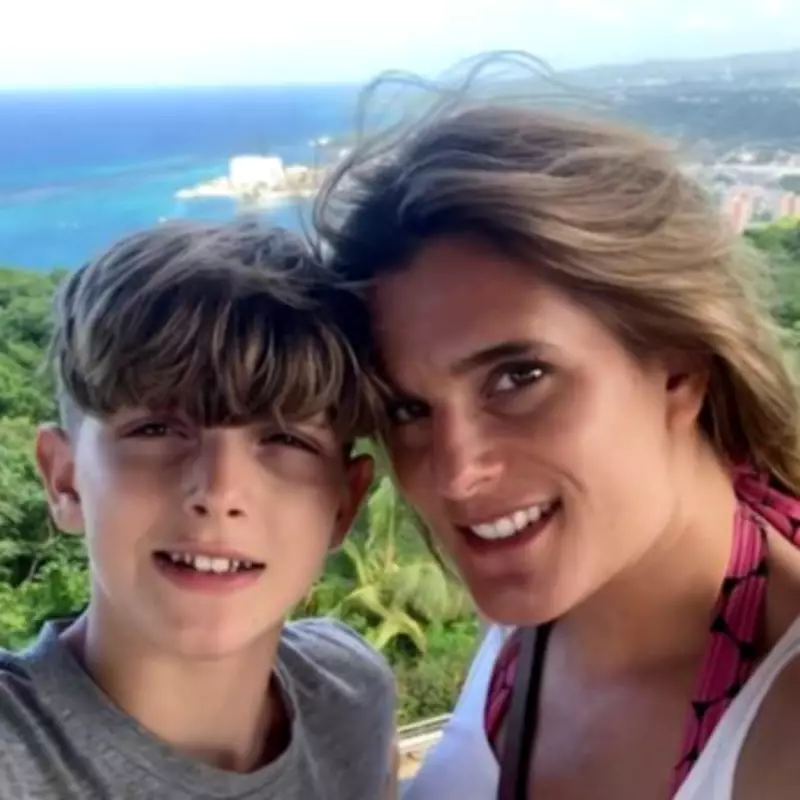
Ellen Roome, a grieving mother who has campaigned tirelessly for legal reform following the death of her 14-year-old son, broke down in tears during a 4am phone call with a government minister after learning her efforts had succeeded. Her son, Julian "Jools" Sweeney, died in unclear circumstances in 2022, prompting a years-long fight to automatically preserve a child's digital data after their death.
Emotional Victory in Early Morning Call
In a significant development, ministers have announced an amendment to the Crime and Policing Bill that will compel social media companies to retain such data. Technology Secretary Liz Kendall personally phoned Ms Roome last week to deliver the news, with the call coming at 04:15am while Ms Roome was in the United States.
"It was 04:15 in the morning in America... I answered the phone and she went: 'Oh hello, it's Liz'... I was quite shocked. I said, really? And then I think I just burst into tears and went, I'm sorry. I can't hold it together. I did just cry down the phone to her," Ms Roome told BBC Breakfast, describing the emotional moment.

Campaign Born from Tragedy
Ms Roome believes her son may have died after participating in an online challenge that went terribly wrong. Jools was found unconscious in his bedroom in April 2022, and an inquest later concluded he took his own life, though the coroner noted it was unlikely he intended to do so and that precise details remained unclear.
Speaking about the campaign victory, Ms Roome expressed mixed emotions: "I did it. I have fought so hard. I wanted to make something positive out of the loss of Jools's life and, yeah, it's happening. This law, unfortunately, won't help me, but it will help other parents. I never wanted another parent to ever be in my position and be begging for answers because I still don't know what happened to Jools."
Ongoing Quest for Answers
Despite the legal change, Ms Roome's personal mission continues. She is seeking to have the inquest into her son's death redone to access data from social media firms and obtain a forensic download of phone data believed to be held by police. TikTok has stated it can no longer access Jools's watch or search history due to legal requirements to delete personal data.
Ms Roome reflected on the emotional toll: "Last night, I couldn't sleep. I just started crying because Jools would be so proud. And I'm not doing it for proudness or some sort of gratification. I just was so determined - I don't want anybody to feel the pain that I've felt."
Government Response and Legal Action
Cabinet minister Liz Kendall emphasized the government's commitment: "I recently met Ellen and other bereaved families and no parent ever wants to go through what she has been through. So I was determined, as was the Prime Minister, to take immediate action so that that data is automatically preserved, so that people can look into the impact that social media might have had on the death of a child."
In related legal proceedings, Ms Roome is suing TikTok alongside other British families whose children died in similar circumstances. The lawsuit, filed last year, alleges that Jools and four other children—Isaac Kenevan, 13, Archie Battersbee, 12, Maia Walsh, 13, and Noah Gibson, 11—died while attempting the so-called "blackout challenge," a viral trend encouraging self-choking until unconsciousness.
TikTok, owned by Chinese parent company ByteDance, asserts that the challenge has been blocked on its platform since 2020. A spokesperson stated last month: "Our deepest sympathies remain with these families. We strictly prohibit content that promotes or encourages dangerous behaviour. Using robust detection systems and dedicated enforcement teams to proactively identify and remove this content, we remove 99% that's found to break these rules before it is reported to us. As a company, we comply with the UK's strict data protection laws."
\nMs Roome's campaign highlights the ongoing challenges parents face in navigating digital legacies and seeking closure after tragic losses, with her advocacy now paving the way for systemic change to protect future families.