Prediction Markets Surge to $1.2 Billion on Super Bowl Sunday Amid Regulatory Debate
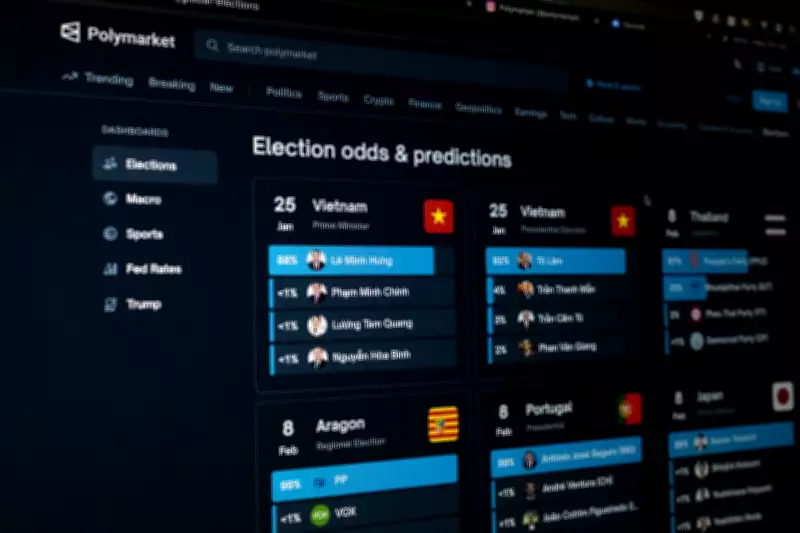
Polymarket and Kalshi, two leading prediction market platforms, collectively recorded approximately $1.2 billion in trading volume during Super Bowl Sunday, according to analysis by Piper Sandler. This staggering figure highlights the rapid growth of these platforms, where users can wager on a vast array of events, from sports outcomes to political scenarios, every second of the day. The surge has ignited intense confusion and concern over whether these markets constitute gambling or legitimate financial investments, with regulatory frameworks struggling to keep pace.
Users Divided on Nature of Prediction Markets
Yadin Eldar, a 21-year-old student at Florida State University who has been using prediction markets since 2019, emphasizes that the activity is not traditional gambling. He describes it as "a mix of betting and options trading," distinct from casino games where players compete against the house. In contrast, Zachary Azra, a 20-year-old economics student at the University of North Carolina at Chapel Hill, views prediction markets as "another way to gamble money that’s framed in a way that looks like good investments." This dichotomy underscores the broader debate surrounding the platforms' classification and oversight.
Regulatory Gaps and Legal Loopholes
Prediction markets operate under different rules than conventional gambling. While sports betting platforms face age restrictions of 21 and are banned in states like California and Texas, prediction markets are accessible in every state and allow users as young as 18 to place bets. They are not limited to specific areas like sports, raising questions about whether they exploit regulatory loopholes. The industry has long argued that its offerings are "event contracts" with binary payoffs, regulated as financial products by the Commodity Futures Trading Commission, despite their gambling-like appearance.

Political Ties and Crackdown Attempts
The Biden administration attempted to clamp down on prediction markets, with the FBI raiding the home of Polymarket CEO Shayne Coplan in November 2024 for allegedly allowing U.S.-based users to bet despite a ban. Polymarket claimed the raid was retaliation for users betting overwhelmingly on Donald Trump winning the election. The Trump administration has taken a softer stance, with Donald Trump Jr. serving as an investor and unpaid adviser to Polymarket and a paid adviser to Kalshi. Additionally, Trump's media company plans to launch its own platform, Truth Predict, further intertwining the industry with politics.
Impact on Media and Public Perception
Prediction markets have gained credibility through partnerships with established media outlets, which quote their odds in news coverage. Harry Crane, a statistics professor at Rutgers University, suggests this trend benefits from declining trust in traditional media and polling organizations. Grant Ferguson, a political science instructor at Texas Christian University, notes that the constant availability and real-time updates of prediction markets make them appealing for political insights, though Eldar cautions they are not a replacement for polls but rather a complementary tool.
Risks of Insider Trading and Gambling Harm
Concerns about insider trading loom large, as seen in cases like bets spiking before the Nobel peace prize announcement, though leaks were traced to publicly available metadata. Representative Ritchie Torres introduced draft legislation in January to curb insider trading risks after suspicious Polymarket trades around U.S. operations in Venezuela. Cait Huble, director of public affairs at the National Council on Problem Gambling, warns that prediction markets carry similar risks to traditional gambling, including financial harm and addictive behaviors, with users often unaware they are engaging in gambling-like activities.

Future Outlook and Calls for Caution
Azra predicts that prediction markets will grow in popularity, potentially leading to widespread participation without proper precautions. He advocates for warnings similar to those on tobacco products, educating users about the gambling nature and potential losses. Without regulatory intervention, the industry's expansion seems likely, raising urgent questions about consumer protection and oversight in an evolving digital landscape.