Meta CEO Faces Intense Scrutiny in Landmark Social Media Addiction Trial
During a pivotal courtroom confrontation on Wednesday, Meta CEO Mark Zuckerberg was directly challenged about his perceived "robotic" demeanor while testifying in a landmark trial concerning social media addiction. The high-profile case, brought forward by a plaintiff identified only by the initials KGM, scrutinizes whether platforms like Facebook and Instagram are deliberately engineered to foster addictive behaviors.
Plaintiff's Allegations and Zuckerberg's Defense
The plaintiff, KGM, now 20 years old, initiated the lawsuit in 2023, asserting that her early and extensive engagement with social media led to a debilitating addiction, severely worsening her depression and triggering suicidal ideation. Under rigorous cross-examination by KGM's attorney, the renowned litigator Mark Lanier, Zuckerberg maintained his longstanding position. He reiterated his agreement with prior statements that current scientific literature has not conclusively proven a causal link between social media use and mental health deterioration.
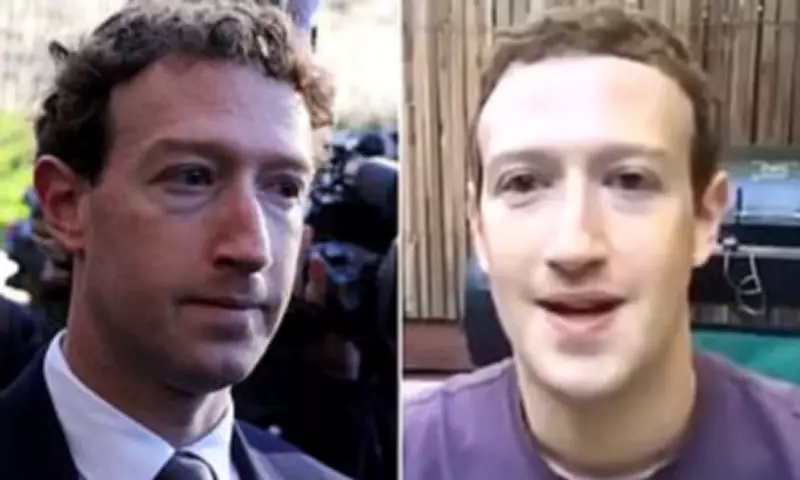
Lanier, however, characterized the CEO's responses as meticulously media-trained, pointing to an internal Meta document that advised Zuckerberg on his communication style. The document explicitly urged him to appear "authentic, direct, human, insightful and real," while cautioning against coming off as "fake, robotic, corporate or cheesy." Zuckerberg firmly rebutted this characterization, insisting the advice constituted mere "feedback" rather than formal coaching on his presentation or responses.

A History of Awkward Public Appearances
Addressing perceptions of his demeanor, Zuckerberg conceded, "I think I’m actually well known to be sort of bad at this," alluding to a history of public appearances that have been widely mocked for their awkwardness. He referenced a notorious 2010 interview at the D: All Things Digital conference, where he sweated so profusely that interviewer Kara Swisher suggested he remove his hoodie. After initially refusing, he eventually did so, exclaiming "whoa" upon seeing his sweat-drenched sleeve.
The CEO also acknowledged the infamous 2017 Facebook Live stream from his backyard, where his repeated discussions about "smoking meats" and using Sweet Baby Ray's barbecue sauce were relentlessly parodied online. The event spawned a wave of memes, with many critics labeling his behavior as awkward and unnaturally robotic.
Core Legal Arguments on Addiction and Design
Beyond the personal critiques, Lanier's questioning zeroed in on the core allegation of deliberate platform addiction. When asked if people inherently use addictive products more frequently, Zuckerberg responded, "I’m not sure what to say to that. I don’t think that applies here." He defended Meta's design philosophy, stating the company operates on the "basic assumption" that if a service is genuinely valuable and useful, people will naturally engage with it more.
The attorney presented a stark choice regarding corporate responsibility toward vulnerable users: help them, ignore them, or "prey upon them and use them for our own ends." Zuckerberg agreed that the latter option is unacceptable for any reasonable company, asserting, "I think a reasonable company should try to help the people that use its services."
Contradictions on Platform Goals and Safety Features
Lanier confronted Zuckerberg with internal documents that appeared to contradict his past congressional testimony, where he claimed Instagram employees were not given objectives to increase user time on the platform. Zuckerberg clarified that while such time-based goals existed historically, he and the company made a conscious decision to shift focus toward enhancing utility instead.
The CEO was also grilled on Instagram's age verification policies and the potential harms of cosmetic beauty filters. Zuckerberg expressed frustration during the age verification exchange, stating, "I don’t see why this is so complicated," and outlined policies restricting users under 13. Regarding beauty filters, he maintained there was insufficient evidence of harm and upheld a "high bar" for limiting features that could curb user expression, despite Lanier noting that all 18 external experts consulted by Meta had raised concerns.

Broader Implications and Critical Reactions
Children's advocacy groups were swift to condemn Zuckerberg's testimony. Josh Golin, Executive Director of Fairplay, stated, "All Mark Zuckerberg accomplished with his testimony today was to prove yet again that he cannot be trusted, especially when it comes to kids’ safety." Golin criticized the CEO's denial of time-based objectives, highlighting internal decisions to retain features like visible like counts and plastic surgery filters, which he argued are inherently addictive by design.
This trial marks the first instance where Zuckerberg has testified before a jury. The courtroom audience included bereaved parents, echoing his 2024 congressional testimony where he offered a general apology to affected families but stopped short of accepting direct responsibility for tragedies linked to social media use.
Legal Stakes and Defendant Positions
The case, alongside two others, has been designated a bellwether trial, meaning its outcome could set a precedent for thousands of similar lawsuits against social media giants. While KGM's suit originally included multiple platforms, Meta Platforms and Google’s YouTube remain as the primary defendants, following settlements with TikTok and Snap.
Meta's defense, articulated by attorney Paul Schmidt, does not contest KGM's mental health struggles but disputes that Instagram was a substantial contributing factor. Schmidt pointed to medical records indicating a turbulent home life, arguing that KGM, along with YouTube's defense, used these platforms as a coping mechanism or an escape from her pre-existing mental health challenges.
Throughout the hearing, Zuckerberg consistently returned to his core talking points, emphasizing his goal of building valuable platforms and repeatedly disputing Lanier's "characterization" of both the questions and his own statements. The trial continues to probe the complex intersection of technology, corporate responsibility, and mental well-being.