From LOL to SYBAU: The Evolution of Confusing Text Acronyms
Text abbreviations first emerged in the 1990s as mobile users creatively navigated strict character limits on early devices. Most people fondly recall classic abbreviations from that era, including LOL (laugh out loud), BRB (be right back), and TTYL (talk to you later). However, the landscape of digital communication has transformed dramatically since those early days.
Modern Acronyms Leave Brits Perplexed
Fast-forward to today, and text abbreviations have escalated into thousands of terms proliferating across social media platforms. The team at Unscramblerer.com has conducted fresh analysis using Google Trends data to identify the acronyms that currently leave British internet users most bewildered.
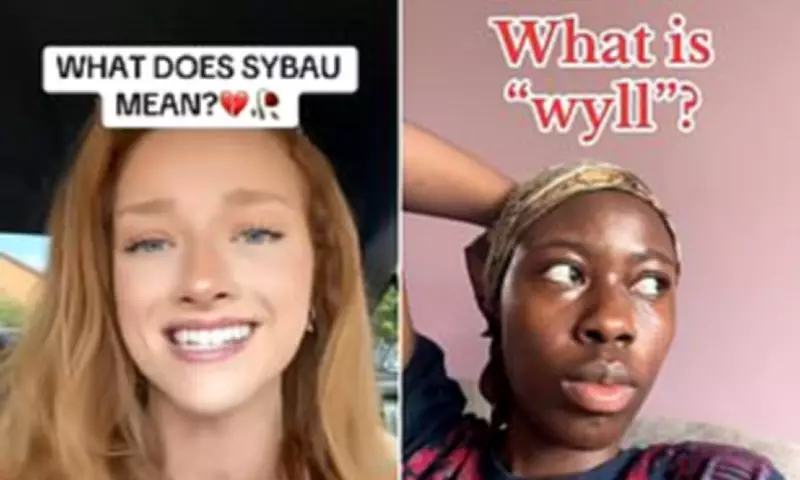
Topping the list is SYBAU, which generates an astonishing 49,400 monthly searches in the UK. While many younger users humorously tell their parents this stands for 'stay young, beautiful, and unique', its actual meaning is considerably more direct: 'shut your b**** a** up'.

'The catalogue of the most confusing UK texting acronyms undergoes constant transformation,' explained a spokesperson for Unscramblerer.com. 'Our 2026 research has identified numerous new top acronyms and even documented shifts in meaning for older established terms. It remains fascinating how social media trends can rapidly alter the mainstream interpretation of an abbreviation within remarkably brief timeframes.'
Methodology and Ranking Details
The research team employed Google Trends to discover the top trending texting acronyms, then utilized Ahrefs to quantify precise monthly search volumes. Following SYBAU in second position is WYLL, which attracts 40,300 searches monthly. This abbreviation stands for 'what you look like' and commonly serves as a request for someone's photograph or physical description in online interactions.
POV (point of view) occupies third place, succeeded by SMH (shake my head), HMU (hit me up), and OTP. Notably, OTP no longer primarily signifies 'one-time passcode' but rather 'one true pairing', referring to a fan's preferred fictional romantic couple or partnership.
Among the most perplexing entries is ASL, which confusingly doesn't represent three words beginning with those letters. Instead, it means 'as hell' and functions to intensify adjectives, appearing in phrases like 'funny asl' or 'slow asl'.
Further down the rankings, FML (f*** my life) records 21,300 monthly searches, slightly ahead of the classic BTW (by the way) at 20,500 searches. At the bottom of the top thirty appear ICYMI (in case you missed it) and WYO (what you on?).
Upgrading Your Acronym Vocabulary
Unscramblerer.com provides guidance for modernizing outdated abbreviations. The team suggests replacing YOLO (you only live once) with DIFTP (doing it for the plot), substituting LMAO (laughing my a** off) with IJBOL (I just burst out laughing), and exchanging ROFL (rolling on the floor laughing) for the skull emoji. Similarly, GR8 could become 'that slaps', OMG (oh my god) might transform to a high-five emoji, and KK could upgrade to 'bet'.
Psychological Impact of Abbreviation Use
Unscramblerer.com characterizes acronyms as an 'effective, lazy and cool way to communicate' while emphasizing that 'context truly matters'. The spokesperson posed a crucial question: 'Should you employ texting shortcuts when messaging friends, family members, work colleagues, or participating in online forums?'
The research highlights a significant 2024 study published in the Journal of Experimental Psychology that analyzed 5,300 participants' conversations across eight experiments. This analysis revealed that individuals who used texting abbreviations like 'FWIW' instead of writing 'for what it's worth' were perceived as more insincere. These abbreviated communicators proved less likely to receive responses because they appeared to invest less effort in text-based conversations.
'In daily digital interactions, we frequently encounter people who might be categorized as good texters or poor texters,' noted lead researcher David Fang. 'We initially hypothesized that texters might appreciate abbreviations because they could convey an informal sense of closeness, so we were genuinely surprised that abbreviations elicited negative perceptions about people who utilize them.'

Practical Communication Recommendations
Overall, text abbreviations remain acceptable for casual messages exchanged with family or friends. However, for serious communications with colleagues or professional contacts, experts recommend spelling out complete words and phrases. The Unscramblerer.com expert elaborated: 'Spelling words out demonstrates that you are genuinely invested in the conversation. People consistently notice this distinction!'