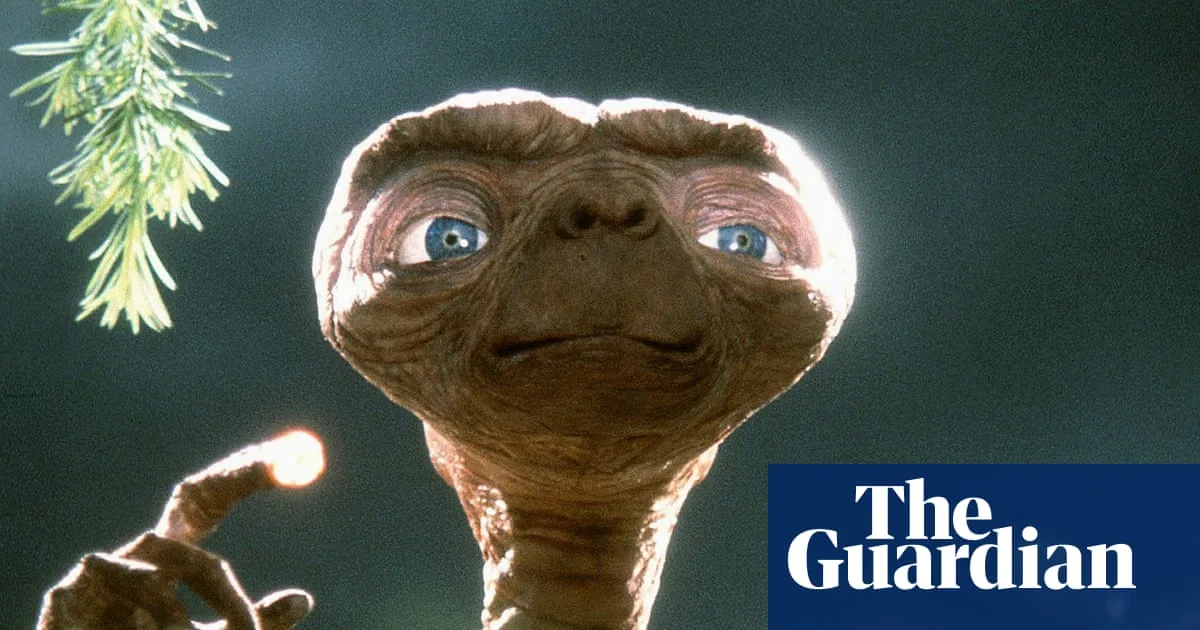
An astrophysicist has proposed a new explanation for why humans have yet to encounter extraterrestrial life: aliens may exist, but their technology is only marginally better than ours, and they have simply grown bored and stopped trying to make contact.
Dr Robin Corbet, a senior research scientist at the University of Maryland, Baltimore County, based at Nasa's Goddard Space Flight Center, suggests that alien civilisations may hit a technological plateau not far above our own. 'The idea is that they're more advanced, but not much more advanced. It's like having an iPhone 42 rather than an iPhone 17,' he said.
This 'radically mundane' theory, outlined in a new paper, challenges more exotic explanations for the Fermi paradox—the contradiction between the high probability of alien life and the lack of evidence for it. Corbet argues that aliens may not have faster-than-light travel, machines based on dark energy, or other advanced physics. Instead, they might explore their cosmic neighbourhood with robotic probes, but eventually lose interest.

Not all experts are convinced. Prof Michael Garrett, director of the Jodrell Bank Centre for Astrophysics, described the theory as projecting 'a very human-like apathy on to the rest of the cosmos'. He favours the idea that post-biological civilisations advance so rapidly they become imperceptible to us. Prof Michael Bohlander of Durham University noted that unexplained aerial phenomena (UAPs) might already provide evidence of advanced alien technology.
Corbet's paper has yet to be peer reviewed, but he suggests that contact with aliens, if it happens, 'could leave us somewhat disappointed'.