Artemis II Crew Describe 'Overwhelming' Emotions After Soaring Past the Moon
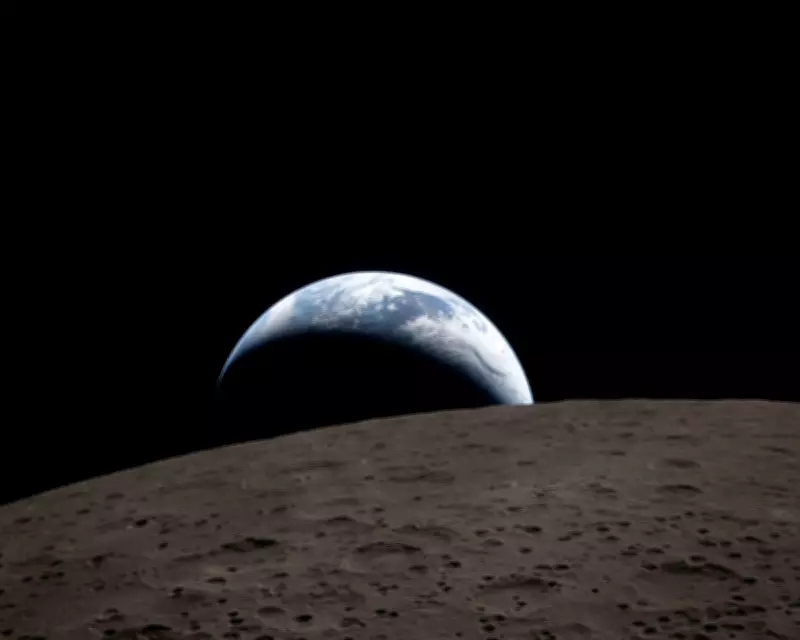
NASA's Artemis II astronauts have shared the profound emotional impact of their lunar flyby, as they photographed impact craters, cracks, and ridges while beginning their long journey back to Earth. Among the eagerly awaited images captured by the crew, who worked in pairs at the Orion capsule windows, are those of the Earth rising from behind the moon, a solar eclipse, and parts of the 590-mile-wide Orientale impact basin that have never been observed with the naked eye.
Historic Observations and Personal Reflections
Christina Koch, the first woman to fly around the moon, described an overwhelming sense of being moved by the lunar landscape. "I just had an overwhelming sense of being moved by looking at the moon. It lasted just a second or two and I actually couldn't even make it happen again, but something just threw me in suddenly to the lunar landscape and it became real," she said. Koch noted the bright new craters that shone from the surface like pinpricks in a lampshade, highlighting their stark contrast to the rest of the moon.
Victor Glover, the first black man to travel beyond low Earth orbit, echoed these sentiments, stating, "It was very moving to look out the window. I went straight where Christina went, and I was walking around down there on the surface, climbing and off-roading on that amazing terrain." The crew's observations included detailed notes on the brown, green, and orange hues reported on the greyish landscape, with further images expected to shed light on these colors and possibly faint layers of moondust visible during Earthrise.

Mission Milestones and Scientific Discoveries
Having swung around the far side of the moon on Monday, a manoeuvre that cut contact with mission control for 40 minutes, the four astronauts are now hurtling back toward Earth. The return trip of a quarter of a million miles is due to end in a splashdown near San Diego at 8.07pm on Friday US eastern time. During the communication blackout, Glover said he said a little prayer but remained busy recording scientific observations of the far side of the moon, noting it was a critical time for detailed observations.
In a Tuesday morning phone call with Donald Trump, Canadian Space Agency astronaut Jeremy Hansen explained the differences between the moon's near and far sides, citing the gravitational pull of Earth's effect on the near side. "The gravitational pull of the earth has had a profound effect on the near side of the moon, changing all those dark mares – those patches of the moon you see from earth – it's very different on the far side," Hansen said. He added that while small patches of mares and deep craters are visible, they are largely absent on the far side.
Record-Breaking Journey and Technical Achievements
On Monday, the crew broke the record for the farthest humans have travelled from Earth, reaching 252,756 miles, surpassing the Apollo 13 record of 248,655 miles set in 1970. Their closest approach to the moon was within 4,070 miles of the lunar surface. To mark the return leg, NASA's flight controllers in Houston flipped over mission patches on their consoles, swapping an image of the moon in front of Earth for one with the moon behind Earth.
During a press conference, flight director Rick Henfling noted the exit from the lunar sphere of influence at 1.23pm Eastern time, returning under Earth's gravity. Kelsey Young, the mission's lunar science lead, reported that crew members observed at least four to six impact flashes during a 30-minute observation period, largely during the eclipse, which help understand the dynamic lunar environment. She also highlighted the crew's observations of colors on the moon, such as green around the Aristarchus plateau, which provide insights into lunar chemistry.

Communication and Re-entry Challenges
Henfling praised the mission's optical communication system, which transmitted 20 gigabytes of data in over 45 minutes, far exceeding the S-band telemetry system's capabilities. The S-band system uses radio frequencies to transmit data like position and speed. As the capsule returns to Earth, it will jettison the service module that provided power and propulsion, with re-entry posing a risky stage as it slams into the atmosphere at over 20,000mph, heating the shield above 1,600°C.
The Artemis II mission, launched on April 1 from the Kennedy Space Center in Florida, continues to provide groundbreaking insights and emotional experiences as humanity advances toward becoming a multi-planet species.