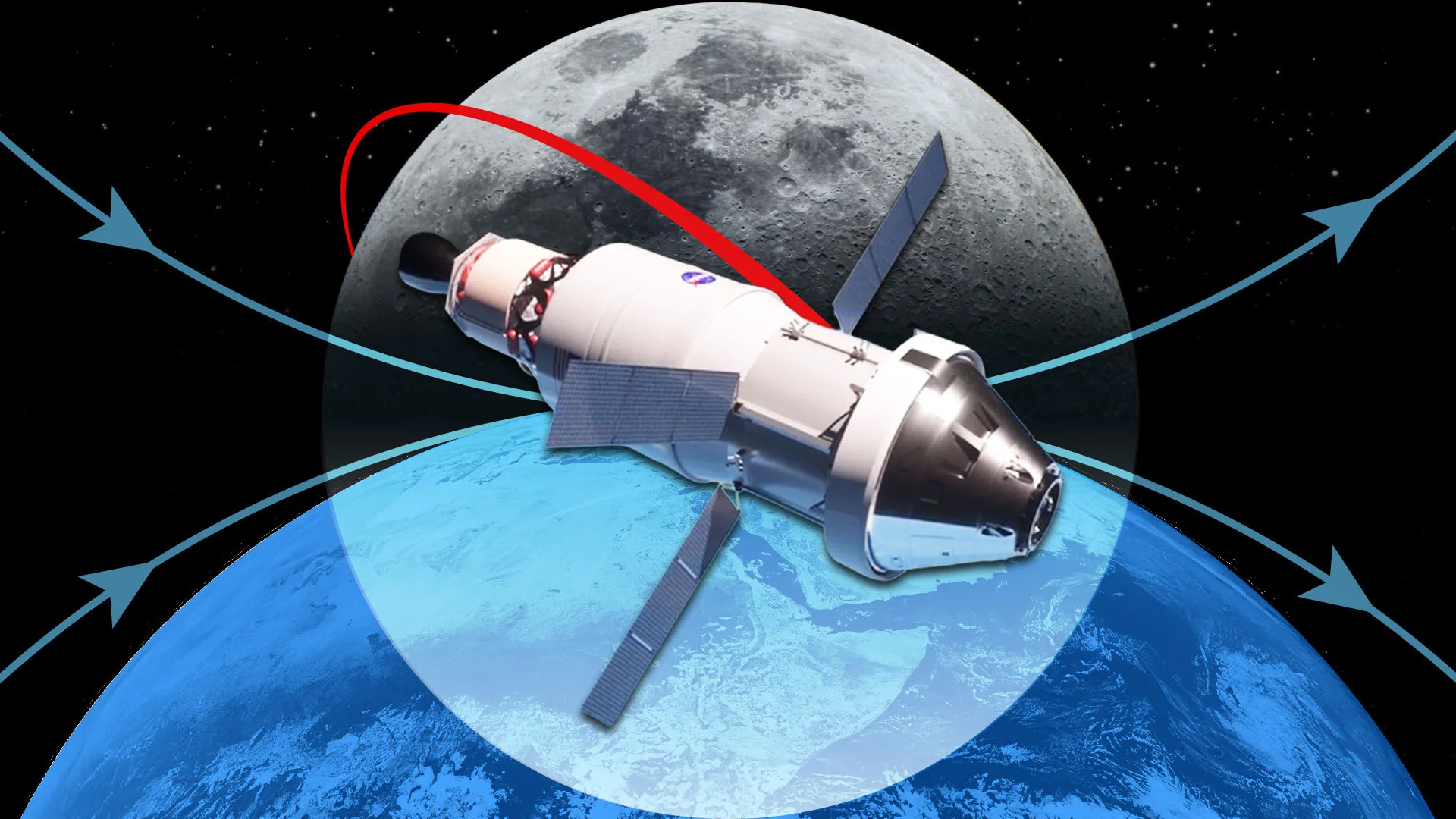
For the first time in over 50 years, humanity is returning to the Moon, with four astronauts set to travel further from Earth than anyone before. Nasa's Artemis II mission, scheduled to launch as soon as 1 April, will take the crew more than half a million miles around the Moon and back. The 10-day voyage will offer stunning lunar views and pave the way for a future Moon landing and base, but it comes with serious risks.
The astronauts will fly in Nasa's Space Launch System (SLS), the most powerful rocket ever built by the US space agency. Standing 98m tall, the SLS has flown only once before, during the uncrewed Artemis I mission in 2022. The rocket's orange core stage holds over three million litres of liquid hydrogen and liquid oxygen, and it will carry the Orion spacecraft, which sits atop the rocket with the crew inside.
The launch is one of the most dangerous phases of the mission. If anything goes wrong, the Launch Abort System at the top of the rocket will propel the astronauts to safety. All four crew members have discussed the risks with their families. The crew includes Commander Reid Wiseman, Pilot Victor Glover, Mission Specialist Christina Koch, and Specialist Jeremy Hansen. They have spent over two years training together, including sleepovers in the cramped Orion capsule, which measures just 5m wide by 3m high.

During re-entry, the Orion spacecraft will face temperatures of up to 2,700°C as it travels at 25,000mph. The heat shield must withstand these extreme conditions to protect the crew. The mission is a critical step toward Nasa's goal of establishing a sustainable presence on the Moon, including a future base where astronauts can learn to live on another world.