Trump Speaks to Artemis II Astronauts as They Head Home Following Historic Moon Fly-By
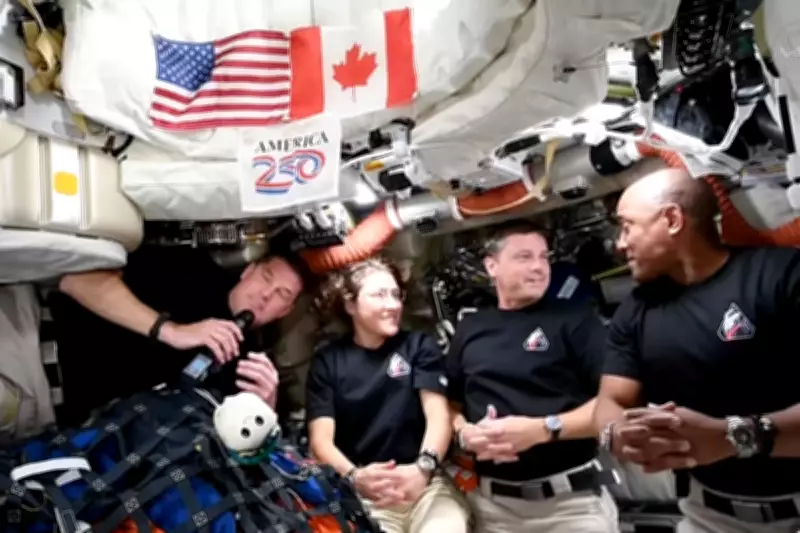
President Donald Trump has hailed the crew of NASA's Artemis II mission, celebrating their successful lunar fly-by as the dawn of a new era for American space exploration. In a live broadcast on Tuesday, Trump told the astronauts they had "made history" and paved the way for America's return to the lunar surface.
Historic Lunar Encounter After 50-Year Gap
The Artemis II mission marks the first time NASA astronauts have ventured close to the Moon in over five decades. Commander Reid Wiseman, pilot Victor Glover, and mission specialists Christina Koch and Jeremy Hansen traveled a staggering 252,760 miles from Earth, surpassing the farthest distance ever traveled by humans.
During their journey, the crew circled the dark side of the Moon, experiencing a 45-minute communications blackout with Earth. As they emerged from behind the lunar surface, they joyfully re-established contact, with Koch describing the moment as "surreal" and a reminder of Earth's special place in the cosmos.

Trump's Vision for Space Colonization
Speaking directly to the astronauts, Trump emphasized that this mission was just the beginning. "We'll plant our flag once again, and this time we won't just leave footprints," he declared. "We'll establish a permanent presence on the Moon and we'll push onto Mars."
The President thanked the crew for "inspiring the world" and asserted that America would be "second to none in everything we do in space." His comments came during a live broadcast that provided continuous coverage of the mission's progress.
Human Moments During the Mission
Beyond the technical achievements, the Artemis II crew shared several personal moments from their journey. During the communications blackout, they took a brief 30-second break to eat maple cookies in space, a small celebration of their passage behind the Moon.
The crew also carried a special zero-gravity indicator: a soft toy named "Rise," designed by an eight-year-old from California. The floating toy served as a visual reminder of when they entered zero gravity conditions.
In an emotional moment, the astronauts requested that a lunar crater be named after commander Reid Wiseman's late wife, Carroll. The crew shared a heartfelt embrace during the broadcast, visibly moved by the tribute.
Scientific Observations and Future Implications
The astronauts' observations have raised intriguing questions about the Moon's composition. Science communicator Bill Nye noted that the crew reported seeing many "pinpricks" of light on the lunar surface, suggesting highly reflective materials that could indicate water ice or unusual minerals.
"If there is water ice on the moon, why isn't it evaporating? What's going on?" Nye questioned during analysis of the mission findings. "I'm most excited about this. I didn't expect [the astronauts] to be saying how reflective things are."
Technological Aspects and Crew Insights
The astronauts praised the technology supporting their mission, particularly thanking NASA chief Jared Isaacman for providing iPhones that helped with photography in space. Koch described capturing images as "a dream come true," especially when setting up shots of Earth's shine near the Moon during an eclipse.
When asked what advice they would give to future Artemis III astronauts, pilot Victor Glover emphasized the importance of preparation. "How you pack has a huge impact on how you'll live on the journey," he explained, noting that familiarity with food systems, hygiene products, and waste management technology is crucial for long-duration space travel.
Return Journey and Mission Conclusion
The Artemis II crew is now on their four-day return journey to Earth, with a scheduled splashdown in the Pacific Ocean set to conclude their test flight on Friday. NASA continues to provide livestream coverage of the mission as the astronauts make their way home.
This successful fly-by represents a critical step toward NASA's goal of returning humans to the lunar surface and eventually sending astronauts to Mars. The Artemis program aims to establish sustainable exploration of the Moon, with Artemis III planned to land astronauts on the lunar surface in the coming years.