BT Broadband Customer Losses Slow as Market Competition Eases
BT Broadband Losses Slow as Competition Eases

Telecommunications giant BT has reported a significant slowdown in broadband customer losses during the final quarter of 2025, as competitive pressures in the UK market begin to stabilise.

Improved Customer Retention Figures

The group revealed it shed 210,000 broadband customers in the last three months of 2025, which was notably less than market analysts had feared. Industry experts had predicted losses exceeding 230,000 customers during this period, making BT's actual performance more favourable than anticipated.

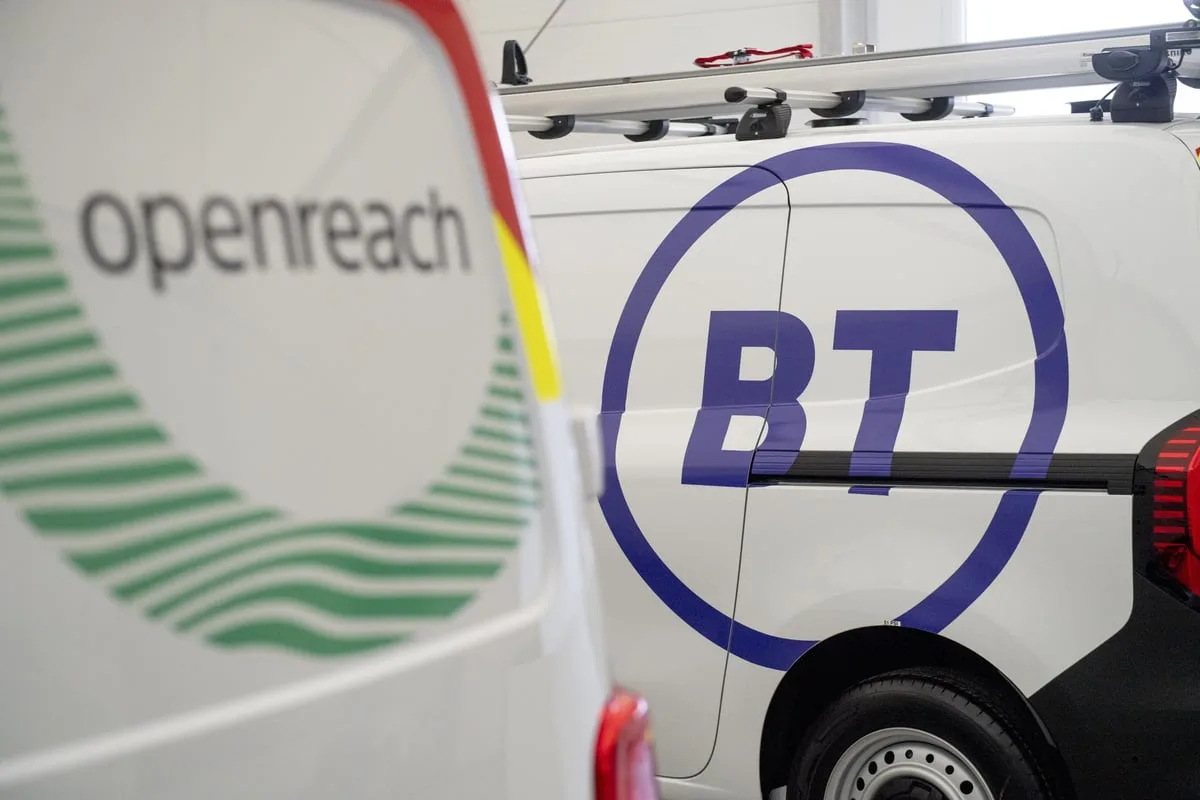
BT has now revised its full-year projection for Openreach fixed-line broadband customer losses downward to 850,000, compared to previous estimates of 900,000. This adjustment reflects improving market conditions and the company's strategic initiatives.

Wide Pickt banner — collaborative shopping lists app for Telegram, phone mockup with grocery list

Full-Fibre Expansion Driving Growth

While managing customer losses, BT simultaneously reported strong growth in full-fibre coverage adoption. The company added 571,000 new full-fibre customers during the quarter, indicating robust demand for next-generation broadband services.

Chief Executive Allison Kirkby explained to the Press Association that competition from low-priced retail alternative networks (altnets) like CityFibre, which had previously impacted Openreach customer numbers, is now showing signs of abatement as BT expands its full-fibre infrastructure.

"We're building further and faster across the country than anybody else," Ms Kirkby stated. "Because we're getting into the areas where we didn't previously have fibre. Now we have two-thirds of the country on fibre and we're seeing reduced competition, so the consumer demand is there."

Financial Performance Overview

The telecoms giant reported that revenues fell by 4% to £5 billion in the quarter ending December 31, primarily due to declines in service revenue. The company was also impacted by lower equipment revenues, largely linked to weakness in handset sales, and various divestments.

Adjusted UK service revenues specifically fell by 2% to £3.8 billion for the quarter. Meanwhile, pre-tax profits decreased significantly to £183 million for the quarter, compared with £427 million during the same period a year earlier.

This profit decline was partly attributed to £214 million of losses related to BT's sports joint venture behind TNT Sports. The venture, operated alongside US media giant Warner Bros Discovery, has recently been at the centre of a bidding war between streaming rivals Netflix and Paramount Skydance.

Strategic Progress and Network Expansion

Despite these financial challenges, BT emphasised it remains on track to meet its financial guidance for the current year. The company continues to make substantial progress in network expansion and technological advancement.

"BT continues to deliver on its strategy – building and connecting the UK to the best next-generation networks at record pace, while accelerating our transformation," Ms Kirkby affirmed.

The company's network leadership strengthened further during the quarter, with full-fibre broadband now reaching more than 21 million homes and businesses across the UK. Additionally, BT's 5G+ network has become accessible to 69% of the population, representing significant infrastructure development.

Openreach achieved record full-fibre connections during this period, while BT's consumer division again added customers across multiple service areas including broadband, mobile, and television offerings.

This combination of slowing customer losses, strong full-fibre adoption, and continued network expansion suggests BT is navigating a challenging market environment while positioning itself for future growth in the evolving UK telecommunications landscape.

Pickt after-article banner — collaborative shopping lists app with family illustration