Scientific Analysis Uncovers Real Weather Patterns in Fantasy Realms
When authors craft immersive fictional worlds, they often rely on what scholars call the "principle of minimal departure"—the assumption that elements not explicitly magical must follow real-world physical laws. This principle has inspired a groundbreaking study where researchers merged literary worldbuilding with advanced climate modeling to simulate weather patterns in famous fantasy settings.
Bridging Fiction and Climate Science
The research team utilized sophisticated computer programs, identical to those forecasting Earth's future warming scenarios, to model climates across multiple fictional realms. These included J.R.R. Tolkien's Middle-earth, George R.R. Martin's Westeros from Game of Thrones, and the far-future Earth depicted in The Wheel of Time series. Additionally, they created a model for a newly developed fantasy world called Terrios.
While this might appear whimsical, the exercise serves several serious purposes. Primarily, it provides new scientific details about fictional environments beyond what authors originally described, effectively "filling the gaps" with climate science. More importantly, it offers an innovative method for communicating fundamental physics principles to broad audiences. Exploring climate model behavior under fantastical conditions also enhances researchers' understanding of model physics itself.

The Meteorological Mysteries of Middle-earth
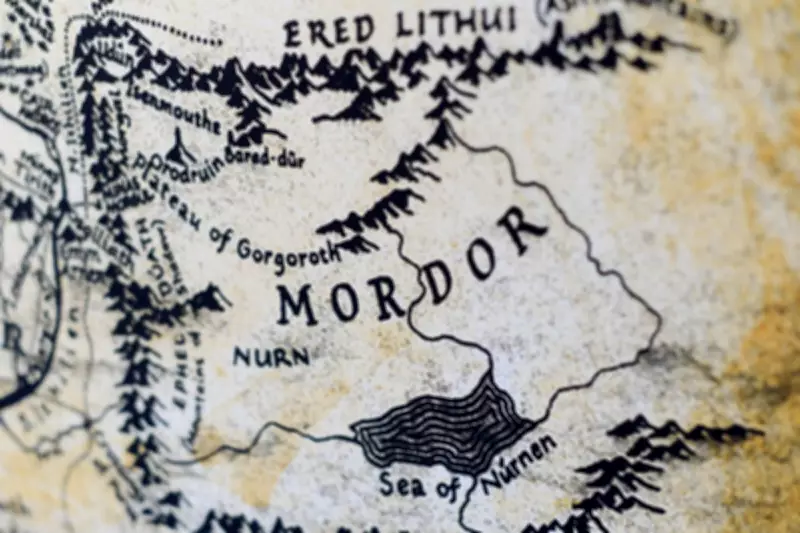
Tolkien, renowned for his meticulous attention to detail, carefully calculated distances, travel times, and even wind directions throughout his characters' journeys. Working from Tolkien's detailed maps, researchers fed Middle-earth's topography and bathymetry into an advanced climate model. Since Tolkien intended Middle-earth to represent our own Earth at a distant historical point, they assumed identical planetary parameters including radius, rotation rate, and solar distance.
The simulation results remarkably confirmed Tolkien's intuitive worldbuilding. The model predicted a climate resembling Western Europe and North Africa, consistent with Tolkien's geographical inspirations. Highest precipitation occurred on and west of the Misty Mountains, with a drier "rain-shadow" effect to the east. This phenomenon occurs when prevailing westerly winds force moist air to rise and cool over mountains, condensing water vapor into precipitation before reaching the eastern side.
The model's prediction of extensive forest coverage across Middle-earth aligned with Elrond's claim that squirrels could once travel from the Shire to Dunland without touching ground. Climate scientist Dan Lunt initially released this Middle-earth simulation in a 2013 fictional paper, which unexpectedly became a classroom success. Educators found the exotic setting helped explain complex weather and climate concepts while relating them to physical laws governing real-world climate change.
Unraveling Westeros's Seasonal Chaos
One of Game of Thrones' defining features is Westeros's unpredictable, prolonged seasons—not merely backstory but a crucial plot device enabling White Walkers to move southward across ice-covered landscapes. Astrophysicists and climatologists have long debated possible causes, proposing theories ranging from binary star systems to volcanic activity, though all struggled to create viable, habitable world scenarios.
The research team focused on chaotically varying axial tilt. Earth's stable axial tilt creates regular seasons, but they modeled a planet where the axis "tumbled" throughout the year like a wobbly spinning top. Results showed that if a planet tumbled exactly once per orbit, one hemisphere would constantly face the sun, creating permanent summer or winter conditions.
To explain sudden seasonal flips from long summer to long winter, researchers noted that Earth's axial tilt is stabilized by lunar gravitational influence. Martin's world has only one moon, though legend mentions a second that "wandered too close to the sun and cracked from the heat." The loss of this second moon might have caused planetary axis instability, providing a physics-based explanation for Westeros's greatest meteorological mystery.

Informing New Worldbuilding with Climate Science
Climate modeling benefits extend beyond analyzing existing stories to informing new fantasy realm creation. The published research originated when climate communicator John Cook developed an allegorical story exploring denialist responses to environmental damage. Collaborating with climate scientists, he simulated Terrios's climate, generating concrete data including temperature, precipitation, and wind conditions throughout character journeys across various biomes.
This approach ensured internal consistency and rich detail, enhancing verisimilitude and creating more immersive reader experiences. Ultimately, applying physics to fictional lands provides engaging pathways for connecting general audiences with complex environmental science. By employing climate models, scientists honor Tolkien's insistence that even fantastical worlds must maintain credible balances between realistic laws and imaginative elements.
The enduring legacy of these simulated worlds demonstrates that when science and art intersect, resulting discoveries can prove as compelling as the stories themselves, bridging entertainment and education through innovative climate communication.