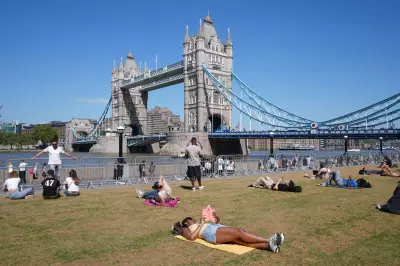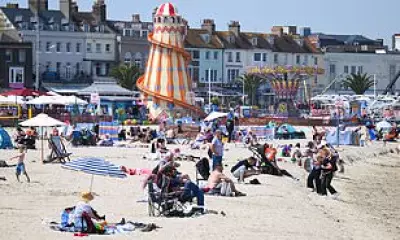
Britain is set to experience its hottest day of the year so far today as an exceptional week-long heatwave begins, with temperatures predicted to reach a record-breaking 34°C. Forecasters anticipate that the UK will have its warmest-ever May day and spring day over the bank holiday weekend as families embark on half-term holidays.
Temperature Forecast
Temperatures will hit 28°C in London this afternoon, surpassing the current 2026 high of 26.6°C recorded at Kew Gardens on April 8. The mercury will rise further to 29°C tomorrow, 31°C on Sunday, and peak at 34°C on Monday. Tuesday will see 32°C, while Wednesday and Thursday will both reach 29°C. Any temperature above 29.4°C will mark the warmest May day in the UK since 2012, while the current May record stands at 32.8°C in London from 1922.
Heat Health Alert
High pressure will bring settled conditions and clear skies, with the Met Office declaring an 'exceptional spell of warmth for May with a notable heatwave forecast'. A UK Health Security Agency six-day heat health alert for southern, eastern, and central areas of England was activated at 9am today and will last until Wednesday. This alert, the first since last August, warns of an 'increased use of healthcare services by vulnerable people' and a 'greater risk to life of vulnerable people'.

Heatwave Thresholds
Heatwave thresholds—defined as three consecutive days at or above a set temperature, which is 28°C in London—are likely to be reached in the South East from Sunday. As the weekend progresses, these very hot conditions will become more widespread, extending across central and western England and into parts of Wales.
Met Office deputy chief forecaster Steve Kocher said: 'Temperatures will climb through the weekend, especially in the South, where 30°C is likely to be recorded on Saturday and 32°C on Sunday. Temperatures are forecast to peak on Monday when we could see 33°C recorded in southern England and the Midlands.' Met Office forecast data for London suggests the temperature could peak even higher at 34°C.
Mr Kocher added: 'It is likely that the May and spring UK temperature records will be broken over the Bank Holiday weekend, with forecast temperatures surpassing the existing record of 32.8°C. As well as it being hot, there will be lots of dry and sunny weather for much of the UK. There will however be more cloud and some showers in Northern Ireland and western Scotland through the weekend. With relatively low sea surface temperatures, there is also likely to be some low cloud and sea fog clinging closely to western coasts.'
Comparison with Mediterranean
Temperatures in the UK are expected to exceed those forecast in Mediterranean hotspots including Mykonos, Rhodes, and Santorini over the weekend. Winds are turning more southerly by the end of the week, but the high temperatures are not primarily due to hot air being transported directly from southern Europe or North Africa.
A Met Office spokesperson explained: 'Instead, the main driver of the warming trend is the development of high pressure over and near the UK. As this high-pressure strengthens, it causes sinking air in the atmosphere. This descending air is compressed as it moves downward, leading to warming through a process known as adiabatic compression. In simple terms, as air is compressed, its temperature increases. This process can significantly raise temperatures at the surface, even when the original air mass is not especially warm. In this case, much of the air over the UK still originates from the Atlantic, but it becomes warmer as it descends under high pressure. This mechanism is a common feature of warmer spells in the UK and is often more important than the transport of heat from lower latitudes.'
Safety Advice
Meanwhile, people are being urged to check water quality in bathing spots and sea conditions along coasts before swimming as the UK braces for the scorching weather. The Met Office is encouraging the public to be 'weather ready' by making informed choices on swimming and locations as they head outdoors or to the coast to enjoy the sunshine.

Campaign group River Action warned of the health risks posed by poor water quality, even in designated bathing spots. Alzheimer's Society said people with dementia are likely to be more vulnerable in warmer conditions and outlined measures others can take to support them. Similarly, the British Heart Foundation said heart patients also face potential dangers in the heat and should take extra precautions to minimise health risks.
Hotter conditions often lead to a surge in ambulance call-outs and Royal National Lifeboat Institution (RNLI) rescues along UK coastlines as people experience heat stress or get into trouble in the water. The Met Office is advising the public to take care with sun protection and check their local weather conditions, using tools such as 'beach forecasts' on its app to help them make informed choices.
Holly Clements, Met Office head of warnings and guidance, said: 'Warm weather on a bank holiday draws people outside, but the weather at the coast can change quickly, and conditions like tides, waves, and wind can all affect safety at the beach. Sun protection is particularly important here as reflective surfaces like sand and water amplify UV radiation that can damage skin and eyes, even when it's cloudy. By checking the forecast and following simple safety advice, people can reduce the risks and make the most of their time by the sea.'
The RNLI said choosing a lifeguarded beach, swimming between the red and yellow flags, and educating themselves on what to do in an emergency can make all the difference in staying safe on the coast. Last year, the organisation helped to save more than 36,000 people across UK beaches, more than double the previous year.
Samantha Hughes, RNLI water safety partner, said: 'If you find yourself in difficulty in the water, try to remain calm and remember Float to Live: lean back with your ears submerged, extend your arms and legs, and float until you can control your breathing and wait for help to arrive or before moving to safety. If you see someone else in trouble in the water, phone 999 or 112 and ask for the coastguard.'
The public is also being urged to check water quality before entering rivers, lakes, or coastal waters ahead of the bank holiday weekend, after the official bathing season began last week. Between May and September, 464 sites across England's coasts, rivers, and lakes are subject to regular water quality testing by the Environment Agency. Poor water quality caused by sewage spills and pollution in many waterways can put people's health at risk with illnesses such as E.coli or norovirus, as well as skin, eye, and ear infections.
River Action said swimmers, paddlers, rowers, and bathers can check for recent sewage spills or water quality alerts near designated bathing sites through tools such as sewagemap.co.uk or Surfers Against Sewage's 'safer seas and rivers service'. The group also encourages people to refer to practical guidance developed in partnership with British Rowing and The Rivers Trust on reducing health risks and staying safe when water quality is poor.
James Wallace, River Action chief executive, said: 'In general, dry weather can mean lower pollution risk, but people should still take care, avoid swallowing water, and avoid swimming with open cuts or wounds.'
Elsewhere, Alzheimer's Society said people can support loved ones or neighbours with dementia by leaving drinking water within easy reach, ensuring they opt for light-coloured, airy clothes, stay out of the sun between 11am and 3pm, take cool showers, and keep blinds closed. Angelo Makri, senior knowledge officer for wellbeing at Alzheimer's Society, said: 'People should absolutely enjoy the nice weather we're having, however, it's important to note that high temperatures can lead to severe health problems for people with dementia unless they take precautions to keep cool and well hydrated.'
And the British Heart Foundation said those with heart conditions face specific risks because the organ has to work harder to keep the body's core temperature at normal levels while blood vessels dilate, which can lead to a drop in blood pressure. Ruth Goss, senior cardiac nurse at the foundation, said: 'In hot weather, check on your friends and relatives regularly to make sure they are cool and comfortable. The most important way you can protect your heart in the heat is to stay cool and keep hydrated.'
Cllr Dr Wendy Taylor, chair of the Local Government Association's Health and Wellbeing Committee, said: 'With a heatwave expected to cover large swathes of the country this weekend, people in affected areas can help to identify those who may need advice or practical help during the high temperatures. Look out for those who are more vulnerable – older people, young children, babies, and those with underlying health conditions. Hot weather advice applies to everyone, not just those who are vulnerable. It may feel like common sense, but we can all take sensible precautions during the high temperatures.'
Climate Context
The Met Office said a climate attribution study published last summer by its scientists found that the 'chances of surpassing the May temperature record set in 1944 have been increasing as our climate changes as a consequence of human greenhouse gas emissions'. A spokesperson added: 'The study found that breaking the 32.8°C May record is around three times more likely now in our current climate than it would have been in a natural climate not impacted by greenhouse gas emissions. What was around a 1-in-100 year event is now around a 1-in-33 year event.'
Yesterday's top UK temperature was 24.6°C at Heathrow Airport, followed by 23.3°C at Kew Gardens.