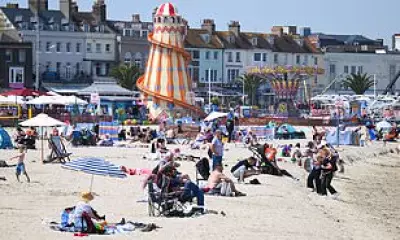
Following more than fifty consecutive days of rainfall across the United Kingdom, Britons are finally enjoying welcome sunshine with temperatures forecast to climb as high as 19 degrees Celsius this week. However, this meteorological silver lining comes with a significant cloud, as the sudden warm spell has unleashed an aggressive 'pollen bomb' nationwide, causing distress for hay fever sufferers.
Pollen Levels Soar Amid Warming Conditions
While grass pollen remains relatively low, tree pollen concentrations have skyrocketed across the UK due to the recent warm weather. A spokesperson for the Met Office explained to the Daily Mail, "Warm, wet weather can lead to a shift in the flowering season for certain plants which in turn can shift the timing of the pollen season." This development will come as no surprise to the millions affected by seasonal allergies, who have taken to social media platforms to share their symptoms.
Social Media Reactions Highlight Widespread Discomfort
On TikTok, one user lamented, "First non-rainy day in London and I'm immediately punched in the face by hayfever." Another asked, "Is anyone else's eyes burning today? Is it just me, or has hay fever started already?" A third individual humorously noted, "I love spring and I'm so happy it's getting warmer, but my hay fever is flaring! I have itchy eyes and my nose is starting to twitch as well. There's no winning!"

Although the Met Office's official pollen forecast has not yet commenced for the season, Kleenex's Pollen Count tool indicates that tree pollen levels are currently 'high' in cities throughout the UK, from Inverness in Scotland to St Ives in Cornwall. London is experiencing particularly elevated levels, attributed to the capital's extensive green spaces.
London's Green Spaces Contribute to High Pollen Counts
Kleenex elaborated, "Despite the Big Smoke nickname and its skyscrapers across The City and Canary Wharf, there are more than 9,200 hectares of parks and gardens across London making it the greenest major city in Europe. While that's fantastic for the local ecosystem and our love of a picnic, it also means the London pollen count can hit some pretty big highs."
Many people associate hay fever primarily with summer, but allergic reactions can actually occur throughout the year as different pollen types dominate each season. Tree pollen peaks in late winter, grass pollen in summer, and weed pollen in autumn. Kleenex detailed, "Seven tree pollen variants start causing havoc in February. As well as hazel, yew, alder and willow, we also see ash, elm and birch pollen join the party. It's in this month we see our first peak from the winter pollen season, with hazel and yew hitting their highs until mid-March."
Regional Variations in Pollen Seasons
The Met Office spokesperson further clarified that tree pollen tends to be more severe in southern regions of the UK. "The exact timing varies depending on where you live," they stated. "The season generally starts later, and is shorter, in the north of the UK, where pollen levels tend to be lower overall. Urban areas often experience lower counts than rural locations, and inland areas tend to see higher counts than coastal regions."
Weather conditions significantly influence pollen production. The spokesperson added, "The weather can also impact pollen production, for example warm, wet weather can lead to a shift in the flowering season for certain plants which in turn can shift the timing of the pollen season."
Symptoms and Sufferer Experiences
Winter tree pollen allergies produce many of the same symptoms as grass pollen allergies, including watery or itchy eyes, headaches, a reduced sense of smell, and disrupted sleep leading to tiredness. This week, numerous sufferers have shared their experiences on TikTok. One user vented, "Oh my god, my hayfever is killing me and I'm only in March. So imagine what it's going to be like in June, July, August." Another reported, "My nose has been itchy, I've been sneezing so much, and my throat feels mad scratchy – it feels like I've got sandpaper in my throat." A third explained, "I can feel it coming. I'm waking up with a swollen face, my skin is getting worse, my eyes feel weird – so I know it's almost here."

Unfortunately, the forecast suggests little relief in the coming days. According to Kleenex's Pollen Count, tree pollen concentrations could reach a high of 599 particles per million in London on Saturday.
Understanding Hay Fever and Its Sudden Onset
Hay fever is an allergic reaction to pollen, a fine powder released by plants. Symptoms typically include coughing and sneezing, a runny or blocked nose, itchy red or watery eyes, itching in the throat, nose, mouth or ears, plus headaches and tiredness. The NHS recommends practical measures such as applying Vaseline around the nose to trap pollen, wearing wraparound sunglasses, regular washing of clothes, and thorough vacuuming and dusting indoors.
For most sufferers, symptoms begin in childhood and persist lifelong. However, some individuals develop the condition suddenly in adulthood without obvious cause. Theories for this unexpected onset include previously mild unnoticed childhood symptoms, the 'hygiene hypothesis' suggesting reduced infection exposure weakens immune responses, environmental changes like moving between urban and rural areas, or immune system weakening due to illness or trauma. Between 15 and 20 percent of the UK population is affected, with higher rates among teenagers and symptoms typically peaking in people's twenties.