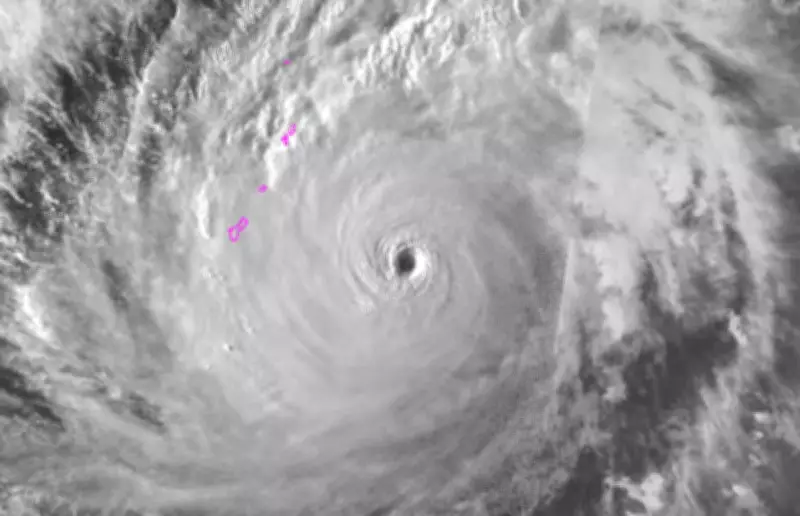
Super Typhoon Sinlaku Poses Grave Threat to Remote US Territories
A perilous super typhoon is rapidly advancing across the Pacific Ocean, targeting a cluster of remote US islands with potentially devastating consequences. Super Typhoon Sinlaku, monitored by the National Weather Service, is forecast to strike the Northern Mariana Islands on Tuesday, unleashing destructive winds, torrential rainfall, and severe flooding.
Imminent Landfall and Widespread Alerts
According to the Joint Typhoon Warning Center, Sinlaku was generating sustained winds of 173 miles per hour on Monday as it approached the islands of Rota, Tinian, and Saipan. This makes it the most powerful tropical cyclone observed on Earth so far this year. Although a slight weakening is anticipated in the coming days, the typhoon is expected to pass near the islands as a formidable category 4 or 5 storm.
In Guam, a US territory housing critical American military installations, damaging winds have already begun, prompting a tropical storm warning. The US Coast Guard has issued flood and high wind advisories over the weekend, urging residents to take immediate precautions.

Emergency Preparations and Historical Context
US military officials in Guam have advised personnel to prepare for the storm and seek shelter in place, recalling the aftermath of Typhoon Mawar in 2023, which caused prolonged power outages. In a proactive move, Donald Trump approved emergency disaster declarations for both Guam and the Northern Mariana Islands on Saturday, facilitating enhanced emergency services and aid.
Super typhoons, defined as the most intense tropical cyclones in the north-western Pacific Ocean, typically equate to category 4 or 5 hurricanes in the Atlantic, with wind speeds exceeding 150 miles per hour. Since the Joint Typhoon Warning Center began using this classification in 1947, over 300 such storms have been documented, underscoring the region's vulnerability to extreme weather events.
As Sinlaku continues its trajectory, authorities remain on high alert, emphasizing the critical need for vigilance and preparedness among island communities.