Bank of England Governor Warns of Major Supply Shock from Middle East Conflict
Bank of England Governor Andrew Bailey has declared that the ongoing war in the Middle East has triggered "a major supply shock" to the global economy, though he remained deliberately non-committal regarding potential implications for UK interest rates. The central bank chief's stark assessment comes as the International Monetary Fund delivered a particularly gloomy economic outlook for Britain, highlighting significant challenges ahead.
IMF Delivers Bleak Forecast for UK Economy
Speaking ahead of crucial spring meetings of the International Monetary Fund in Washington DC, Bailey acknowledged the conflict involving Iran has delivered a substantial jolt to worldwide economic stability. The IMF's latest analysis revealed Britain has suffered the sharpest reduction in growth forecasts among all major global economies, with energy price spikes from the Middle East turmoil expected to push UK inflation toward 4% - double the Bank of England's official target.
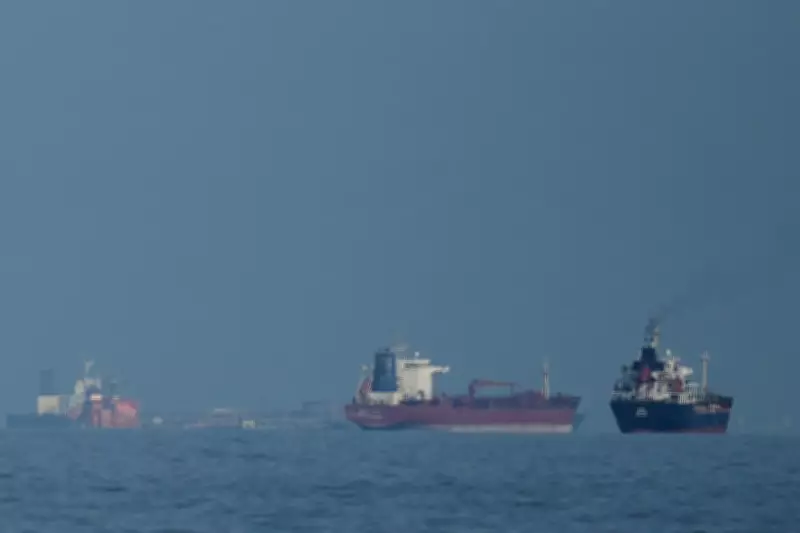
The influential financial body warned these inflationary pressures would inevitably translate into higher living costs for British households, compounding existing economic pressures. The conflict's disruption stems primarily from Iran tightening control over the strategically vital Strait of Hormuz, a critical chokepoint for global oil and gas shipments, prompting a US naval blockade of Iranian ports despite a fragile ceasefire arrangement.

Resilient Banking System Provides Buffer Against Shock
Despite the concerning developments, Governor Bailey emphasized the United Kingdom enters this crisis period from a position of relative strength, thanks to a resilient banking system forged through extensive reforms following the 2007-2009 financial crisis. "I would argue that we are in a much better place today because we have got a resilient banking system than we would be if we didn't have," Bailey stated during remarks in New York before traveling to the IMF summit.
He elaborated further: "I think if we didn't have a resilient banking system, I'm not going to predict what would happen, but I think we would be spending a lot more time worrying about financial stability. That underlying resilience is important because we don't get stability more broadly, we don't get growth in our economies without it."
Political Responses and International Tensions
The economic ramifications have sparked contrasting political responses on the international stage. Prime Minister Sir Keir Starmer has spearheaded diplomatic efforts to ensure future free navigation through the critical Gulf waterway, while US leadership has reportedly criticized Britain for not expanding North Sea oil extraction, urging more aggressive domestic energy production.
Meanwhile, Chancellor Rachel Reeves, who joined financial leaders in Washington for the IMF gatherings, condemned what she termed the "folly" of American military engagement with Tehran without a coherent exit strategy. These political divisions underscore the complex geopolitical landscape complicating economic responses to the supply shock.
Monetary Policy Committee Faces Critical Decisions
As chair of the Bank's nine-member Monetary Policy Committee, which directly influences UK lending and saving rates through its interest rate decisions, Bailey maintained a position of "studious neutrality" regarding upcoming policy moves. The MPC is scheduled to convene on April 30th for its next critical decision-making session.
Regarding the Middle East crisis, Bailey explained: "It's a major supply shock. I said in the paragraph I wrote in the last MPC minutes, there's no question that the best way to deal with supply shocks is at the source of the shock. The source of the shock is not monetary policy. It's obviously what's going on in the Gulf and in the Strait of Hormuz."
The Governor outlined the dual analytical challenge facing policymakers: "What we have to do is assess both the so-called first-round effects, which is obviously how long is this thing going to go on for? What is going to be the impact of it? But then we also have to assess the second-round effects on inflation, which are going to be really to what extent is it going to generate persistence?"

He concluded that these assessments must be carefully weighed against both UK and global economic conditions, representing a complex judgment the Bank will need to exercise repeatedly in coming months as the Middle East situation evolves.