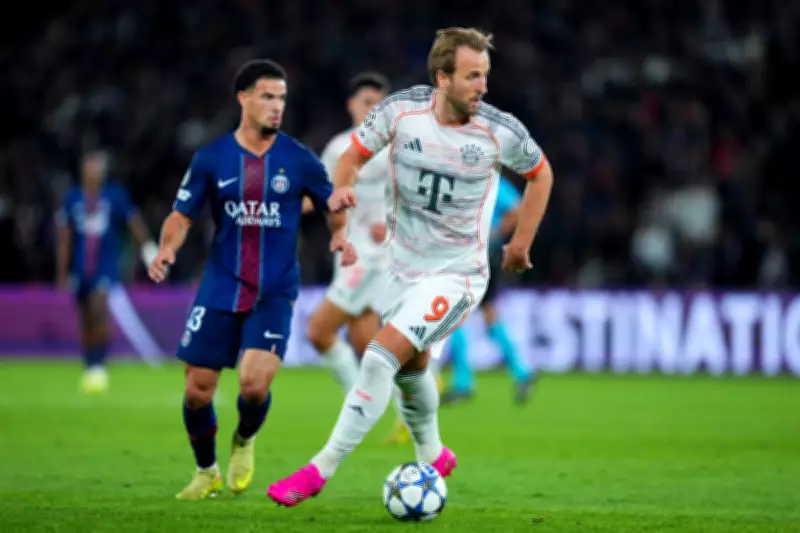
The contrast at the heart of the Champions League semi-finals reveals much about football's future. Serial winners Bayern Munich and Paris Saint-Germain carry confidence into their tie, while Arsenal and Atletico Madrid have psychological hurdles to overcome, setting up two very different paths to the final.
Two Different Styles
At this stage of the season, when the Champions League reaches its gloriously charged air, even staff meetings have an edge about getting it right. While some coaches at both Bayern Munich and PSG are concerned with stopping opposition attackers, others shift the emphasis: make them stop us. This means letting Jamal Musiala rampage at PSG and pin them back, as Kvicha Kvaratshkelia tries to do the same to Manuel Neuer's defence. The potential effects could be electric football, reminiscent of the 2015-19 "era of comebacks."
However, in the other semi-final, we may see evolving trends of a different kind. If PSG-Bayern is set up for attackers expressing themselves, Atletico Madrid-Arsenal looks likelier to be a fraught battle within the margins. This contrast was visible in the quarter-finals: while Arda Guler and Luis Diaz exchanged screamers at the Allianz, there were no goals in Arsenal's second-leg elimination of Sporting. Atletico's defeat of Barcelona was absorbing but more about clashing styles than open play. A Diego Simeone team is always given to a fight, which may be even more pronounced against Arsenal.

Different Sports?
Another feeling is the sense of almost watching different sports depending on the game. This contrast is relevant for the future of the sport, as the season has been characterised by debate about tactical directions. The eventual final may be presented as a game for football's future. For now, one semi-final could define a new roaring 20s, while the other might descend into trench warfare. Yet sources at all clubs contend it is not so simplistic. Antoine Griezmann has been at the centre of elegant attacking play, with Atletico far more progressive than their 2013-16 peak. Arsenal overwhelmed Bayern Munich with forward play in a 3-1 group-stage win just five months ago.
Demands on Clubs
Most of all, there are the demands on the clubs. Arsenal and Atletico have toiled through testing seasons against rivals with superior resources, while Bayern and PSG cruised to their league titles. Bayern sealed the title by going 15 points clear, earning over €300m more in revenue than Borussia Dortmund. PSG, despite a closer six-point lead over Lens, have beaten down Ligue 1 through Qatari sportswashing. Such superiority affords space to keep players physically and mentally fresh for more idealised football. As one source insists, "it's drastically underestimated how dependent modern systems are on full capacity."
Psychological Factors
Bayern won the Champions League in 2020, beating PSG in the final, who finally got over the line last season. Such victories bring deeper assurance that Arsenal and Atletico don't possess. They are the two biggest clubs never to have won it, a reality made more acute by recent seasons. Atletico's quest under Simeone includes two painful final losses to Real Madrid in 2014 and 2016. Mikel Arteta is determined to become the first manager to deliver the Champions League to Arsenal, especially given the risk of not winning the English title. The pressure to deliver one of the two major trophies is immense.
That pressure can produce reactions that intend more control, as seen with Arsenal. The closer they get to glory, the more Arteta tries to control, constricting the team. Similarly, sources say Simeone constantly tries to progress but cannot fully escape inherent conservatism. He cannot rely on a defender like Diego Godin anymore, as the game produces fewer such players. One of the most prominent, Gabriel, is at Arsenal. This conditions a certain outlook.

The Stakes
The Atletico-Arsenal semi-final will be driven by agitation, PSG-Bayern by affirmation. That does not make it any less absorbing. At this stage, the stakes make the game. The prize, an appearance in club football's greatest stage, produces all sorts of responses. Teams will do almost anything to get there. They will be guided by different approaches from different contexts. It is not necessarily a fight for football's future. Barcelona 1994 were still more influential than the Fabio Capello Milan that thrashed them. The present, however, involves very different tests that will immerse both sides. There is little like it, especially when the games are set to be so unalike.