China's Economic Ambitions Confront Growth Constraints as National Congress Gathers
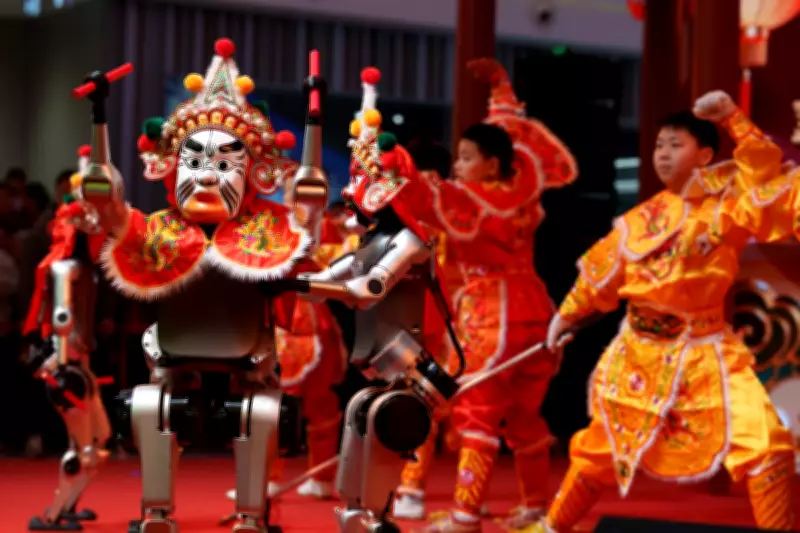
China's impressive progress in constructing a modern economy, vividly demonstrated through innovations like kung-fu fighting robots and self-parking cars, is encountering substantial limitations. A prolonged downturn in the housing sector continues to exert drag, while small businesses face hardships and young people grapple with severe job market challenges.
The High-Tech Vision Versus Economic Realities
The widening chasm between Chinese leader Xi Jinping's ambitious high-tech, artificial intelligence-driven objectives and the stark realities of decelerating growth forms the critical backdrop for the annual assembly of the National People's Congress. This largely ceremonial national legislature commences its proceedings this Thursday in Beijing.
Approximately 3,000 deputies will convene in the capital, where top leadership will unveil China's annual growth target and endorse a comprehensive five-year policy blueprint extending through 2030. Alexander Davey, an analyst at the Mercator Institute for China Studies, observed, "What we'll witness is the trade-off between prioritizing industry and technology or focusing on bolstering domestic demand. These are the two competing priorities that Xi Jinping must currently juggle."

Economic Momentum Shows Signs of Fading
Across southern China's Guangdong province, families significantly curtailed major purchases during last month's Lunar New Year celebrations. Even traditionally auspicious items like orchids, symbols of abundance and prosperity, saw prices slashed by up to 40% compared to the previous year.
This widespread penny-pinching has left small business owners vocal about enduring difficult times. While China reported achieving "around 5%" economic growth in 2025, numerous economists express skepticism regarding certain official data points. This relatively robust growth pace was primarily sustained by vigorous manufacturing activity as exports surged, despite facing tariff increases from U.S. President Donald Trump and other trade disruptions.
Eswar Prasad, a professor of economics and trade policy at Cornell University, commented to The Associated Press via email, "Hitting the 2025 growth target provides little reassurance as the Chinese economy loses momentum, with rising imbalances and enormous structural problems being temporarily masked by a surge in export-driven growth."
Persistent Property Market Slump Creates Widespread Impact
A downturn in China's housing market, which began several years ago, continues with piecemeal revival efforts achieving only sporadic progress. Dozens of property developers have defaulted on debts following authorities' crackdowns on excessive borrowing. With overall home prices declining 20% or more from 2021 peaks, a meaningful recovery remains elusive.
The collapse within one of the nation's largest industries has eliminated hundreds of thousands of jobs. Compounding this, with 12.7 million graduates entering the job market this year, more than 16% of young Chinese citizens currently face unemployment. Many are simply abandoning traditional career pursuits, adopting a "lying flat" mentality of opting out from competitive pressures.
Families whose primary assets are residential properties have grown increasingly cautious about spending, thereby weakening consumer demand and frustrating longstanding efforts to shift economic reliance toward domestic investment. The congress may introduce fresh measures to strengthen social welfare and other support systems—interventions economists describe as overdue and essential for sustained, stable growth.
Export Dependence Provides Temporary Economic Buffer
Reliance on exports continues to maintain China's economic activity, at least temporarily. The country recorded a substantial $1.2 trillion trade surplus in 2025, with exports keeping factories operating at capacity. Despite ongoing trade tensions with the United States, China has successfully increased shipments to regions including Europe and Latin America, though it faces growing pushback from trading partners.

Under Xi's leadership, China has prioritized developing advanced technologies such as artificial intelligence, robotics, computer chips, electric vehicles, and renewable energy. Massive state support has enabled companies to produce more electric vehicles, televisions, solar panels, and other products than both domestic and international markets can absorb.
Leah Fahy, a China economist at Capital Economics, noted, "To achieve these technological goals, the government must continue providing subsidies and preferential support for high-tech and strategic industries. This will, in turn, perpetuate overcapacity issues."
A recent International Monetary Fund report urged China to reduce extensive state subsidies and other industrial supports that many Western nations argue provide unfair advantages over foreign competitors. Meanwhile, social welfare and other economic sectors continue to lag behind.
Leadership Consolidation and Military Purges Under Scrutiny
The annual congress presents an impressive spectacle, with thousands of delegates filling Beijing's Great Hall of the People, military band performances, and ethnic representatives in traditional attire. Despite the pomp, the meeting remains largely ceremonial, lasting only one week with near-unanimous votes formalizing decisions predetermined by party leadership.
This gathering reinforces unity behind policies and direction set by increasingly centralized leadership under Xi Jinping, who has consolidated remarkable power since assuming control in 2012. Now 72, he stands as one of modern China's most influential leaders, with some analysts speculating he may emulate revolutionary founder Mao Zedong in pursuing lifelong rule.
Days before the congress opened, the national legislature removed nine military officers from its ranks, expanding a years-long military purge. Last month, Gen. Zhang Youxia, the highest-ranking military official below Xi, was ousted over suspected disciplinary violations. While Xi's actions may temporarily weaken military readiness, analysts suggest they ensure greater political reliability long-term while eliminating potential rivals.
Xi's firm control makes challenges to his vision—transforming China into a self-sufficient technological leader and 21st-century global power—increasingly unlikely as the nation navigates complex economic transitions.