Economist Who Bet Against 2008 Crash Issues Stark Warning to Australia
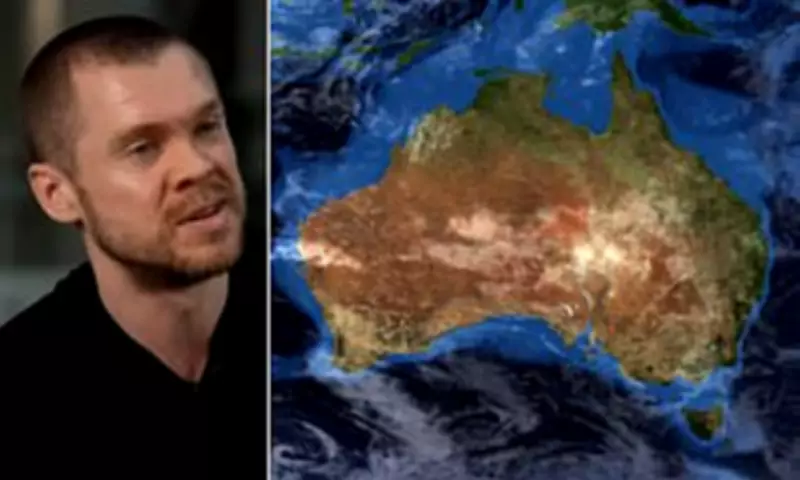
Gary Stevenson, a British economist who made millions by correctly predicting the 2008 financial crisis, has issued a dire warning during his first visit to Australia. He cautions that the nation is on a dangerous trajectory mirroring the United Kingdom's mistakes, with rapidly widening wealth gaps, deteriorating public services, and housing markets so inflated that purchasing a home now resembles a "$5 million bet."
From East London Roots to Global Inequality Campaigner
Raised in a working-class family in East London, Stevenson rose to become Citibank's most profitable trader during the financial meltdown. Today, he commands a substantial platform with 1.5 million YouTube subscribers, using his influence to rally global support against economic inequality. His speaking tour in Australia aims to highlight the parallels between British decline and emerging Australian crises.
"I want to come and show Australians what is happening in the UK, what is happening in Europe," Stevenson told the ABC. "Public services being shut down, poverty exploding. That will happen in Australia unless we deal with inequality."

Housing Policies Inflating Prices and Risk
Stevenson sharply criticised Australia's expanded 5 per cent Home Guarantee Scheme, arguing it artificially inflates house prices while pushing young buyers into perilous multi-million-dollar mortgages. The policy allows first-home buyers to purchase with just a 5 per cent deposit, with the federal government guaranteeing the remainder to avoid lenders mortgage insurance.
"I think the only people that really benefit from that are the mortgage lenders," he stated. "They're not taking the risk." He warned that housing affordability cannot be solved by easier mortgage access alone, noting prices have soared to multiples of annual wages that are unsustainable for future generations.
"Is that what we want for our kids - to have $2 million, $3 million, $4 million, even $5 million mortgages?" Stevenson questioned. "Do we want this country to be one where the only way to buy a house is to take a $5 million bet?"
Political Inertia and the "Painfully Simple" Solution
The economist expressed frustration with political reluctance to address inequality, noting that wealthy elites and politicians often lack incentive for meaningful reform. "The problem with an inequality crisis is it feels good for rich people," he explained. "And most politicians are in that community of rich people - I think they're out of touch."
During his tour, Stevenson plans to pressure local MPs to develop practical housing policies, arguing that waiting for political action means "waiting a long time." His proposed solution is straightforward: "If you want housing to be affordable, you need to deal with inequality, and you need to have a tax system that taxes the very wealthy more than ordinary working people."
Tax Reform Proposals and Intergenerational Equity
The Albanese government has not ruled out raising taxes on property investors by adjusting capital gains tax rules in the upcoming May Budget. Current laws, introduced by the Howard government in 1999, allow investors to pay tax on only half the profit from selling investment properties held over a year.
Among more controversial proposals is the introduction of an inheritance tax, which Deloitte argues could help level the intergenerational playing field. "Broad-based taxes on wealth – such as an inheritance tax – are a way to repair the budget, help all Australians share in the asset price windfall that has flowed to older generations over the last 40 years, and help to prevent inequality from cascading through future generations," a Deloitte report noted.
Stevenson emphasised that Australia and the UK are not alone in facing economic systems that perpetually favour the rich. He aims to "light a fire here" and mobilise Australians to demand change. "Because the politicians are not going to give it to us, and I want the Australians fighting by my side," he declared, urging citizens to fight for a future where housing and opportunity remain accessible to all.