President Donald Trump's vision of an economic surge powered by substantial tax refunds is colliding with the harsh reality of escalating fuel costs, leaving American consumers with diminished financial flexibility.
The Refund Promise Versus Fuel Price Reality
In a December prime-time address aimed at addressing economic anxieties, President Trump declared, "Next spring is projected to be the largest tax refund season of all time." This statement was grounded in his administration's tax cut legislation, which was anticipated to deliver a significant boost to household finances.
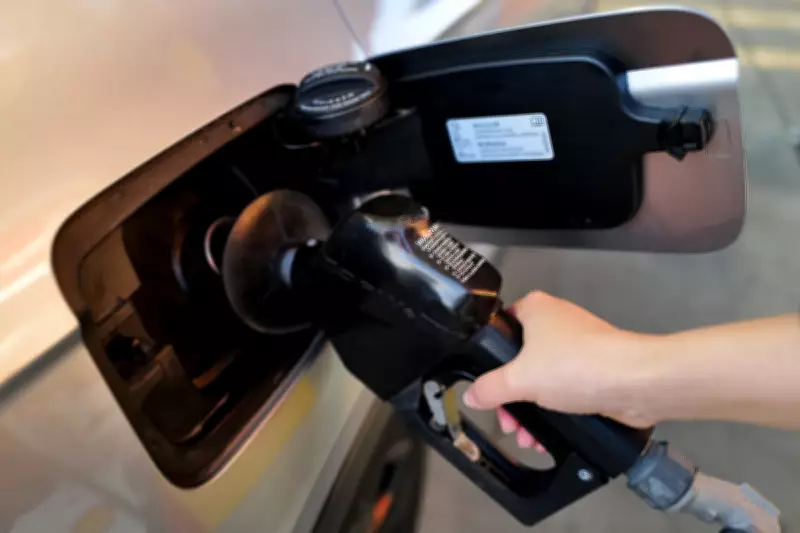
However, the onset of the Iran war on February 28th dramatically altered the economic landscape. Since that date, oil and gasoline prices have skyrocketed across the United States. By Sunday, the national average for a gallon of gas had climbed to $3.94, representing an increase of over one dollar compared to just one month prior.

Economic Impact and Household Strain
Economists now predict that this energy price shock will translate into slower economic growth for the spring and the remainder of the year. The fundamental issue is that dollars allocated to fuel are no longer available for discretionary purchases such as dining out, apparel, or entertainment.
Lower and middle-income families are expected to bear the brunt of this squeeze. These households typically receive smaller tax refunds while simultaneously dedicating a larger percentage of their earnings to essential transportation costs.
"The energy shock is going to hit those who have the least cushion," explained Alex Jacquez, chief of policy at the left-leaning Groundwork Collaborative and a former economist in the Biden White House. "And it doesn't look like those tax refunds are going to be here to save them."
Quantifying the Squeeze
Neale Mahoney, director of the Stanford Institute for Economic Policy Research, forecasts that gas prices could peak at $4.36 per gallon in May, based on oil price projections from Goldman Sachs. This would be followed by a gradual decline throughout the year, a pattern economists describe as the "rocket and feathers" phenomenon, where prices fall much more slowly than they rise.
In such a scenario, the average American household would incur approximately $740 in additional fuel expenses this year. This figure nearly matches the $748 increase in tax refunds that the Tax Foundation estimates the average household will receive from the new legislation.
Current Internal Revenue Service data through March 6th shows average refunds at $3,676, which is $352 higher than the $3,324 average recorded in 2025. While this increase is notable, it falls short of offsetting the surge in fuel costs, and more complex tax returns filed later could potentially alter the final average.
Broader Economic Assessments
Analyses from other institutions reinforce this concerning outlook. Economists at the consulting firm Oxford Economics estimate that if gas prices maintain an average of $3.70 per gallon for the entire year, the total cost to consumers would reach about $70 billion. This sum exceeds the projected $60 billion increase in total tax refunds nationwide.
The timing of this fuel price spike is particularly problematic. Unlike the 2022 energy crisis triggered by Russia's invasion of Ukraine, many American consumers now find themselves in a more vulnerable financial position. Pandemic-era stimulus savings have largely been depleted, the job market has cooled significantly, and personal savings rates have declined as households increasingly rely on credit to maintain their standard of living.
"When you start looking from a consumer perspective, you're seeing people who have maxed out their credit cards and are using 'buy now, pay later' services to purchase groceries," noted Julie Margetta Morgan, president of The Century Foundation think tank. "They're making it work for now, but that can fall apart quite quickly."
Disparate Impacts and Growth Forecasts
This situation threatens to exacerbate the "K-shaped" narrative of the U.S. economy, where higher-income households continue to thrive while lower-income families struggle. According to Pantheon Macroeconomics, the bottom 10% of earners spend nearly 4% of their income on gasoline, compared to just 1.5% for the top 10%.

Despite these headwinds, most analysts still anticipate that the U.S. economy will expand in 2026, albeit at a reduced pace. The immediate effect of higher gas prices will likely be a worsening of inflation, but over time, constrained consumer spending is expected to dampen overall growth.
American consumers and businesses have demonstrated remarkable resilience in recent years, weathering successive shocks including high inflation, rising interest rates, and trade tariffs without tipping into a recession. Furthermore, the proportion of income that Americans spend on energy has decreased significantly compared to a decade ago.
Recent data from the Bank of America Institute indicates some ongoing consumer strength. Spending on gasoline using the bank's credit and debit cards surged 14.4% higher in the week ending March 14th compared to the same period last year. Prior to the conflict, such spending was actually running 5% below the previous year's levels.
The institute also reported that discretionary spending on categories like restaurants, electronics, and travel continues to grow, signaling persistent consumer resilience. However, there is little evidence of the acceleration in spending that many economists had hoped the tax refunds would stimulate.
"The longer these gasoline prices persist, the more that will gradually sap consumer discretionary spending," cautioned David Tinsley, a senior economist at the Bank of America Institute.
Revised Economic Projections
Other economic forecasters have already adjusted their growth expectations downward in response to the conflict. Bernard Yaros and Michael Pearce, economists at Oxford Economics, have revised their 2026 U.S. growth forecast to just 1.9%, down from a previous estimate of 2.5%.
"We had anticipated a lift in spending from a bumper tax refund season," they stated, "but the rise in gasoline prices, if sustained, would more than offset that boost." This succinctly captures the central economic dilemma: the promised financial relief from tax refunds is being consumed at the fuel pump, leaving American households with little of the extra spending power that was promised.