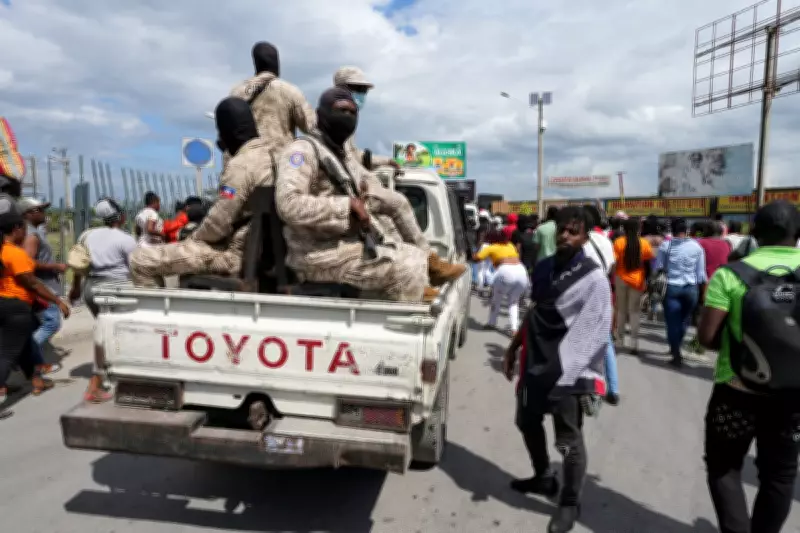
More than 1,000 workers have mobilized in Haiti's capital, Port-au-Prince, staging a significant protest on Monday to demand an increase in the minimum wage. This demonstration comes as the ongoing conflict in Iran continues to exacerbate global oil prices, placing immense financial strain on Haitian households.
Workers Rally at Industrial Park
Employees from the state-owned Metropolitan Industrial Park, commonly referred to as Sonapi, gathered outside its gates, chanting loudly, "When we are hungry, we don't mess around!" The protesters highlighted that they have not received a salary increase since 2023, a situation made dire by recent government hikes in fuel costs.
Fuel Costs Outpace Daily Earnings
Earlier this month, the Haitian government raised diesel prices by 37% and gasoline prices by 29%, making basic transportation and goods increasingly unaffordable. Marc Jean Jean-Pierre, a 47-year-old factory worker and father of two, starkly illustrated the crisis: "A gallon of gas is higher than our minimum daily wage."

Jean-Pierre earns 685 Haitian gourdes (approximately $5.23) per day manufacturing jeans, while a gallon of gasoline now costs 850 gourdes (about $6.49). To cope, he has abandoned public transport, opting to walk an hour to work to save money, as round-trip fares have surged by 100 gourdes (76 cents). "You can see what we're going through," he lamented, vowing, "We will be in the street until the government hears our voice."
Protesters Voice Desperation and Determination
Maxime Excellence, a 49-year-old janitor, joined the protest, expressing concerns over rising transport costs and basic sustenance. "On top of it, I have to eat. I can't spend the whole day not eating," he said, adding, "God knows what I'm going to have to eat when I get home." Excellence described the workers' demands as fair, noting, "We can barely make ends meet with what we're living on," and warned of potential violence if their needs are ignored.
James Cardichon, a 37-year-old T-shirt factory worker, echoed calls for drastic change. "We need a revolution for them to understand," he asserted, criticizing poor factory conditions and the broader impact of gang violence on daily life. "Our country is infested by gangs. The bus charges more because they have to pay the gangs to get through, and we end up paying for everything." He expressed frustration with unfulfilled government promises, stating, "We are tired of promises. We want them to take action, and quickly."
Broader Societal Frustrations Surface
The protest also drew Haitians not employed at the industrial park, reflecting widespread anger over the nation's escalating crises, including surging gang violence and deepening poverty. Garry Jean Paul, a 35-year-old street vendor selling cellphones, highlighted how rising oil prices worsen the situation. "Some days I make a couple hundred of gourdes, some days I have to go home with nothing," he said, observing, "Families are doing things they are not supposed to be doing. They are begging."
This demonstration underscores the severe economic pressures facing Haiti, as workers and citizens unite to demand immediate governmental action to address wage stagnation and the soaring cost of living driven by international oil market turmoil.